From Less to More:Minimalism vs Maximalism in Japanese Art & Design
A culture shaped by the constant tension between restraint and excess, where Zen-inspired simplicity and sensory overload have coexisted, collided, and redefined each other across centuries of design and daily life.
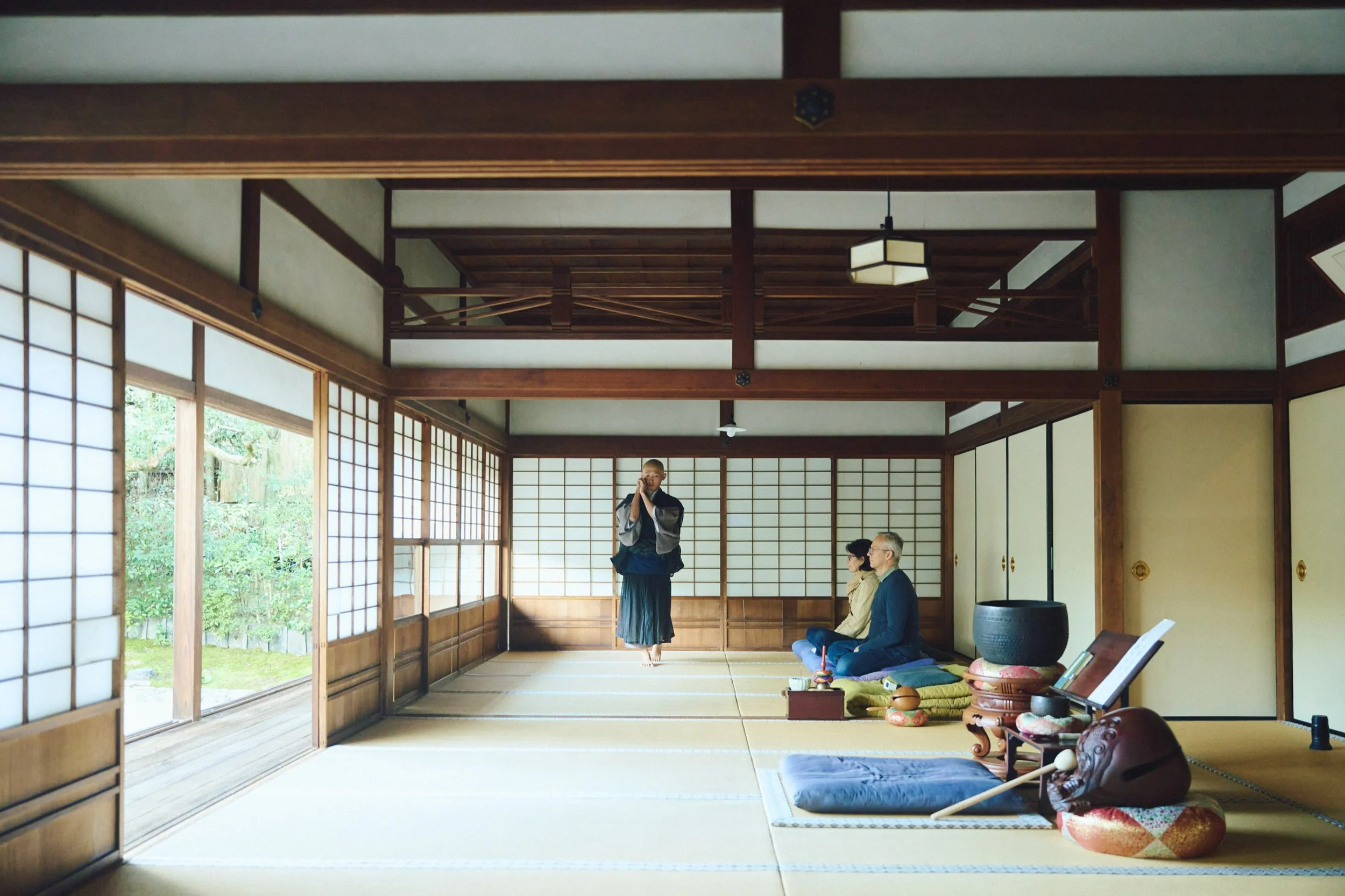
It has been typical of foreign writers in Japan to remark upon the absence of things. Lafcadio Hearn wrote of “the unspeakable loveliness of a solitary spray of blossoms arranged as only a Japanese expert knows how to arrange it.” A Western bouquet was, by comparison, “a vulgar murdering of flowers, an outrage upon the color-sense, a brutality, an abomination.” When author and academic Allen S. Weiss visited Ryoan-ji, an almost-vacant rock garden in Kyoto, he described being “stupefied” by its “sublime beauty.” Frank Lloyd Wright believed Japanese art was “the gospel of elimination,” while Roland Barthe’s monograph on Japan, Empire of Signs, reads like a 100-page meditation on the nature of emptiness.
This is the Japan of minimalism, the Japan that still populates the pages of travel brochures and stars in YouTube vlogs. Some critics decry it as cliche, an entire culture reduced to a single aesthetic ideal: Japan viewed through the “Western gaze.” But such criticisms are also reductive. The philosophy of restraint has been a central tenet of the Japanese scholar since the rise of Zen Buddhism in the Kamakura period (1185-1333), when influential priests like Dogen were returning from their years-long tutelage in China with new spiritual lessons to impart.
During those years, the essayist Kamo no Chomei wrote Hojoki (“On Account of My Hut”), which, according to one of the book’s translators, Meredith McKinney, provides us with “the quintessential figure of the literary recluse. He has built for himself a tiny hut, exactly large enough to contain the essentials for life, in a remote place far from the distracting presence of others, where the peace and beauty of the natural surroundings are conducive to calm contemplation. His life is one of utmost simplicity.”
Many more Japanese writers have championed the minimalist ethos in the years since, from D.T. Suzuki and Kazuko Okakura to Junichiro Tanizaki and Seigo Matsuoka. In more recent times, Marie Kondo and Fumio Sasaki have become minimalism gurus, making careers at home and abroad by turning the elimination of unnecessary things into an art – and also a commodity. But Kondo’s and Sasaki’s success is also predicated on messiness. For if every Japanese person lived in a neat and orderly home as sparsely decorated as a white-box gallery they’d have no unnecessary things that needed eliminating.
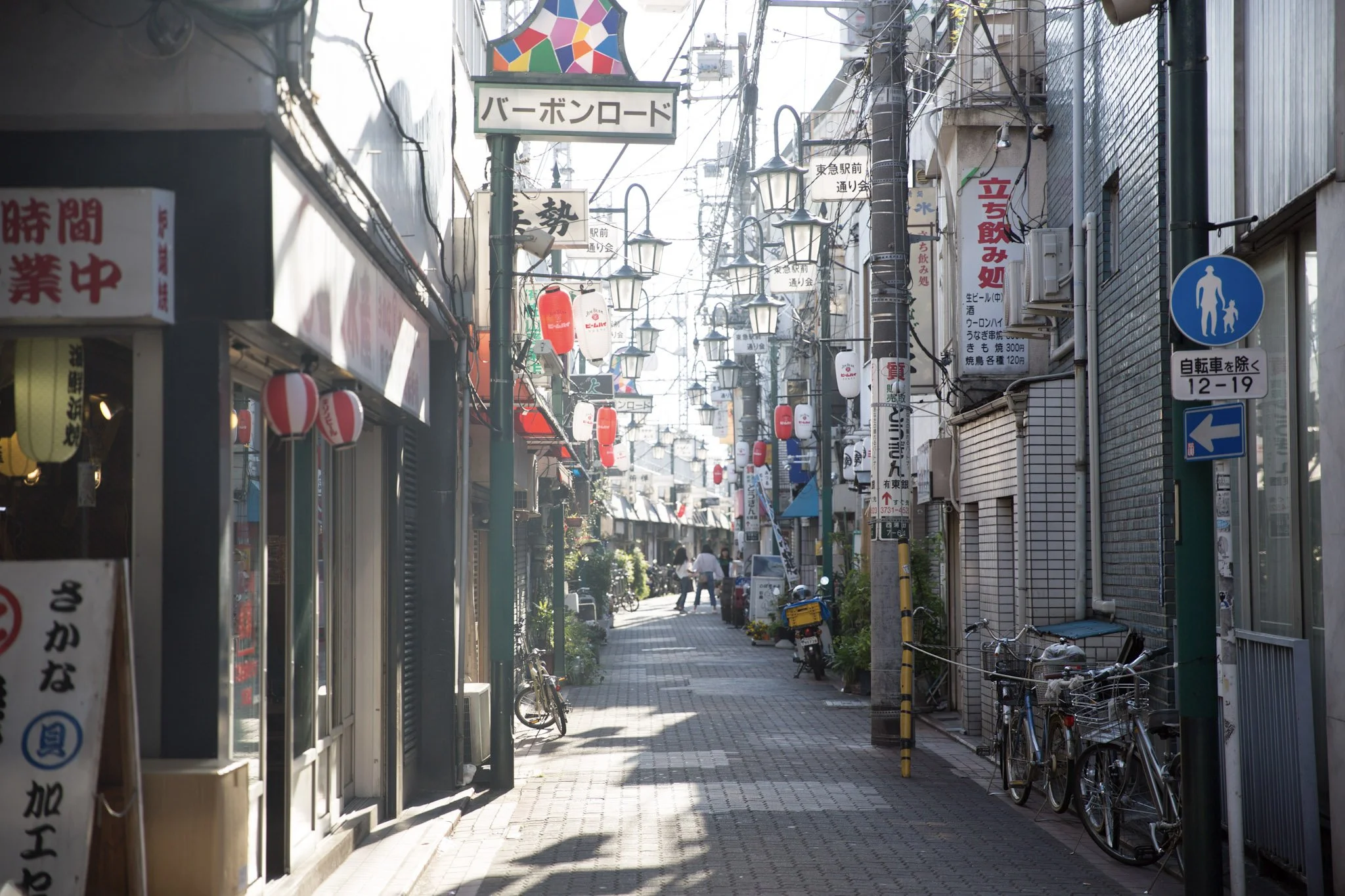
When we think of Japan in purely minimalist terms, we are also choosing what not to see: the maximalism and visual noise that exist in the beats of daily life. The modern visitor to Japan will probably land in Tokyo or Osaka and will quickly be assailed by a barrage of colorful advertising and flashing screens. Products vie for their attention in garish window displays and neon signs flicker at every turn. They’ll wander down an alleyway where no square foot of space is wasted and order from a restaurant menu that screams its recommended offerings. Before the night is out they may find themselves in an arcade or pachinko parlor pulsing with light, or gawking at a love hotel that looks like an ocean liner or a spaceship or a castle made of candy.
Contemporary design culture in Japan often embraces this extravagance, using bold colors, layered imagery, wild ornamentation, and eye-catching characters to stand out in a highly competitive commercialized world. Tanizaki believed such stimulus-overload was a foreign import and laid some blame at the foot of the West. In his seminal essay, In Praise of Shadows, he argued Japan embraced outsider habits too quickly following the Meiji Restoration, divesting itself of material restraint in search of something akin to “progress.” But the relationship between these contrasting philosophies is perhaps more complex, and what constitutes a Japanese sense of design has been reinterpreted throughout history.
How Less Became More… And More Became Less
Maximalism in Japan has its historical antecedents. There may not be a more opulent nor ostentatious structure in the archipelago than Nikko Toshogu, a shrine built in the early 17th century to entomb and deify the nation’s great unifier, Tokugawa Ieyasu. The shrine’s Yomeimon is immense, a gold-plated, multicolored entrance to the former shogun’s tomb that is about as antithetical to minimalism as one could imagine. The gate is so grand, in fact, it’s sometimes called the “Twilight Gate,” as it would take from sunrise till sunset to inspect the hundreds of individual carvings etched into its lacquered exterior. Likewise, Kyoto’s 14th-century Golden Pavillion, pasted in sheets of shimmering gold leaf, treads a fine line between kitsch and art, and there is nothing at all subtle about the multistory pagodas and vermillion-painted walls of Senso-ji Temple in Tokyo or Kumano Nachi Taisha in Wakayama Prefecture – both more than 1,000 years old.
During the 8th-century Nara period, when a proto-national culture began to emerge, Japan looked westward for inspiration, modeling its cities after those in China and adopting its neighbor’s religion, arts, modes of governance, and architectural quirks. Japan’s first capital, Heijo-kyo (modern-day Nara City), was established in 710 AD and designed in the likeness of Chang’an, the seat of the Tang Dynasty. Chang’an had 20 miles of fortified walls, the kind of grid-like orderliness we’d associate with Kyoto today, multicultural markets selling everything from embroidered textiles to foreign cuisine, and temples to a dizzying range of religions and denominations. It was a cosmopolitan megacity dwarfing, in both diversity and scale, the scattered power centers and rudimentary agricultural settlements of the Japanese Empire.
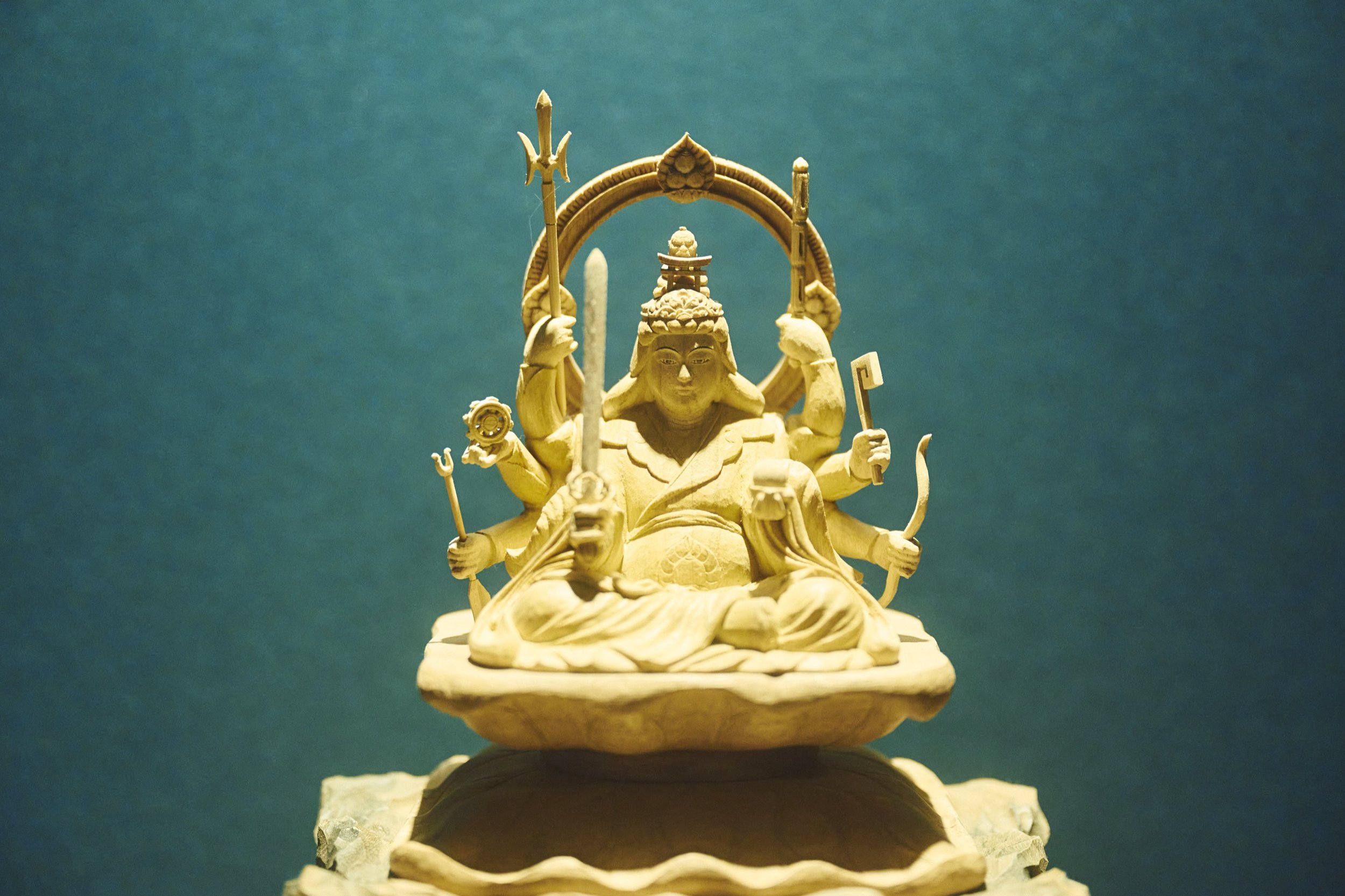
While Japan was acquiring civic design techniques from China’s engineers, it was also adopting Buddhism from its priests and scholars, and slowly merging this new religion with the indigenous ancestor worship. But the imported Buddhism was not the austere form most associated with Japan today. Look at Todaiji, an 8th-century temple so grand it required 900 hectares of forest to be razed and nearly bankrupted the empire. The bronze Buddha inside – built to convey power and prestige, and embody Todaiji as a Buddhist utopia – stands 15 meters tall and weighs 250 tons. Likewise, the Shoso-in treasury on the temple grounds is stocked with curios brought to Japan via China along the Silk Road, showing that Japan was discovering a taste for extravagant art and design long before the virtue of restraint became a dominant social paradigm.
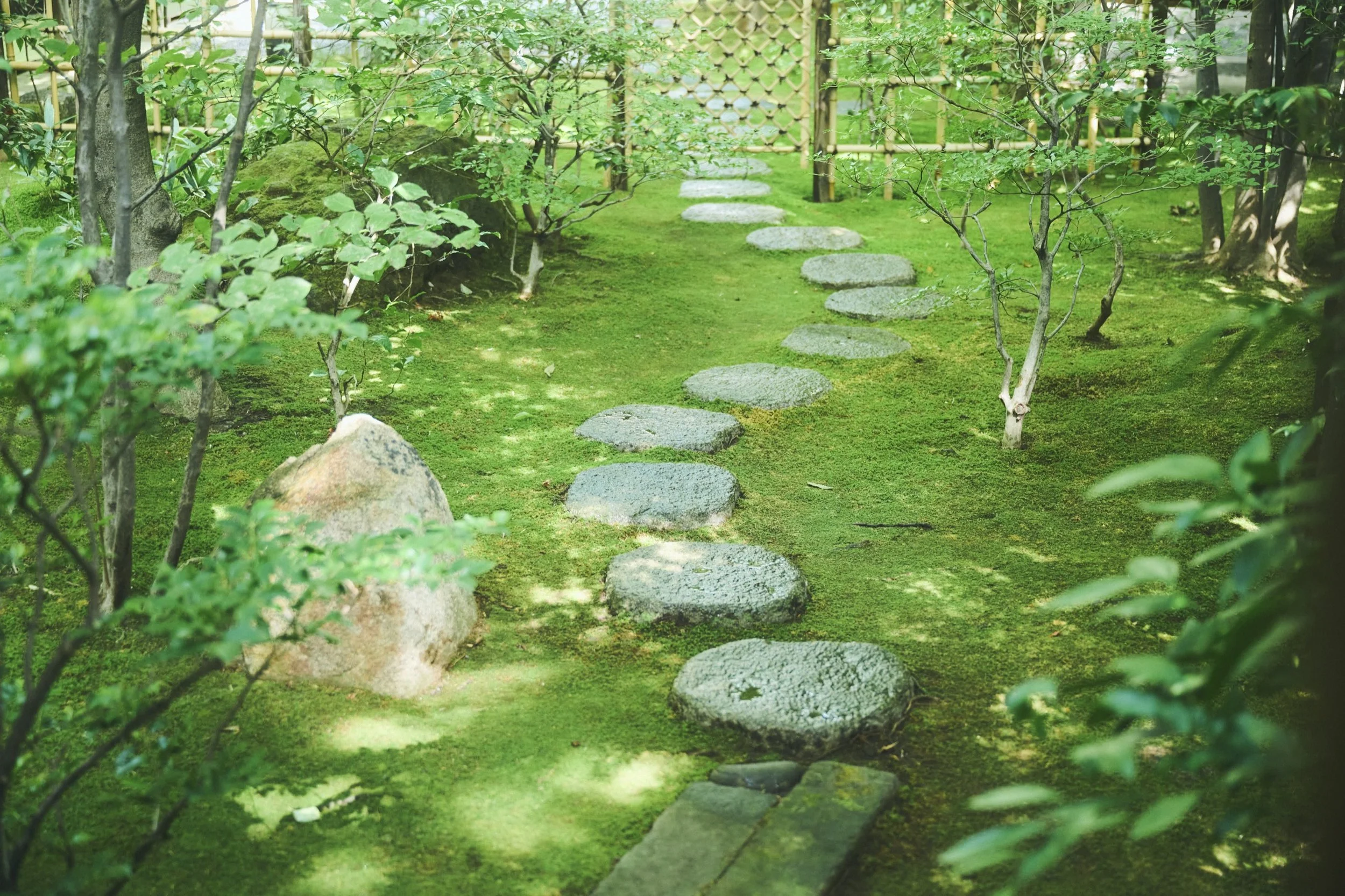
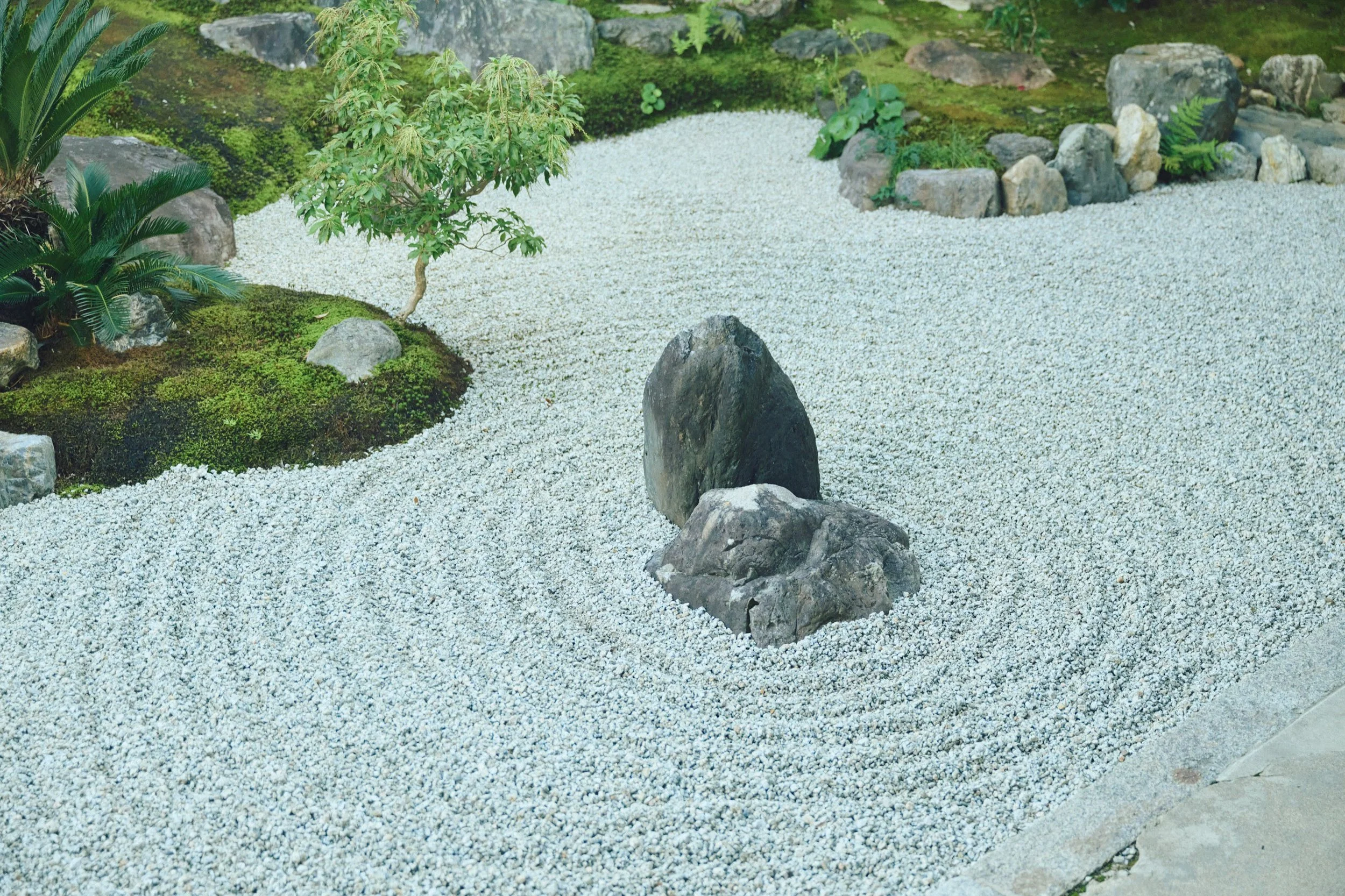
Minimalism, insofar as it was considered a unifying way of thought, arose with the proliferation of Zen Buddhism during the medieval era (between the 11th and 16th centuries), which is why artforms like ink painting, dry rock gardens, ikebana, calligraphy, and Noh theater developed during these years. In an essay titled Getting to Noh: Myths of Japanese Minimalism, writer and curator Glenn Adamson argues that the tea ceremony was Japan’s most notable artistic counterpoint to Chinese ceremonial excess. Whereas Chinese-style tea drinking was a display of opulence, Japanese tea pioneers like Sen no Rikyu reduced the ceremony – and the teahouses – to their barebones essentials.
Minimalism became more explicitly tied to a sense of national identity in the Meiji era (1868-1912), when Japan was in a period of intense soul searching. The end of 250 years of national isolation and the arrival of scholars, engineers, economists, and industrialists from the West was changing, culturally and aesthetically, the fabric of Japanese society. Kazuko Okakura was one of the most influential figures in the movement to reestablish what it meant to be Japanese, and it was minimalism – something Japan had used before to localize foreign imports – that he reached for. In a still famous treatise, The Book of Tea, which ironically was aimed at a Western audience, Okakura wrote, “To a Japanese, accustomed to simplicity of ornamentation and frequent change of decorative method, a Western interior permanently filled with a vast array of pictures, statuary, and bric-a-brac gives the impression of mere vulgar display of riches… The simplicity of the tea-room and its freedom from vulgarity make it truly a sanctuary from the vexations of the outer world.” In that last sentence, one senses, the words “tea-room” and “Japan” were meant to be interchangeable.
Japan in an Age of Consumption
In the 20th century, minimalism and maximalism circled one another as competing – and occasionally complementary – design philosophies, a relationship we still observe today. After the Second World War, as Japan adopted an increasingly Westernized outlook, mass-market production and consumption boomed. “By the time that the economic miracle culminated in the bubble economy of the second half of the 1980s, the Japanese consumer was able to spend with abandon,” wrote Penelope Francks in The Japanese Consumer, “not just on designer handbags and the most expensive golf equipment, but also on connoisseurs’ sake, obscure species of gourmet fish, and rice from the most prized fields in the most prized regions of the country.” As the Japanese grew rich and the country morphed into a land of plenty, advertisements, branding, overabundance, wastage, and shows of wealth were as common as deprivation, poverty, and despair had been only a generation earlier.
Voracious consumerism will always encourage some degree of maximalism as companies seek to outcompete each other with their flashy new products. This is one reason why, as though mirroring the then-high-tech televisions Japan was manufacturing, this era seems to spring forth in technicolor. In several small towns in Japan – Takayama, Matsushima, and Unzen come to mind – you can visit retro museums displaying soft vinyl toys, movie posters, arcade machines, junky sports rags, electronics, video game cartridges, city pop record sleeves, and other memorabilia from the bubble era. The sheer cacophony of color, designs, and stylized text presents the 1980s as a time of stimulus overload and halcyon age for acquiring new and shiny things.
Artists who grew to prominence during the late 20th century also spoke to a growing taste for sensory extremes, whether it was the psychedelic pop art of Yayoi Kusama or the superflat movement of Takashi Murakami, which merged traditional flat-plane aesthetics with bright colors and bold outlines. Cartoonists like Osamu Tezuka and Hayao Miyazaki were adapting their black-and-white manga comics into full-color anime productions for the screen. Harajuku fashion, characterized by its aversion to the mainstream and the minimal, also hit an apex, with youngsters using color and contrast as acts of sartorial expression.
Other creatives pushed back against the visual noise and rampant consumption. Mono-ha, meaning “School of Things,” was the most significant art movement of the postwar era, defined by its rejection of artistic representation and its preference for displaying raw materials in their natural states. The works of Lee Ufan, a leader of the movement, typify Mono-ha design and bring to mind the spatially aware aesthetics we’d think of as Japanese minimalism. Meanwhile, Tado Ando was on his way to becoming the nation’s leading architect, designing buildings from smooth concrete using the “haiku effect,” in which emptiness and the interplay of light and shadow were the true sources of meaning. Home goods brand MUJI was then launched in 1980 to combat consumerism fatigue. Short for Mujirushi Ryohin – literally “no-brand quality goods” – this brand-of-no-brand specialized in simplistic yet functional furniture and was an immediate success in the domestic market. The rest of the world has since fallen for its chic signature style, spawning more than 1,300 MUJI outlets in 29 countries.
Some writers in the West still claim that branding Japan as a paragon of minimalism is to misrepresent history and fetishize the Orient. While there may be some truth in that – after all, it’s much easier to interpret something in broad strokes than with nuance – it’s also clear that minimalist artworks like Banryutei rock garden in Koyasan or a lone bonsai pine in a tokonoma alcove are recognizable as fundamentally Japanese things. But it can also be true that colorful anime heroines and neon-suffused backstreets speak, in their own way, to Japanese design sensibilities.
Perhaps what Japan is most masterful at is creating pockets of calm amid the tumult of modern life. When you live in a dopamine economy, where every product and app is designed for instant gratification, it’s refreshing to walk into a coffee shop or sushi bar that’s shorn of unnecessary artifice and demands nothing more of you than engaging with the task at hand. Similarly, ryokan (traditional Japanese inns) are popular not just for the hot springs, but because they allow guests to retreat, even if only for a weekend, to a more simplistic – albeit refined – form of living. The same people who have spent good money to experience the minimal, then return happily to their crowded, bustling cities and feel at home when walking through the door of a cramped and cluttered apartment. But this shouldn’t be a surprise. Both the stability of order and the excitement of chaos embody what it means to be human, or as Tanizaki might have phrased it: “The quality that we call beauty… must always grow from the realities of life.”
About the Author: David is a Northern Irish freelance journalist, writer and author based in the UK and Tokyo. Fusing reporting and social commentary with extensive experience traveling throughout the country, he has published stories on travel, arts and culture, business and current affairs, and sports in Japan. His work has appeared in a range of national and international publications online and in print. He's also the author of two travel books, Intrepid Japan and the most recent edition of Frommer's Japan. You can find links to his work at www.davidmcelhinney.com.

Recommended Reads

Discover Cultural Experiences