
What Is Ikebana and How Is It Different From Western Flower Arranging?
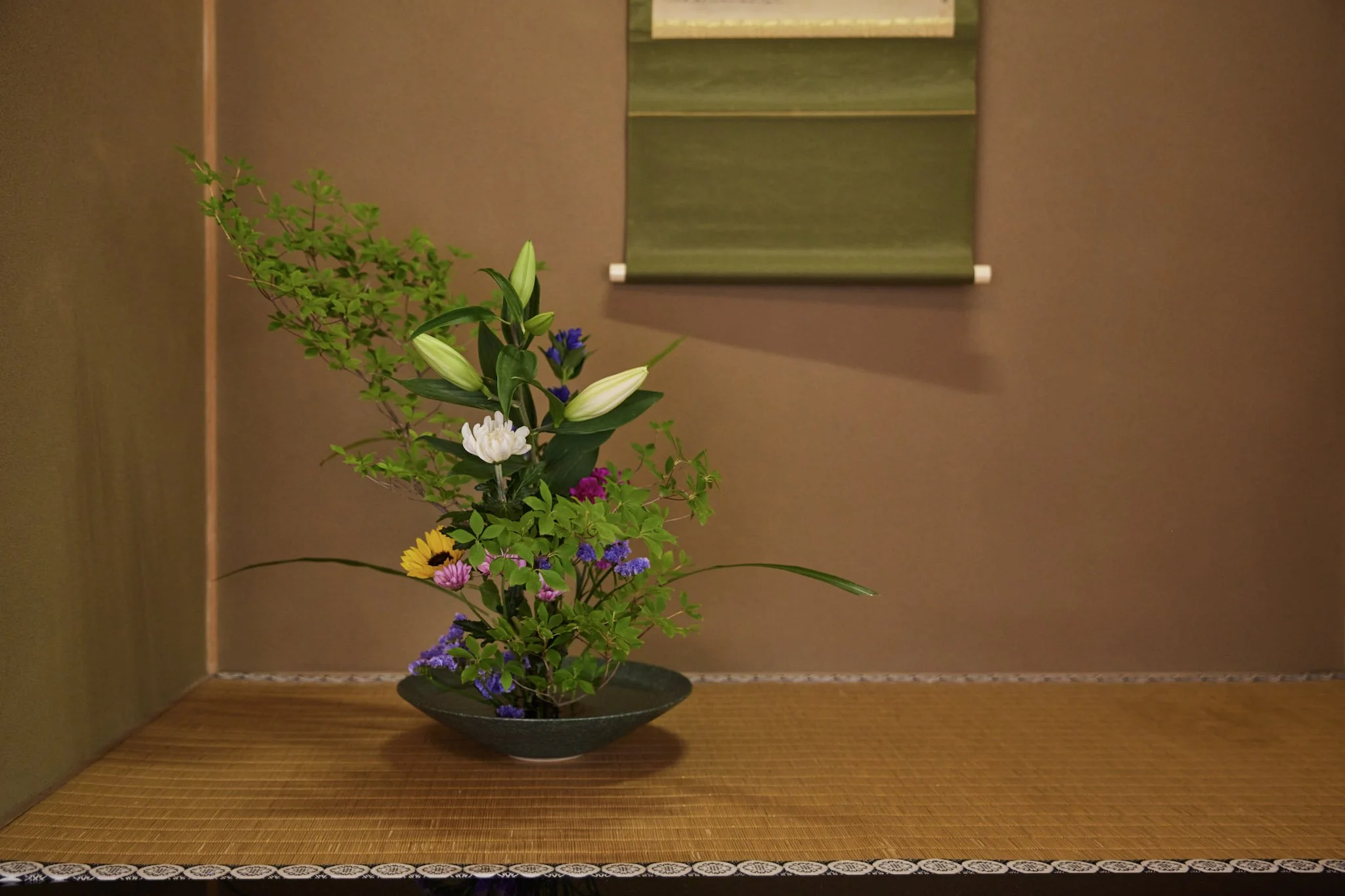
Arrange stunning seasonal flowers in a traditional tea room with an ikebana master
Ikebana (which translates directly to “bringing flowers to life”) is a flower-arranging practice that first emerged in Japan during the 6th century. Deeply rooted in ancient Buddhist traditions, ikebana is still widely practiced today and taught at approximately three thousand ikebana schools across Japan by professional Iemoto (ikebana instructors) worldwide. Continuing to evolve as an art form centuries beyond the 6th, today, we are inundated with creative and modern variations that have emerged since its inception.
But what is ikebana, why has it remained central to Japanese aesthetics for centuries, and how is it different from other forms of flower arrangement?
To answer what is ikebana, it’s essential to explore a deeper understanding of the differences between what we know as the western flower arranging practice and the art of ikebana through its historical background, teaching philosophy, arrangement styles, and its purpose.
How is Western Flower Arranging Different from Ikebana?
Florals as a decorative and artistic practice became prominent during the European Renaissance period, most notably in Italy. By the 17th and 18th centuries, during a period of global expansion and commerce, new and distinctive floral arrangements emerged across European countries. Arrangements were most often used in spaces of celebration or worship, including festivals, feasts, and pageants.
In Japan, during the Heian period (794 - 1185), Buddhist priests, who were responsible for caring for and arranging the Buddhist altar, incorporated flowers in their offerings. Eventually, in the 16th century during the Muromachi period, aesthetic and artistic practices were of large priority to aristocrats, which transferred a responsibility to doboshu (artist-monks) to execute the vision of these nobles–including the practice of floral arrangements, what we know as “ikebana” today.
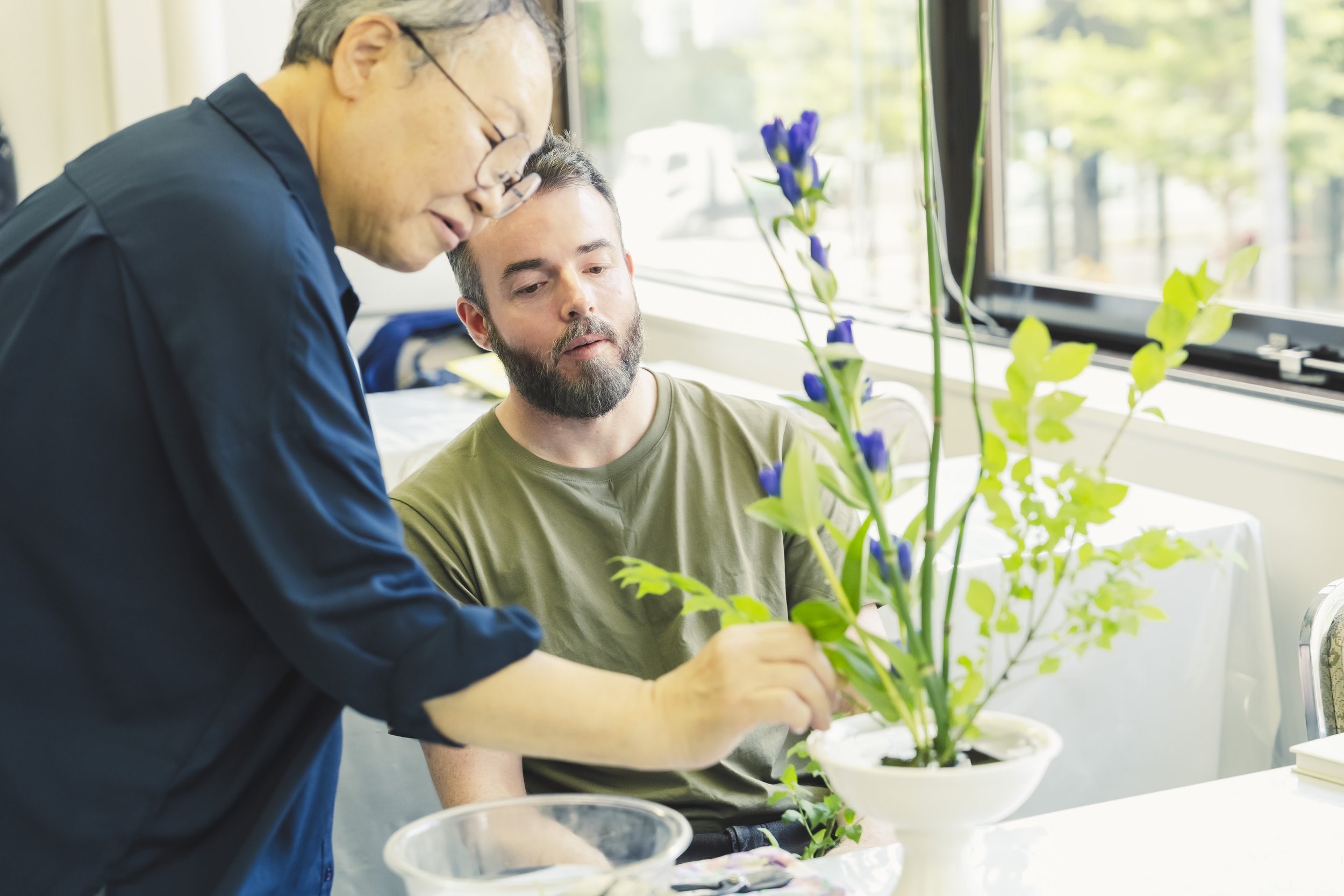
Create floral art in a peaceful Ohara-style ikebana lesson in the heart of Sapporo
How is Ikebana Different from Western Flower Arrangement
Western flower bouquets and arrangements, similar to their historical functions, place emphasis on fullness, boldness, and abundance. This ethos is represented in both color and size, as well as shape, which is overall formulaic, symmetrical, and triangular. Floral elements are tightly knit together surrounding the centerpiece, leaving minimal room between each component.
Ikebana, on the other hand, focuses on minimalism and asymmetrical elements. Traditionally, there are three main flowers in the arrangement: the middle at the highest point (representing heaven), another on its left (representing earth), and the shortest in positioning on the right-hand side (representing humanity).
There is a wide spacing between them, which also represents the Japanese philosophical concept of “ma,” where negative space or emptiness is viewed as an essential element of artistic composition. In addition, ikebana are asymmetrical in shape, representing and honoring the random combinations and occurrences of these elements occurring naturally in the environment. At its core, what is ikebana if not a reflection of harmony between nature and space?
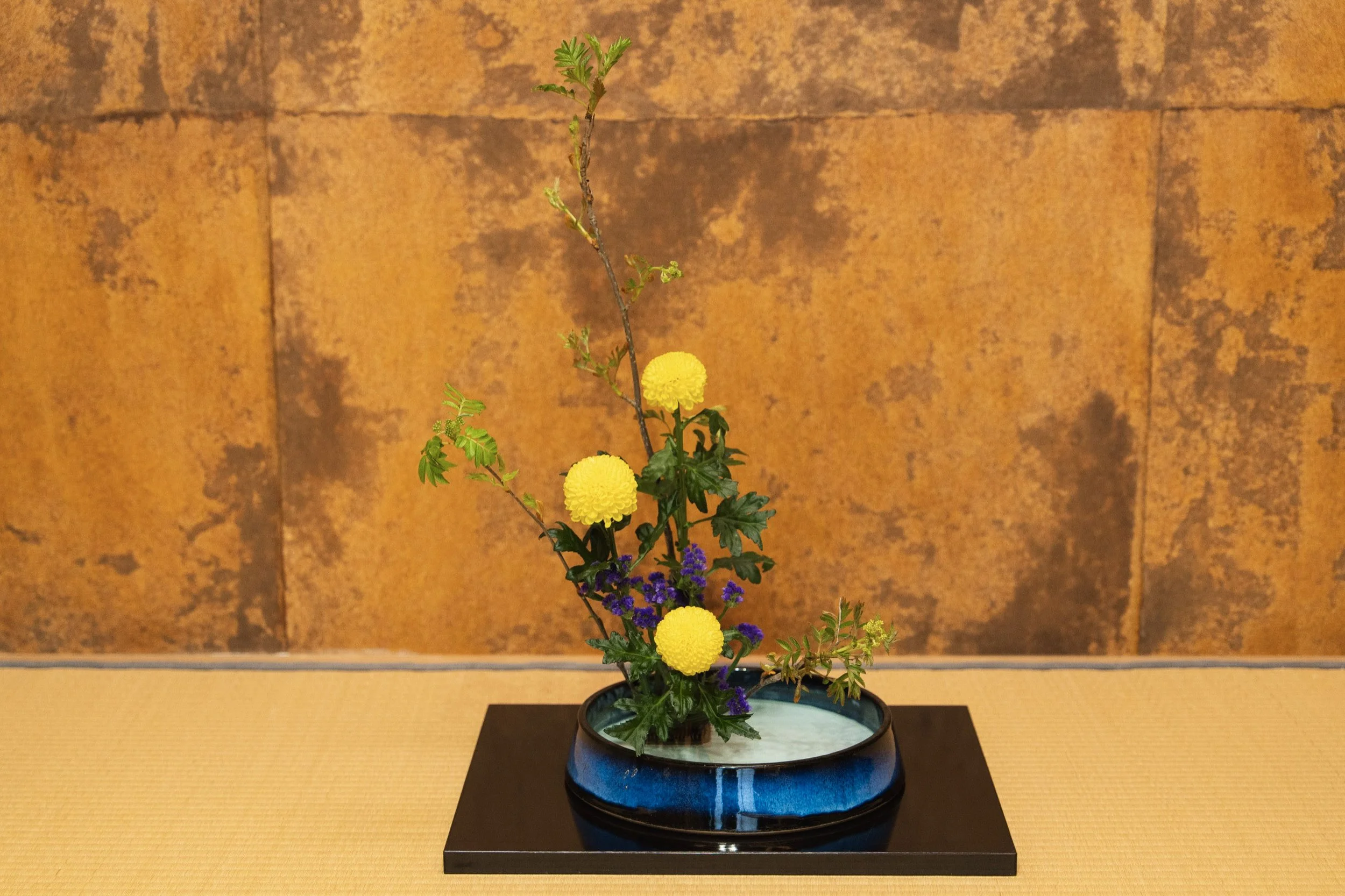
Immerse yourself in the traditional techniques of Japanese flower arrangement
What is the Purpose of Ikebana vs Western Flower Arranging
In the West, the concept of a "language of flowers” emerged in the Victorian era, and was a cultural practice communicating human emotion and sentiment through flowers. Symbols were then attached to flowers, helping one express their thoughts through bouquets. Today, floral arrangements are also a popular medium of expression, signifying an important right of passage or event such as a wedding, birthday, or anniversary.
In contrast, ikebana values a minimalist sensibility — one that emphasizes a delicate balance and harmony between humans and the natural world. The arrangement is meant to blend effortlessly into one’s daily and normal life, incorporating a visibly pleasing and natural element to the everyday — while they can be an addition to any celebration, an event is not necessary for their enjoyment. In fact, ikebana are often stationary, displayed in a tokonoma alcove, bringing in the beauty of the outdoors to the indoors.
Additionally, beyond simply assembling an assortment of blooms together, ikebana touches upon the beauty of decay and impermanence –a principle known as wabi-sabi– which emphasizes the flower’s journey from its seasonal peak to its eventual end.
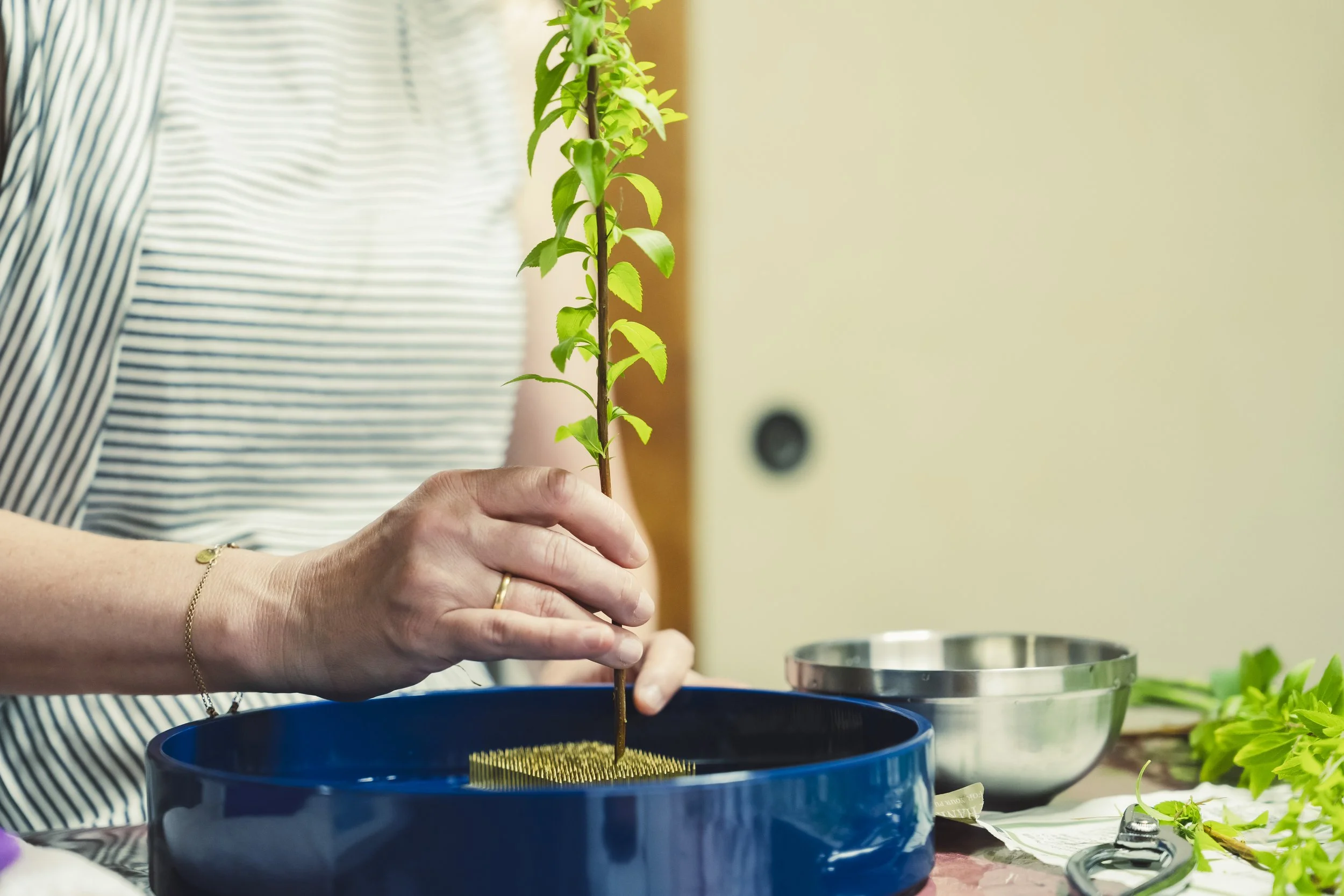
Experience the harmony of flowers and the artistic freedom of Sougetsu-style ikebana.
What is the Ikebana Teaching Philosophy vs Western Flower Arranging
To understand what is ikebana, it helps to look beyond flowers and into philosophy. In the West, floral design is taught with a large focus on design principles, structuring techniques, and proper flower care. Rather than having teachers instruct a codified curriculum or theory of thought, a greater emphasis is placed on different methods of shaping or styles, such as grouping, layering, or framing.
In Japan, Iemoto (heads and teachers of ikebana schools), in addition to teaching practitioners appropriate techniques, are equally responsible for imparting philosophical wisdom attached to their school of thought.
There are various types of ikebana schools across Japan, including Ikenobo (rooted in Buddhist principles), Sogetsu (rooted in individuality and creative freedom), and Enshu, which has strong ties to traditional tea ceremonies. However, beyond the main three schools, over 400 other schools of ikebana exist within Japan, each infusing their own techniques and perspectives into the art of flowers.
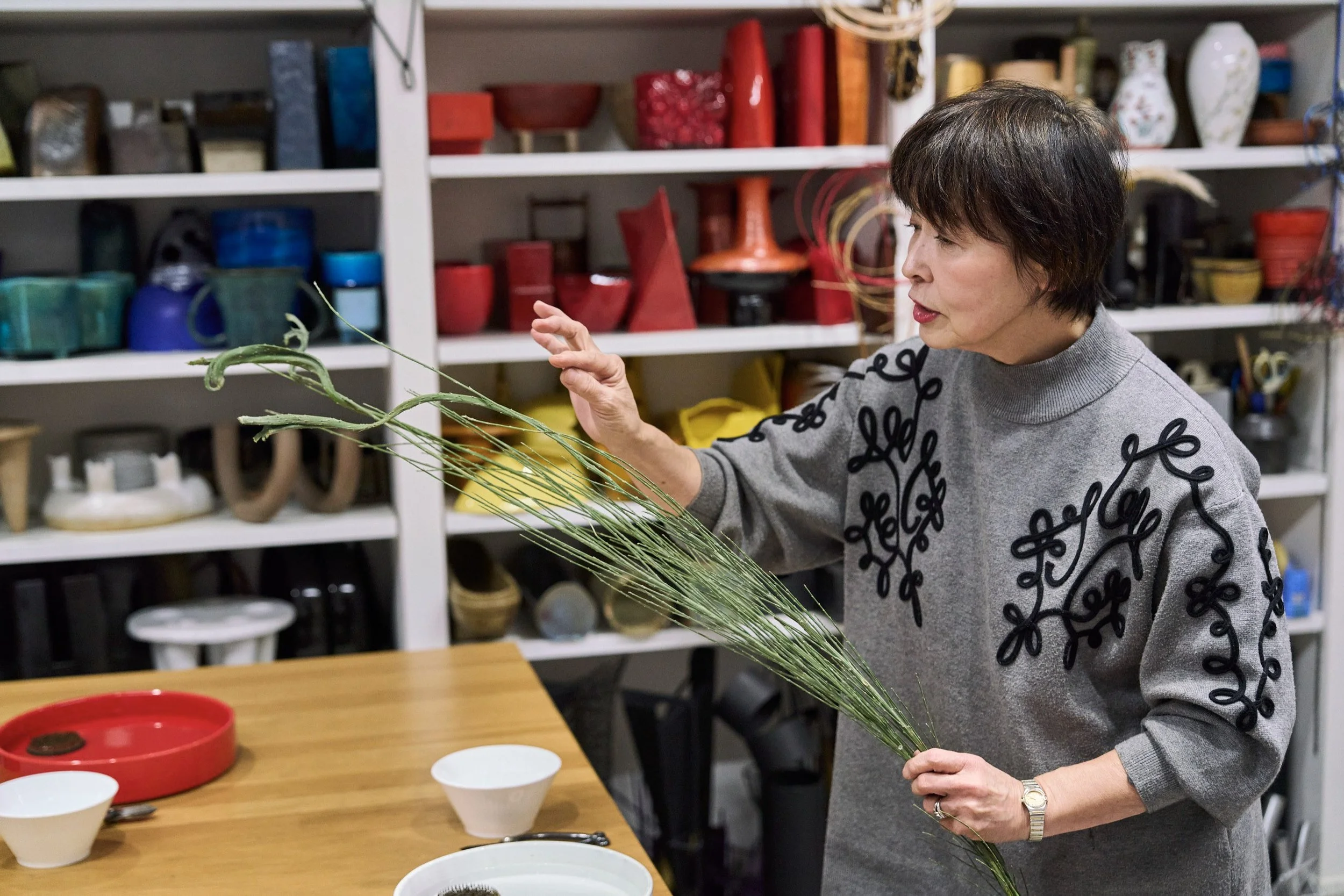
Unleash floral creativity in an ikebana workshop led by head Sogetsu instructors
Western Arrangement and Ikebana in Japan Now
In Japan today, standing parallel to ikebana practices, western flower arranging classes are equally available — and it is not unusual for romantic gestures to be conveyed by way of gifting western-style bouquets on Valentine’s Day and White Day. Despite differences in styles, there remains mutual appreciation for both cultural traditions.
Ikebana has also expanded beyond the confines of a tatami room, from ikebana-inspired digital art displayed at Nijo Castle in Kyoto to VR Ikebana-making experiences, allowing the history and philosophy of ikebana arrangement stand the test of time in this modern age. Through this, what is ikebana becomes less a question and more an experience.
Ikebana Workshops in Japan
For travelers curious about what is ikebana, hands-on ikebana workshops in places like Kansai or Kanto offer direct insight into this timeless cultural practice. Deeper Japan collaborates with some of Japan’s top ikebana instructors to offer in-depth immersions that showcase the elegant beauty and technical practices of ikebana arrangement.
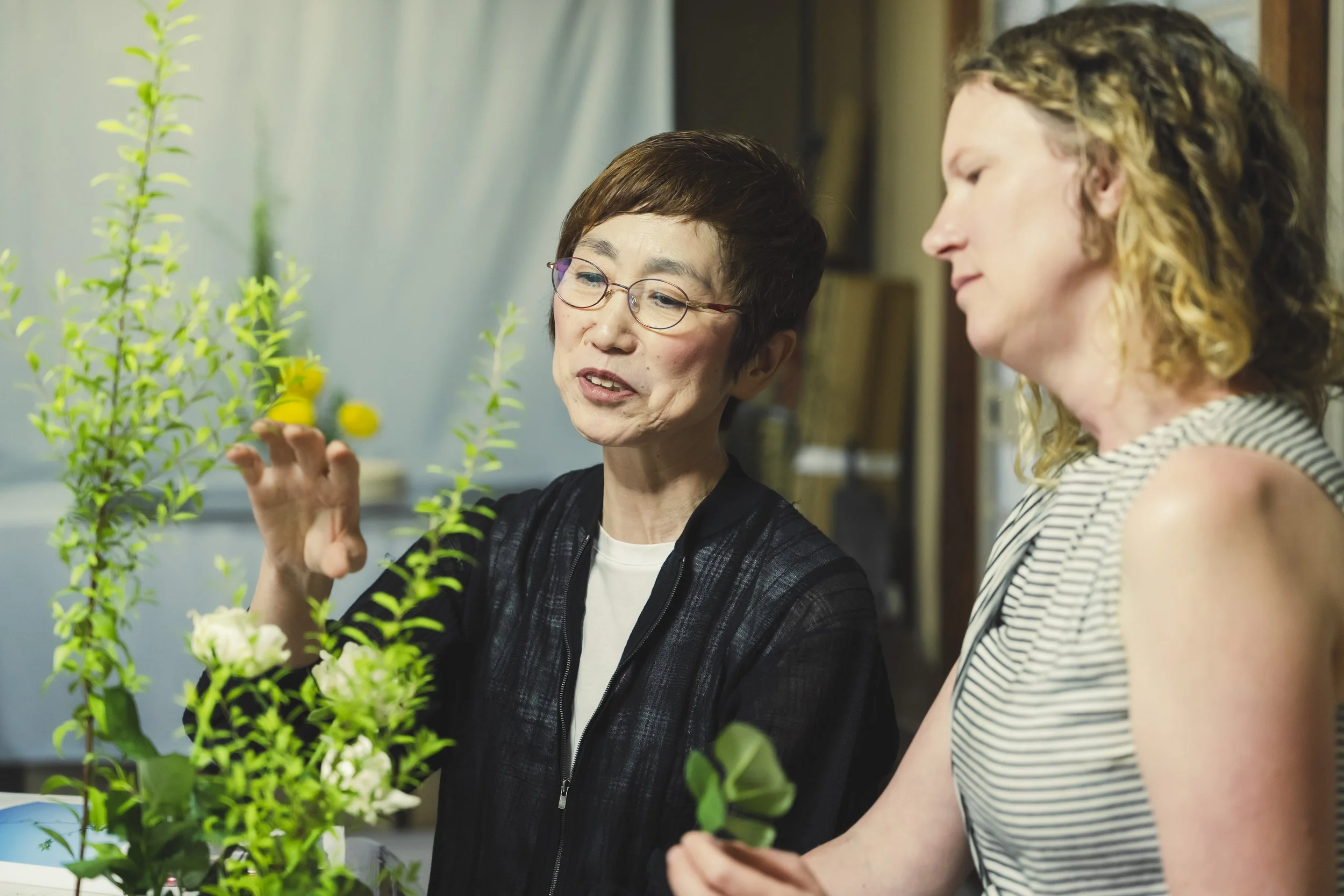
About the Author: Mishu Callan is a Tokyo-based freelance writer whose work has appeared in The Japan Times and Voyapon. Her work focuses on Japanese travel and culture, with a particular emphasis on the communities, places, and tastes that reveal a lesser-known side of Japan.
FAQ: Ikebana
-
Ikebana is the traditional Japanese art of flower arranging. Originating in the 6th century through Buddhist floral offerings, ikebana emphasizes harmony, balance, and the relationship between nature and human expression—distinguishing it from purely decorative floral design.
-
-
Most ikebana arrangements are built around three core elements representing:
Heaven
Earth
Human
Spacing (known as ma) is equally important, creating a sense of intentional emptiness that enhances the composition rather than filling it.
-
Yes. Ikebana is highly accessible to beginners, and many experiences are designed for first-time participants. Deeper Japan offers guided sessions with various top-ranking ikebana instructors that introduce fundamental principles while allowing for personal interpretation.
-
Ikebana uses seasonal flowers and natural materials, including cherry blossoms, chrysanthemums, irises, lilies, and branches like pine or bamboo. The focus is on seasonality and natural shape, so what’s used changes throughout the year, including in hands-on ikebana experiences in Tokyo, Kyoto, or anywhere across Japan.

Set against the stunning backdrop of Mt. Fuji, explore lush forests on horseback