
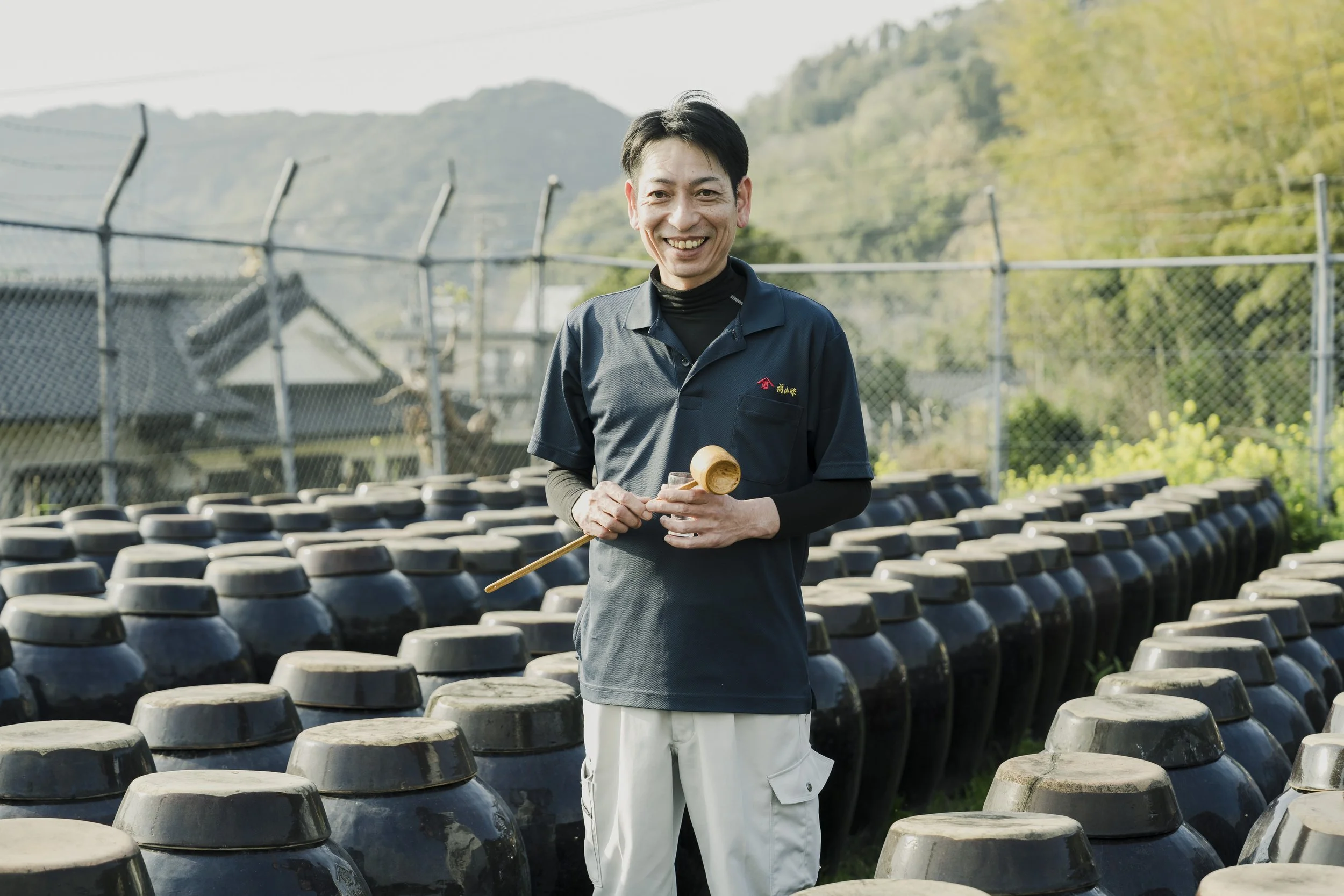
Meet Yuji, Black Vinegar Brewer
“For us, this is what authentic black vinegar looks like, and we take great pride in preserving this method.”
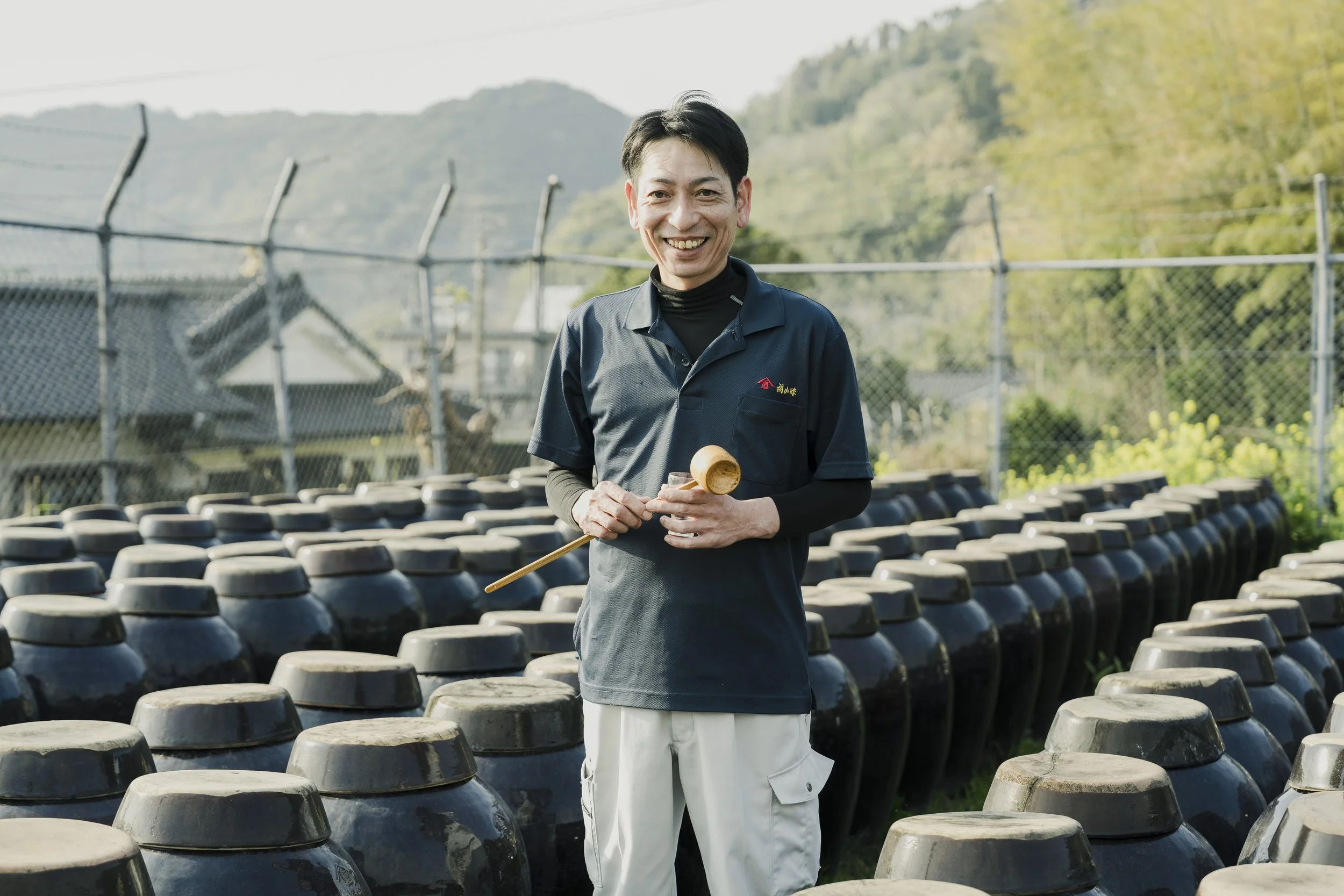
Amongst the wide-range of fermented Japanese culinary staples, black vinegar humbly brings a balance of sour and sweet to the palette.
Hundreds of matte black earthenware pots stretch across the hillside beneath the warm Kagoshima sun, each quietly nurturing a living fermentation.
Beyond them, the volcanic silhouette of Sakurajima rises above the bay: a reminder of the natural forces shaping the landscape, and the traditions that thrive within it. For more than two centuries, these pots have produced one of Japan's most distinctive fermented ingredients: black vinegar. Crafted using little more than rice, water, and koji, each batch begins its journey in the open air, shaped by the climate and surrounding environment.
While soy sauce, miso, and sake often define Japan's rich fermentation culture, black vinegar remains one of its quieter treasures, with a mellow bite of acidity and complex depth of flavor.
At this historic brewery, visitors step into a world where generations of brewers have preserved a craft that transforms simple ingredients into one of Japan's most complex and expressive condiments.
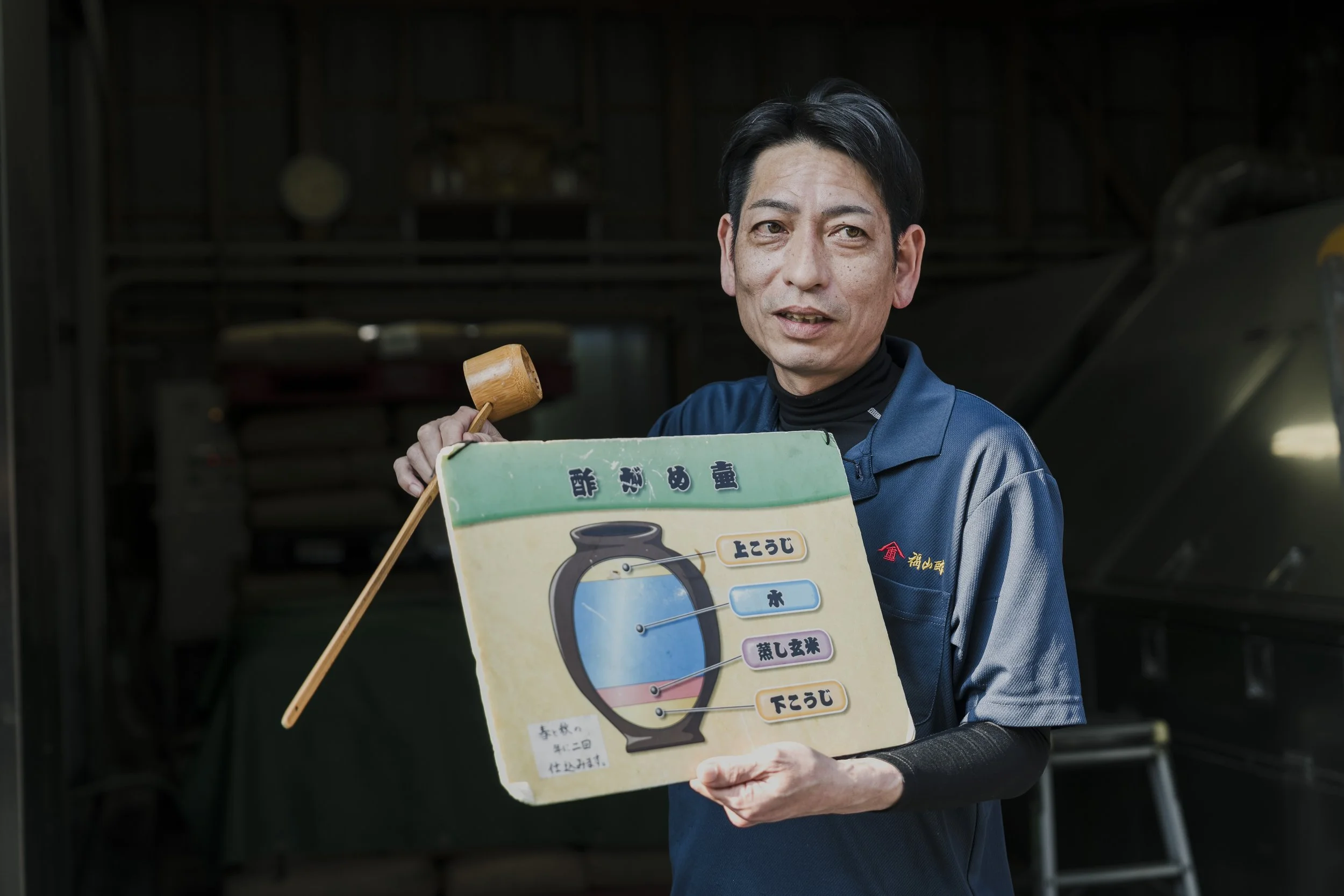
Q: To begin, could you tell us a little about your company? What kind of company is it, what do you produce, and what is the history of both the company and this region?
A: At our black vinegar brewery, we’re now in its sixth generation of producing black vinegar. Since the company’s founding, it has continued to make black vinegar using traditional earthenware jars (kame-tsubo) in open-air fermentation.
Fukuyama has a history of more than 200 years as Japan's center for jar-fermented black vinegar production. The company has been part of that tradition since the very beginning, preserving the same production methods that have been passed down through generations.
Q: Is there anything that particularly defines your philosophy or what you are most committed to in your production?
A: The philosophy I inherited from the current company president is simple: everything begins with making excellent koji.
We often say, "First, second, and third—it's all about the koji." If you make good koji, you can make good vinegar. Because of that belief, we devote tremendous care and attention to the koji-making process. It's probably the stage where we're the most meticulous, because it ultimately determines the quality of the finished vinegar.
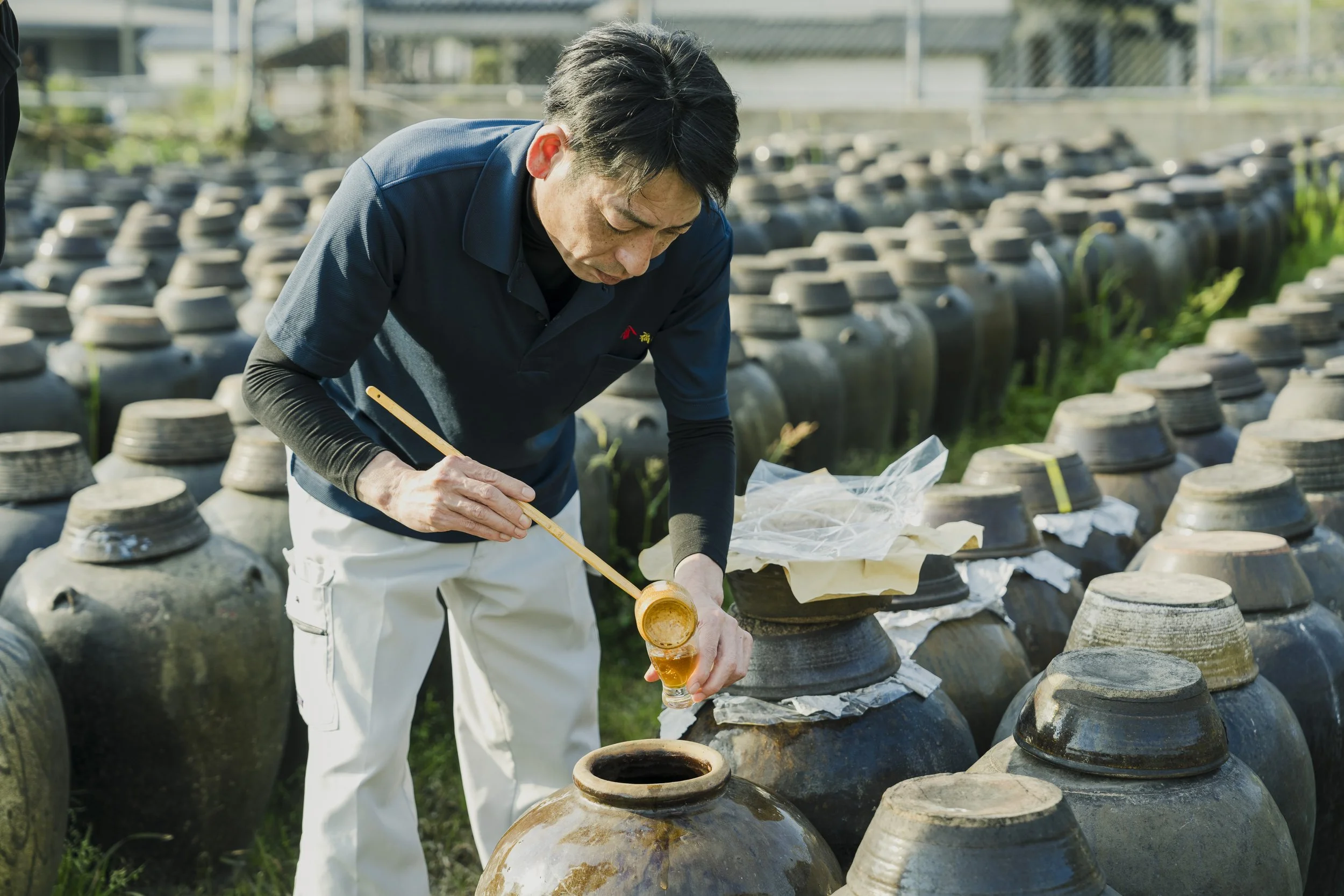
Q2: I'd also like to ask about your own journey. How did you become involved in this work?
A: I grew up here in this region. From kindergarten through high school, this community was my home.
Over the years, many young people have left for larger cities, and the population has gradually become older. I, however, chose to stay in Kagoshima.
Another important connection is my mother. She worked for this company until she was 70 years old, and in many ways, the company helped support and raise my family. That became a meaningful connection for me. I wouldn't necessarily call it repaying a debt, but I wanted to contribute to the company that had been so important to my mother and to help share this region's traditional vinegar-making culture with people throughout Japan and around the world.
Q2: Earlier, we spoke about the history of the region, but could you also explain why Fukuyama is such an ideal place for making black vinegar?
A: One of the greatest advantages of Fukuyama is its stable climate. There is very little difference between summer and winter temperatures, creating an ideal environment for the microorganisms involved in fermentation.
We rarely experience heavy snow or prolonged freezing conditions. Since this vinegar is fermented outdoors in earthenware jars without artificial temperature control, having a mild, consistent climate is extremely important. The natural environment here is perfectly suited to this traditional method of fermentation.
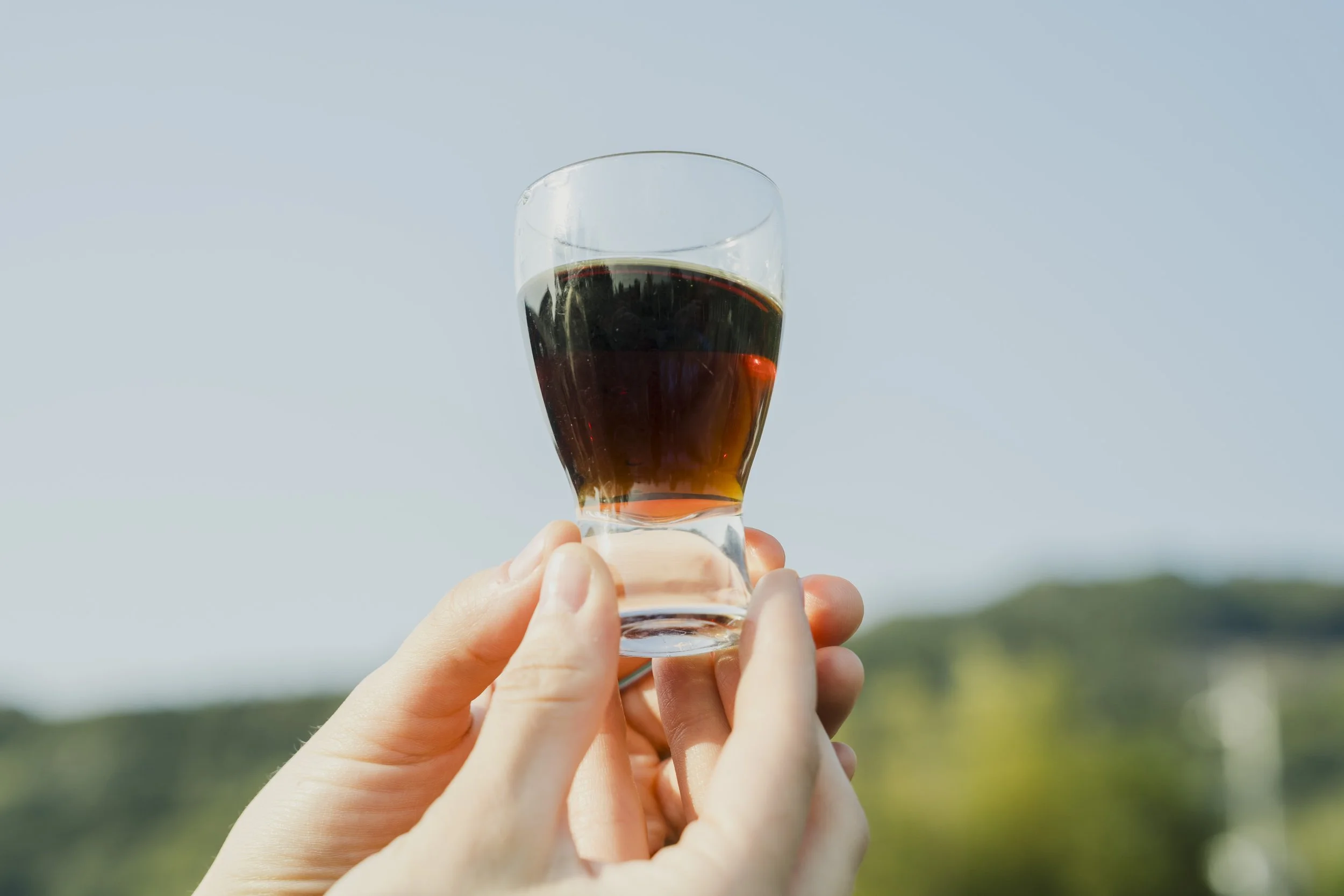
Q3: For guests who make the journey all the way here, what do you hope they'll experience? What do you think they'll find most interesting?
A: There are many different ways to produce black vinegar today. Some producers use carefully controlled tanks, while others, like us, continue to use traditional earthenware jars.
For us, this is what authentic black vinegar looks like, and we take great pride in preserving this method.
When visitors come, I'd like to personally guide them through the fermentation area and show them the different stages of the process. It's something that very few people have the opportunity to see, and I hope they experience it not simply as a factory tour, but as a part of Japan's traditional culture.
I also hope they take those memories home with them. Perhaps what they see here will inspire new ideas or perspectives in their own countries. At the same time, I enjoy hearing the thoughts and impressions of overseas visitors. Their perspectives often inspire us as well, and I'm always open to incorporating new ideas while continuing to protect our traditions.
Above all, I hope everyone who visits truly enjoys the experience.
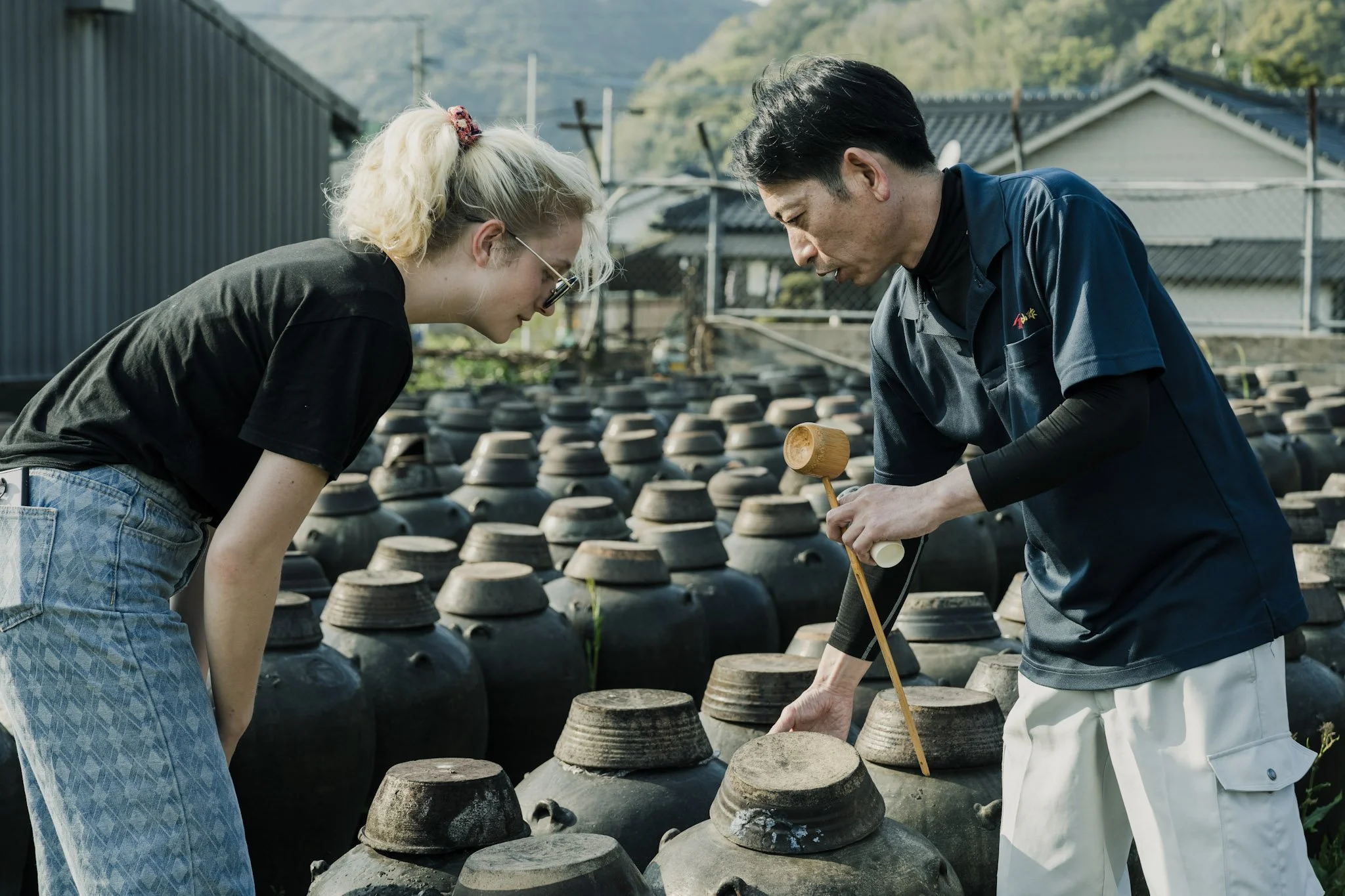
Immerse in Japan's traditions of fermentation, surrounded by scenic coastal views
Yuji-san encourages all visitors to take a private tour of this 200-year-old vinegar brewery in Kagoshima to learn more about the natural brewing process of black vinegar. Surrounded by peaceful landscapes, find out more about the outdoor fermentation process of a 6-generation-owned vinegar brewery.
Tour an outdoor black vinegar distillery and experience the authentic, rich taste of traditional black vinegar made from open-air jars.
Meet More Masters

Discover Cultural Experiences


Get right next to the action and observe an authentic sumo training session