
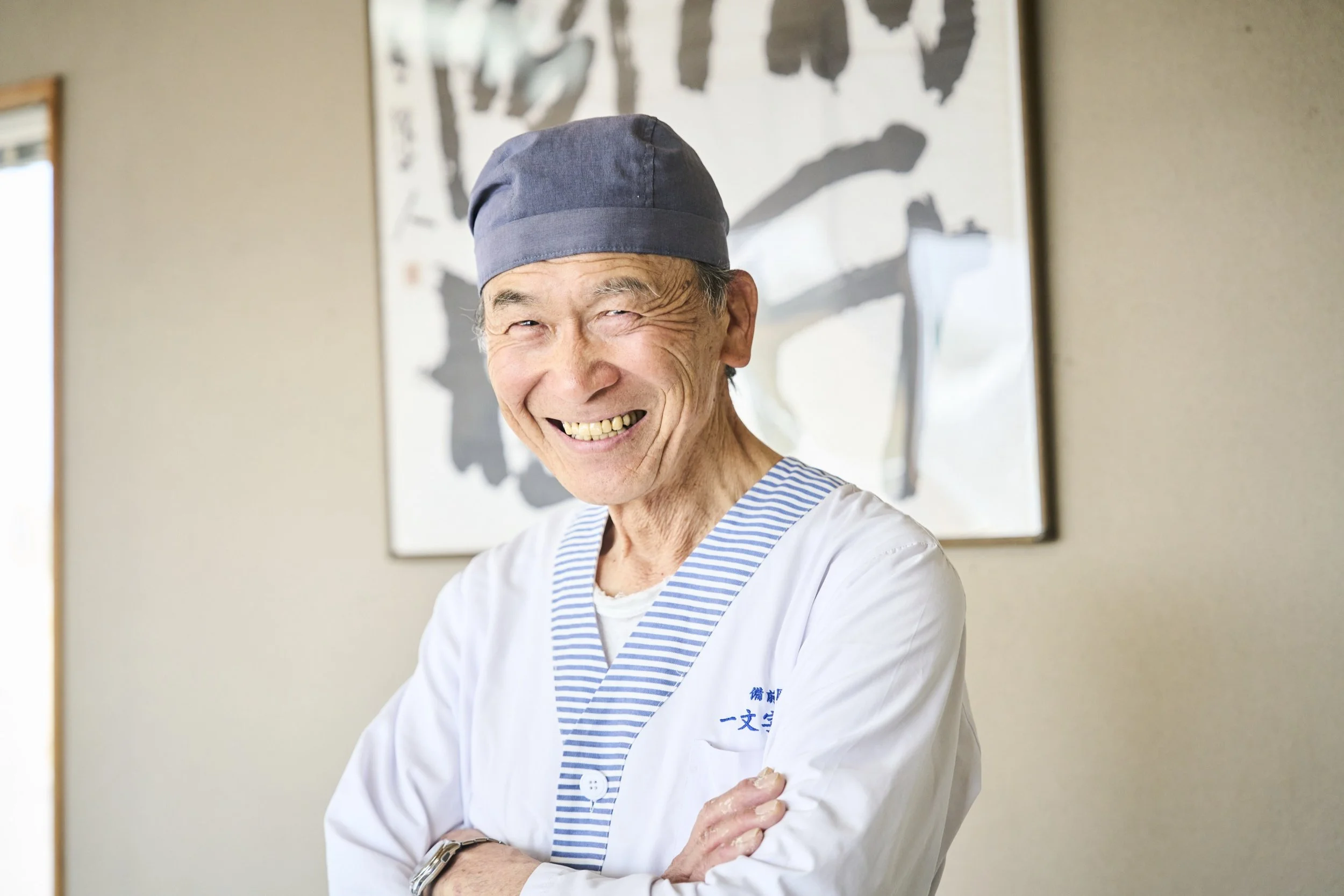
Meet Hidechiyo, Udon Chef
“Fortunately, by owning a stone mill, I have been able to recreate that local cycle, and I believe that is what allows this restaurant to produce udon with a genuine regional character.”
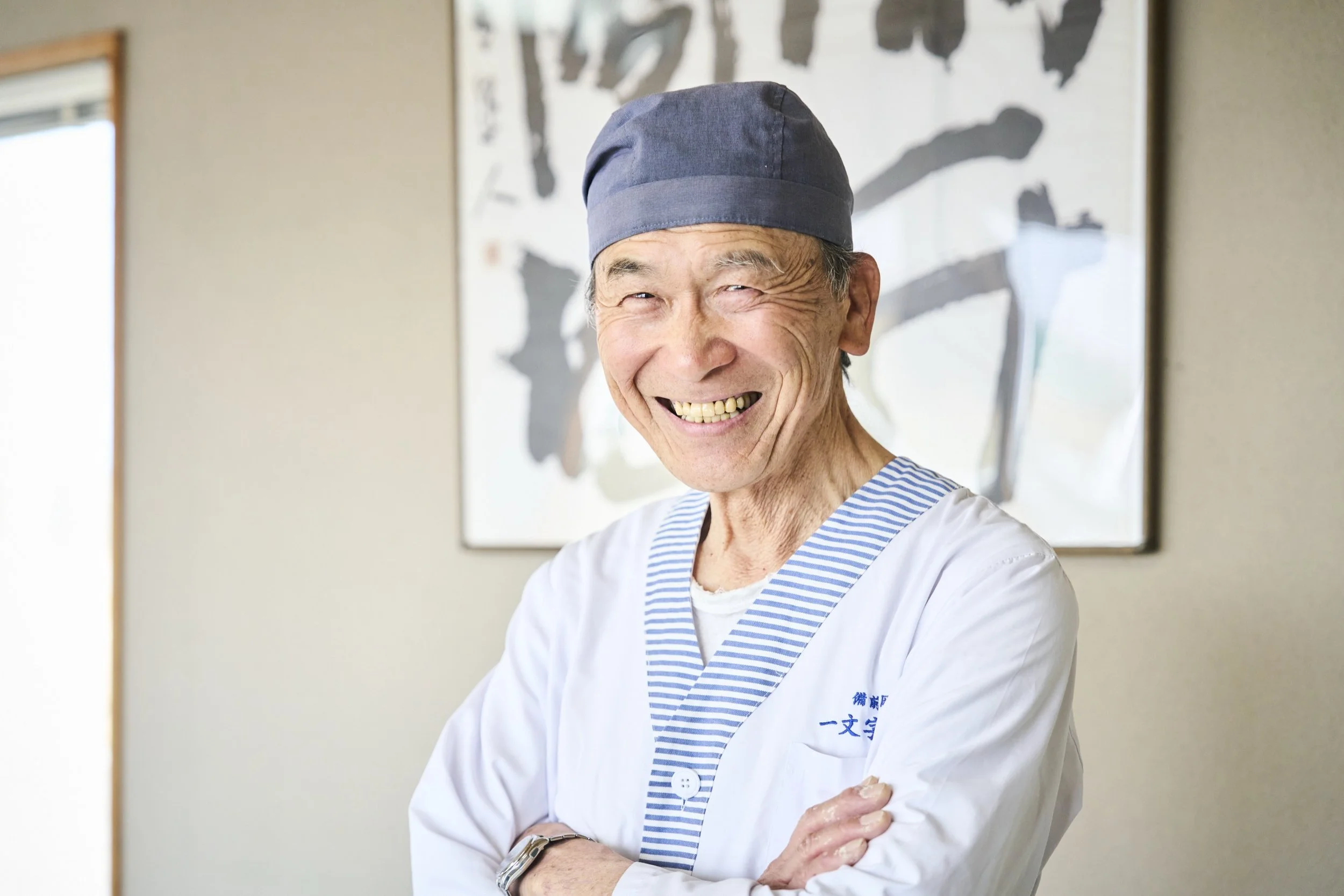
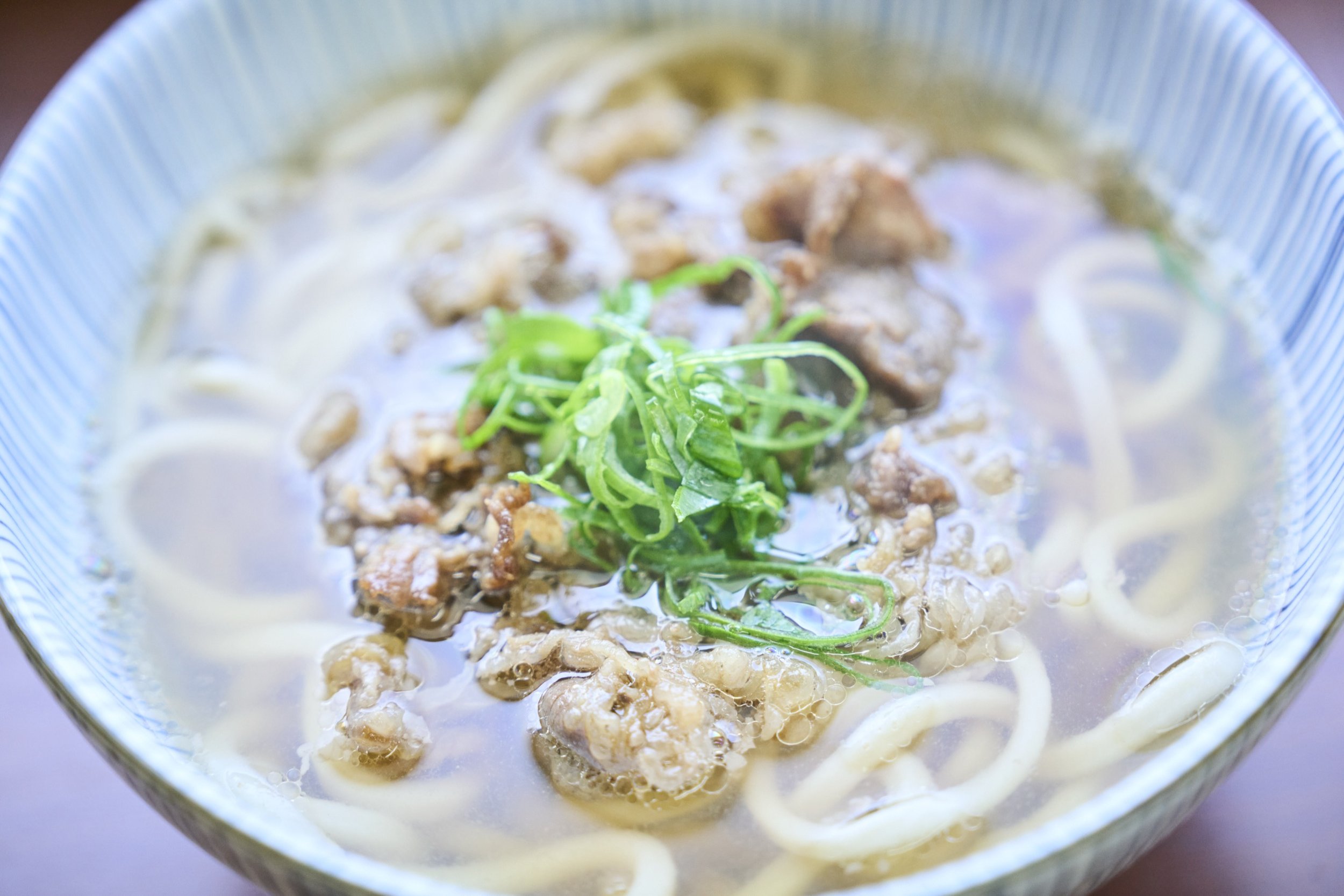
Firm, springy, and imbued with an earthy taste lingering from the milled wheat, udon is a dish with endless variety.
Surrounded by verdant fields, gently flowing streams, and centuries-old farmhouses, this third-generation udon restaurant sits at the heart of rural Okayama. Here, wheat ripens in the neighboring fields before being milled in-house using carefully calibrated machinery designed to preserve its natural character, forming the foundation of every bowl.
Dating back to at least the eighth century, udon has long been a cornerstone of Japanese cuisine. With little more than flour, salt, and water, each noodle brings delicate flavor through careful simplicity, where subtle differences in ingredients, kneading, and texture define the final result. Whether served in a light broth or paired with seasonal toppings, its appeal is enduring.
From homegrown ingredients to meticulously crafted noodles, every bowl upholds family legacy—and a taste that can be found nowhere else.
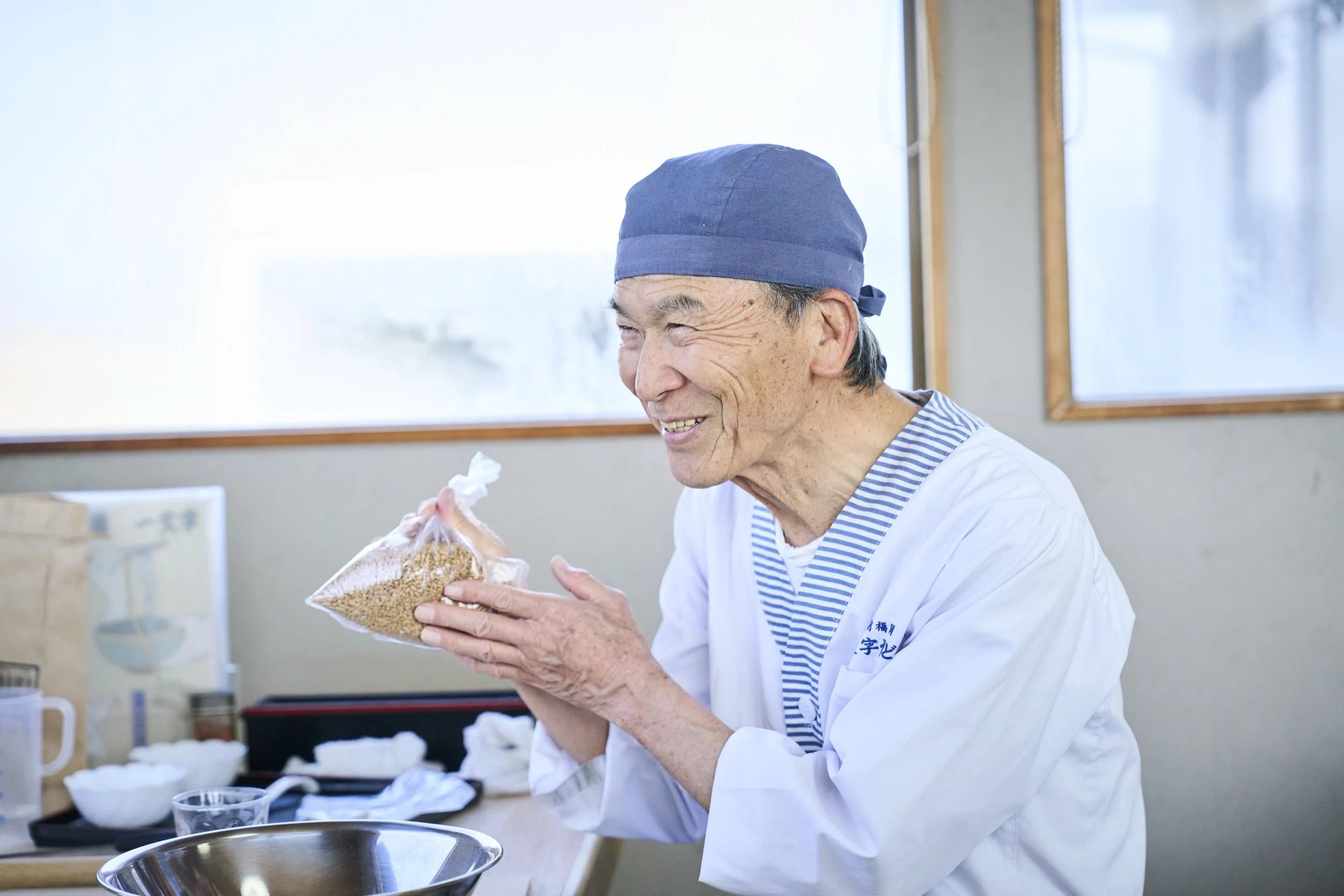
Q1: Could you tell us a little about this udon shop? What kind of restaurant is it, what is this region like, and what are some of the things that make both the shop and the area unique?
A: This year marks the 43rd year since our shop first opened.
Originally, this started as a self-service udon restaurant. In fact, the self-service style itself originated here in Okayama Prefecture, and I believe our shop is probably the second-oldest self-service udon restaurant in the prefecture.
My father and mother started the business and their concept was simple: 100-yen udon. They wanted local people to be able to come in and enjoy a bowl of udon casually and affordably.
My mother, in particular, became quite well known in the community. People affectionately called her "the udon lady," and she built close relationships with our customers. She was committed to keeping the price at 100 yen and refused to raise it for many years.
I am the second-generation owner.
Originally, I worked as a salaryman in Tokyo, but about 33 years ago my mother became ill and could no longer continue running the restaurant. My father contacted me and said, "If you're not coming back, I think it's time to close the udon shop."
I was 40 years old at the time, and I’d always thought that the countryside would be a better place to raise a family in the future, so I planned to move back to the countryside and run the udon shop myself. I loved this udon too, and I knew how important the shop had become to the local community.
I had imagined returning around retirement age, but everything happened about fifteen years earlier than expected. I realized I had to make a decision, so I resigned from my company and moved back home.
When I returned in 1993, I found that, as is still true today, this area had become an aging community. Many of the people living here were elderly, and the town no longer had the vitality it once did.
I wanted to help bring back some of that energy. Of course, one person alone can't accomplish much.
Since I was taking over a restaurant, I knew I would be working with food, and my family also owned rice fields, so I thought I could connect agriculture with food. I wanted to build something that linked farming and cooking together, so I started by growing vegetables and rice.
While doing that, my wife was talking with a friend in Tokyo and mentioned that we ran an udon shop where we grow our own vegetables and rice. Her friend was someone who cared deeply about food, and she replied, "But your wheat is imported, isn't it?"
Hearing that surprised me.
At the time I had only recently left Tokyo myself, and my immediate reaction was, "People from Tokyo just don't understand farming. Of course you can't grow wheat."
But then I stopped to think about it.
Udon is one of Japan's traditional foods. So why would it be impossible to make udon entirely from Japanese wheat?
Around that same time there was a television commercial for Nisshin Foods featuring Arnold Schwarzenegger promoting cup noodles as "Japanese udon." I remember thinking that seemed strange as well.
So I began searching for domestically grown wheat.
It wasn't easy to find, but then I happened to read a newspaper article about a neighboring town where a variety called hakusai wheat was grown. It was considered ideal for making udon, and they even held an annual udon festival celebrating it.
As soon as I read the article, I went there.
I was able to obtain some wheat and make udon with it, and the results were excellent. I asked if I could continue purchasing it, but they told me there wasn't any left.
Since I had farmland, I asked if they could simply provide me with wheat seed instead.
To keep a long story short, that's how it all began.
The restaurant’s name is inspired by the nearby school of swordsmiths, who once lived in this region and produced extraordinarily beautiful swords. The most famous of their works is a tachi (Japanese curved long sword) known as Sanchoumou.
My parents named the restaurant after the school because they wanted the name to reflect the history of this region. Since the restaurant already carried a name rooted in local history, I wanted to focus even more on preserving regional traditions.
One of the first things I did was revive a local dish called dodomese, a traditional regional specialty and the origin of modern chirashi-zushi. There was no place where people could regularly eat it anymore, so I was encouraged to serve it at my restaurant, and eventually it was added to the menu.
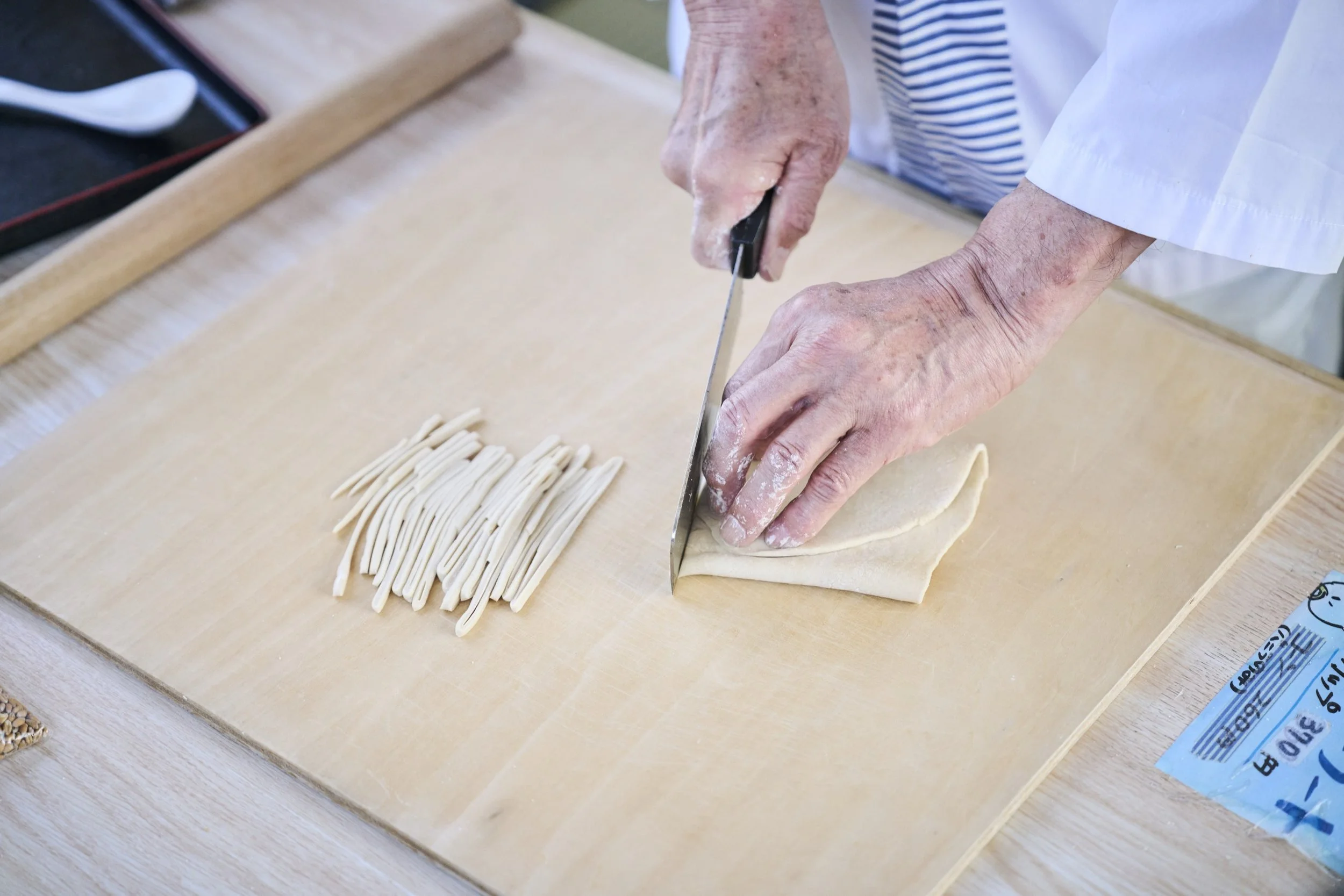
At the same time, I wanted to make udon using locally grown wheat. Although I had succeeded in growing wheat and obtaining the grain, there was no local milling system that could process small quantities into flour. So I purchased a traditional stone mill and began milling my own flour. That was how I was able to connect local agriculture with the food I served.
To be honest, the noodles weren't very good in the beginning. I spent years researching and improving the milling methods, and I believe I have finally reached the point where I can produce delicious udon that truly showcases the character of the local wheat.
Q2: When visitors come here in the future and experience this workshop, what do you hope they will feel? What do you hope they will enjoy most?
Udon is one of Japan's traditional foods. From Hokkaido in the north to Kyushu in the south, you can find udon throughout the country. But traditionally, each region made udon using its own local ingredients. That is what created each area's unique style—what you might call regional udon.
To achieve that, the wheat has to be grown locally, milled properly so that it produces high-quality flour, and then turned into noodles. That entire chain is essential. It's easy to say, but very difficult to accomplish in practice.
The reason is that wheat is no longer distributed locally. Rice still circulates within local communities, but wheat has become centralized through the major flour milling companies, making local distribution extremely difficult.
Fortunately, by owning a stone mill, I have been able to recreate that local cycle, and I believe that is what allows this restaurant to produce udon with a genuine regional character.
Historically, this area became sandy because of repeated flooding from the Yoshii River, making it particularly well suited to growing wheat. The region has also long practiced double cropping, producing both rice and wheat, making it an especially fertile agricultural area.
Our town is a place where people have lived continuously from ancient times to the present. It has been a prosperous region with relatively few natural disasters, and over many centuries that has shaped both the local culture and the character of its people.
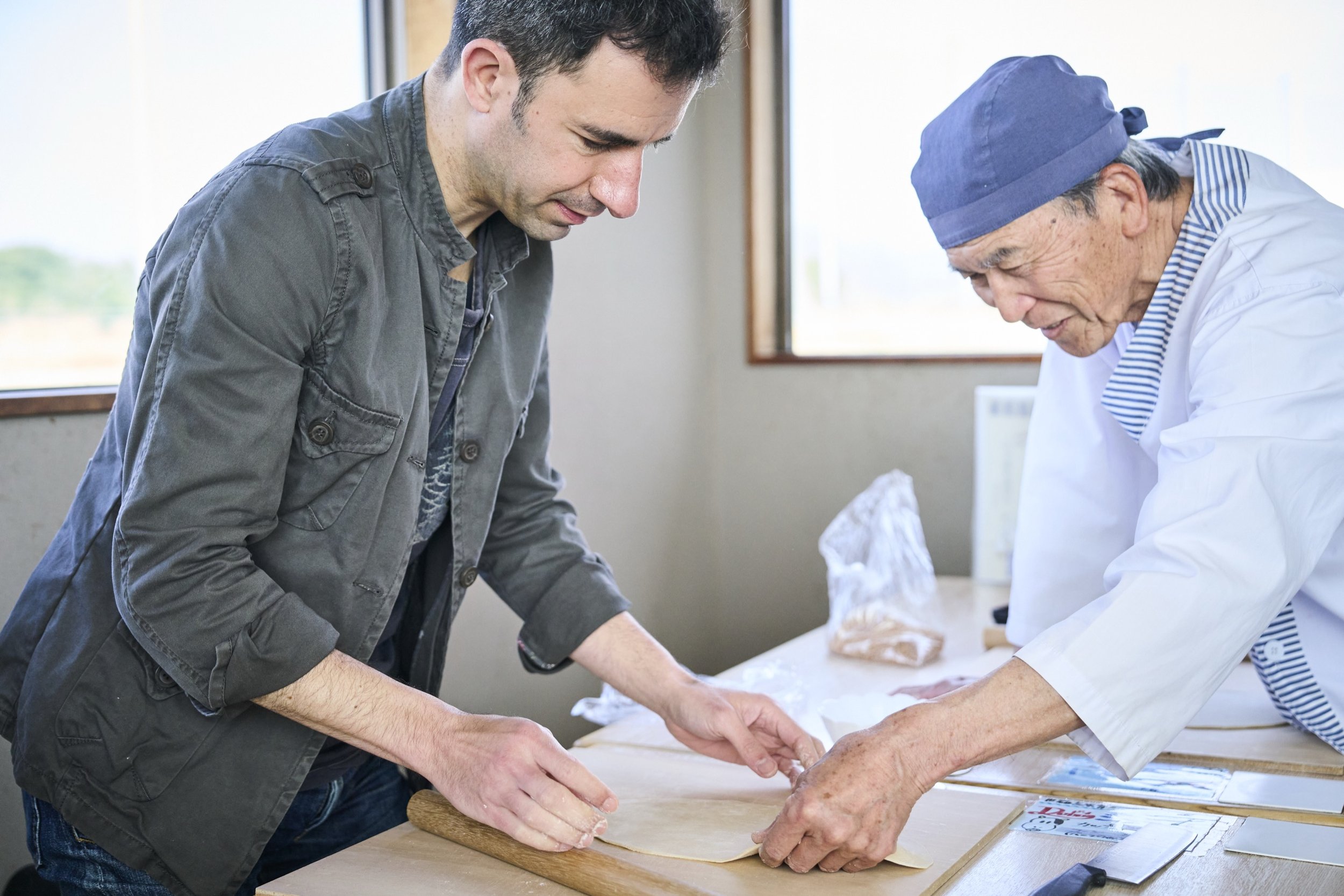
Taste local culinary legacy crafted by your own hands, led by a seasoned udon chef
Amongst the peaceful rural landscape and lush agriculture, Hidechiyo’s self-grown wheat field provides the best ingredients for his handmade udon noodles. Taste the natural local flavors Okayama has to offer within each chewy noodle, crunchy tempura, and fresh vegetable.
Tour Hidechiyo’s now third-generation udon restaurant and learn how to hand-make your own udon bowl that transforms from simple grain to delectable noodle.
Meet More Masters

Discover Cultural Experiences


Get right next to the action and observe an authentic sumo training session