From Alleyway Kitchens to Avante-Garde: Japanese Ramen Through The Years
An iconic dish packed with powerful flavor, ramen’s road to becoming classic Japanese cuisine is filled with history—and it continues to evolve both new traditions and new tastes.
When I met ramen expert and tour guide Frank Striegl to interview him for a book I was writing, I was surprised on two counts. First, he had too trim a figure for someone who ate carbs for a living – he reckoned he’d eaten in 2,000 noodle shops, give or take. Second, he explained why ramen might just be the most innovative space in Japan’s culinary scene. Japanese chefs have been known for their reluctance to fiddle with timeworn recipes, but ramen, he told me, invites improvisation.
I thought about this on the train journey home, my stomach heavy from the gelatinous mapo tofu ramen I’d just wolfed down for lunch, and it began to make more sense. Ramen is often considered a quintessentially Japanese dish. There are different styles dictated by region – tonkotsu in Fukuoka, miso in Sapporo, shoyu in Tokyo – and shops that have been in operation for decades, where second- or third-generation chefs cook the same umami broth and serve the same stringy noodles as their forefathers did before them. But this is a mere snapshot of the ramen scene.
Some restaurants serve vegan ramen, or red-hot broths full of chilli and spices, or French-inspired ramen flavored with duck bones and scallops. Afuri, a chain known for its zesty yuzu-infused broths and meat-free options, is popular despite its willingness to play with culinary conventions. At Menbaka in Kyoto, the chefs turn the signature soup into a pyrotechnic display, giving it a sumptuous charred flavor. Tokyo’s social-media-famous Kipposhi shop serves a ramen broth that’s bluer than the waters of an Okinawa beach. Indeed, as I’d just realized, you can eat ramen with left-field combos like mapo tofu, a Sichuan dish of spicy, oily tofu with minced beef.
The purists don’t always love this exercise in throwing paint all over the canvas. Some would argue whether a dish of soupless noodles topped with bacon, fried onions, and shaved parmesan — the specialty in a noodle joint near Azabudai Hills — even constitutes ramen. But it would be beside the point. Since that first ramen broth was simmered in a Tokyo kitchen in 1910, the dish has been a playground for innovation.
From Across the East China Sea
When Japan opened its ports to international trade in the 1850s, bringing an end to more than two centuries of national isolation, Chinese immigrants were among the first wave of foreign arrivals. Coming from Hong Kong, Guangdong, Fujian, and Shanghai, many worked for the Western businessmen establishing operations in coastal cities like Nagasaki and Yokohama. Initially, they acted as brokers, middlemen and translators, aided by their use of a common script with the Japanese. But following the 1871 Treaty of Friendship and Commerce between Japan and the Qing Dynasty, economic opportunities for Chinese migrants broadened and they began to establish themselves as merchants and traders in their own rights.
These Chinese settlers were a significant, if sometimes overlooked, influence on Meiji-era Japan. In Yokohama, just 20 miles south of Tokyo, there were as many as 200 private Chinese enterprises operating by 1890, around double the number from all other nations combined. It was a continuation of the influence China had exerted on Japan for centuries. Many Japanese cultural hallmarks — Zen Buddhism, paper-making, the tea ceremony, ink painting, calligraphy, garden design, and temple architecture — are adaptations of ancient Chinese imports that would develop their own character under Japanese stewardship. Even rice, wheat noodles, soy beans, and citrus like yuzu and mikan became staples in the Japanese diet only after they were introduced by travelers from mainland East Asia.
In Yokohama – still home to Japan’s largest Chinatown – the Chinese quarter arose on swampy, coastal land, formerly used for cultivating rice. Many Japanese at that time, already resentful that the Chinese were given “special treatment” by Western traders, deemed Chinatown unsavory, a place rife with mosquitoes and disease, full of shady dealers and drunken sailors, where laborers urinated with abandon in the foul-smelling alleys. It was anathema to a culture that saw itself as an exemplar of refinement. Unsurprisingly, the Japanese rarely ventured into Yokohama’s Chinatown, and as a rule, wanted nothing to do with the punchy, aromatic food being cooked in its kitchens.
“This changed after the turn of the century,” writes Katarzyna Joanna Cwiertka in Modern Japanese Cuisine: Food, Power and National Identity. “Japan's confidence in the international arena increased and the infatuation with the West cooled off. The time was ripe for the Chinese food boom to begin.” To rubberstamp the point, she adds that in the 17 years between 1906 and 1923, the number of Chinese-style eateries in Tokyo jumped from two to 1,500. That’s around 88 news establishments a year, or between one and two per week. The flavor profile of China’s southern provinces had finally crawled out of the culinary shadows and onto the Japanese mainstream palate.
One of these new restaurants was Rairaiken. Owned by a former official at the Yokohama Customs Office and staffed by a coterie of Chinese cooks, the restaurant in Tokyo’s lively Asakusa district served Guangdong-style cuisine to around 2,500 customers daily. Among its top sellers was shina soba, or “Chinese noodles,” a dish of alkaline noodles in a hot, salty broth that most historical accounts argue was the precursor to modern ramen. Cheap and cheerful, shina soba became a popular everyman lunch for Japan’s growing industrial-era labor class. Chefs, freed from the constraints of cooking a classic Japanese dish with centuries of tradition, were able to take the shina soba concept and run with it, localizing it through ingredients like kelp, katsuobushi (dried bonito flakes), miso, nori seaweed, naruto fishcakes, green onions, and bamboo shoots.
A Chinese import was once again rising to the status of Japanese national treasure, but it would achieve such status under a new name. The term shina soba, associated with Japanese imperialism, acquired negative connotations in the interwar period and was slowly replaced by the more apolitical ramen – from the Chinese la mian, meaning “pulled noodles.” Ramen had officially arrived, but its most successful days were still ahead of it.

Japan’s Most Democratic Dish
The story often goes that Momofuku Ando, an intrepid if somewhat hapless businessman, was walking along the streets of postwar Osaka at a time when Japan was wracked by famine and strife. He watched in despair as starving, emaciated people queued at one of the black market noodle stalls that had opened despite strict government controls on food rationing. Was there a way, Ando wondered, to make these noodles cheaply, at scale, and with at least some nutritional value, to meet the needs of a population in recovery?
Ando tinkered tirelessly for a year, barely sleeping, hellbent on creating noodles that were tasty, clean, non-perishable, inexpensive, and could be cooked quickly with only hot water. His great insight wasn’t that people needed instant noodles; it was how the noodles could be preserved. It struck one day as his wife was making tempura. Ando noticed how the hot oil drove moisture out of the tempura batter and correctly assumed that if he applied the same flash-frying principle to steamed wheat noodles, it would dehydrate them, enabling the dish to be stored on kitchen shelves for months, if not years. To cook the noodles, all one needed to do was reapply the moisture by adding hot water.
Ando called his invention “Chicken Ramen.” Though deemed pricey when released to market in 1958, the noodles became hugely successful over the following decade, as the price dropped and the public realized this unprecedented cooking method was much more than a flash-in-the-pan gimmick. In 1971, he then introduced the world to Cup Noodles, making instant ramen more interpretable to foreign audiences and cementing his status as one of the 20th century’s true food visionaries. In terms of quality, few would argue that Ando’s noodles can compete with those served in a brick-and-mortar ramen shop, but he managed to spearhead ramen’s ascendency from humble Japanese dish to titan of the global culinary world.
Elsewhere, the 20th century saw much innovation in the world of non-instant ramen. The dish spun off into a variety of styles, influenced by local ingredients, culinary trends, and even climate. Miso ramen, often served with butter and corn, was first cooked in Sapporo, the capital city of Hokkaido. It was the 1950s and one of two things happened: either a chef decided that miso would make a lovely addition to a bowl of ramen, helping diners warm up during the bitingly cold winters; or, the more interesting version, a grumbling customer, in a moment of drunken foresight, demanded the chef put a bowl of miso soup into his noodle broth. Whatever transpired, the city of Sapporo never looked back.
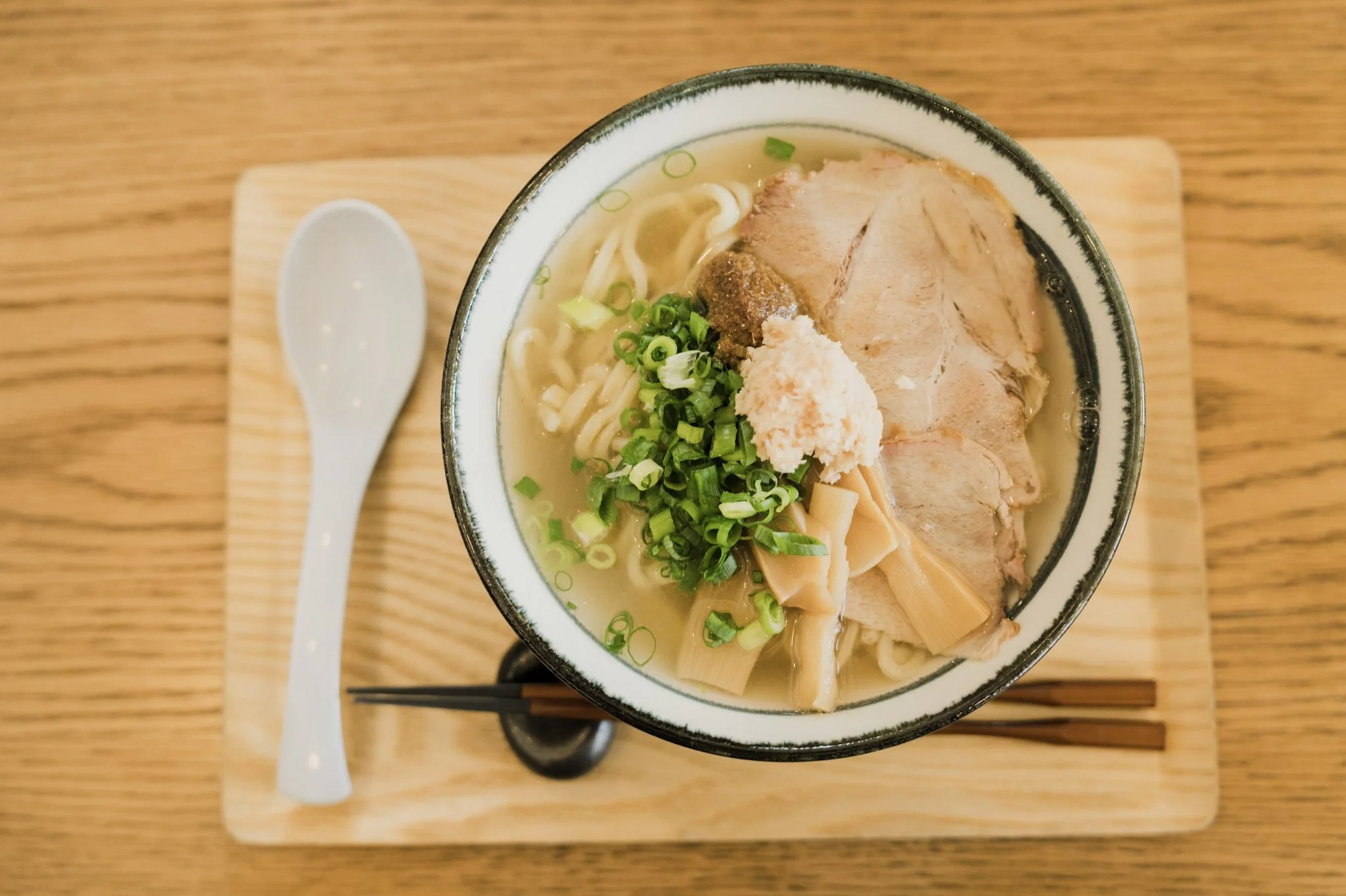
Tonkotsu ramen is even older, dating to 1937 and a Fukuoka noodle stall called Nankin Senryo. Pork was a fundamental part of Fukuoka cuisine, so Nankin Senryo’s chef began serving his noodles in a pork-bone broth, an inspired dish that was a hit with local diners. It soon spread across Fukuoka, with imitators popping up in cities throughout the prefecture. Later restaurants like Ippudo and Ichiran iterated upon Nakin Senryo’s original recipe, becoming globally acclaimed ramen enterprises in the process and elevating tonkotsu to the upper echelons of Japan’s culinary pantheon.
This set the stage for further ingenuity. Popular chefs led the way, showing that ramen was a guideline rather than a decree. The dish probably still had to have noodles and toppings and some “Japaneseness,” like dashi or soy sauce, but aside from that, everything else was fair game. Kuzuo Yamagishi, the so-called God of Ramen, proved the point when he created tsukemen, or “dipping noodles,” where the noodles are served separately from a concentrated helping of the broth.
Yasushi Matsumura brought fine-dining flair to ramen, creating a French-style soup with no tare (a base usually considered fundamental to ramen). At one time, the dish, served in his Ginza Hachigou shop, even earned Matsumura a Michelin star, despite costing the equivalent of around $10. Hiromistu Mizuhara, described by Nippon as a “ramen maverick,” now has eight shops under his stewardship, each with its own signature style, whether it’s a soup infused with sancho peppers or noodles soaked in a seaweed broth.
In a society bound by tradition, ramen is a space where chefs can express themselves fully, unleashing the creative shackles free from reproach. Yet at its core, ramen remains a homely, working-class dish; a high-quality fast-food enjoyed by people across the country, irrespective of age, gender, occupation, or socioeconomic status. In a way, it is food as the embodiment of Japan at its best, where refinement, humility, warmth, and flavor dance in perfect harmony.
About the Author: David is a Northern Irish freelance journalist, writer and author based in the UK and Tokyo. Fusing reporting and social commentary with extensive experience traveling throughout the country, he has published stories on travel, arts and culture, business and current affairs, and sports in Japan. His work has appeared in a range of national and international publications online and in print. He's also the author of two travel books, Intrepid Japan and the most recent edition of Frommer's Japan. You can find links to his work at www.davidmcelhinney.com.

Recommended Reads

Discover Cultural Experiences