
Tsundoku: The Habit of Piling Books
There’s a Japanese phrase to describe everything—including the habit of piling up books—with historic roots and modern usages.
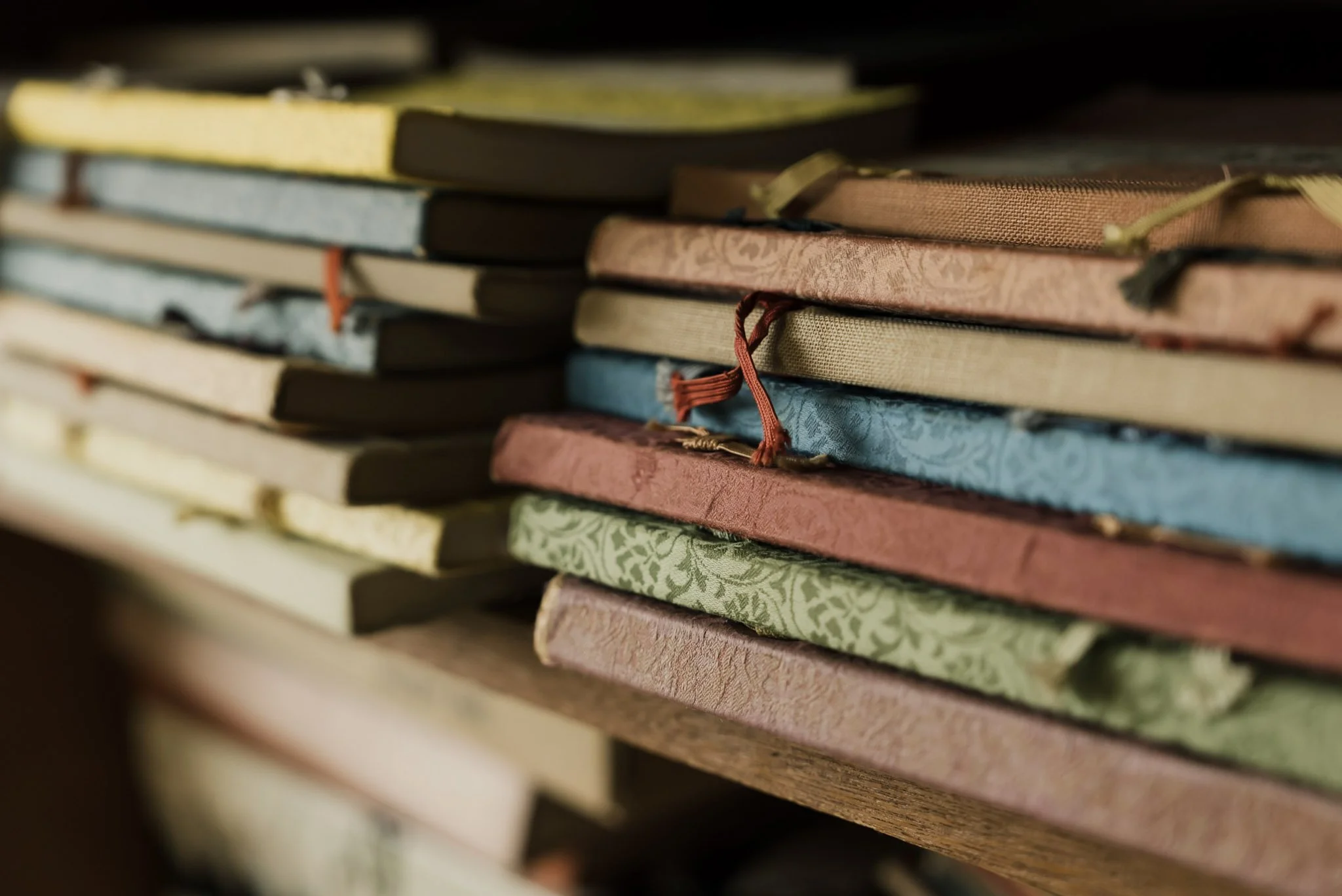
As I write this, there’s a pile of books beside my bed. The third volume in Brandon Sanderson’s Stormlight Archive, a doorstop of a novel, sits at the bottom, a sturdy foundation. I opened it recently, read a few chapters, then jettisoned it for Sayaka Murata’s Vanishing World, though I don't really know why. Now Vanishing World, also unread, lies there too. Laura Pashby’s Chasing Fog, a nonfiction book in which the author uncovers the mysteries of that most bewitching weather phenomenon, has since joined the pile. It’s an entertaining tale, but one I need to read in interstitials – a chapter here, a chapter there – like I would the features in a magazine. So there it sits, waiting to be picked up again when the time is right.
My Kindle rests at the top, out of recency bias rather than pride of place. But the trim size of the e-reader is misleading, because it’s just a digital repository of more unfinished material: Bill Bryson books I visit in dribs and drabs, like slices of literary comfort food; Haruki Murakami novels that were a bit too weird; popular science books in which the authors ran out of steam; classics I started reading out of obligation, even though (whisper it) they’re not that good; and the collected works of prolific writers amounting to thousands upon thousands of untouched pages.
I don’t know if this is an affliction or a trait. I don’t usually pile my belongings and have been known to be fussy about where things go. Even my bookshelves start out with an obsessive-compulsive orderliness: Books on Japan along one shelf, sci-fi and fantasy on another, general fiction over here, nonfiction over there, coffee table books displayed like artworks at the top. But eventually piles will form, sometimes on the shelves, other times on the floor, and entropy will gather amid the growing abundance of volumes. Some are picked up, partially read, then set aside with a bookmark wedged along the way. Others are finished then piled near my laptop under the loose pretense of being “necessary for research.”
When we don’t have a word for something, often we appropriate it from somewhere else. So it was with some relief when I recently discovered a Japanese term for this behavior: tsundoku, a compound of the verb tsumu, “to pile up,” and dokusho, meaning “reading books.” It dates from the Meiji era, first appearing in print in 1879, when Japan was undergoing a revolution in its writing system, making literature more accessible and increasing the likelihood of people amassing piles of half-read books. Tsundoku refers to the habit of buying books with the intention of reading them but letting them pile up instead, which differentiates it from English words like bibliomania, collecting books intentionally, or bibliophilia, the sheer love of books.
The Sensei Who Piled Books
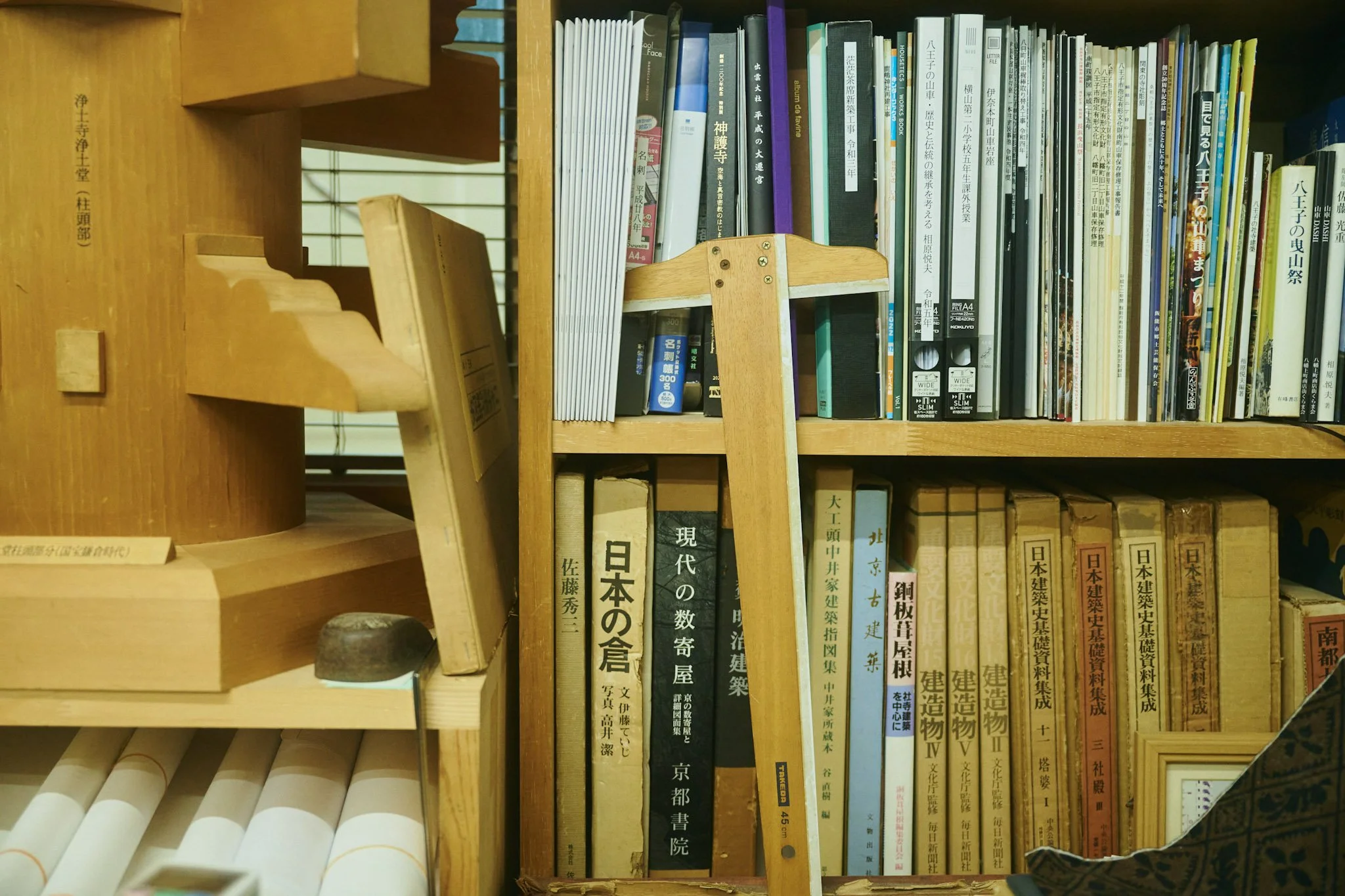
When tsundoku entered the Japanese lexicon its connotations were open to interpretation. The most common telling is that tsundoku was first used to describe a teacher who bought a surfeit of books but failed to read them – the tsundoku sensei. But was this sensei ridiculed for his failure? Was the term more neutral, like calling someone a bookworm? Maybe it was a badge of honor, in the way that people refer to themselves as “voracious” or “avid” readers to emphasise just how much literature they consume. Most academics agree that the original text in which tsundoku appeared was probably satirical, implying the word was created with the writer’s tongue placed firmly in their cheek. But language is not a fixed and immutable thing. It’s “more fashion than science,” as Bill Bryson has noted, “and matters of usage, spelling and pronunciation tend to wander around like hemlines.”
A pair of Japanese studies professors at Carnegie Mellon University, Kiyono Fujinaga-Gordon and Yoshihiro Yasuhara, suggested to the Huffington Post that tsundoku’s metamorphosis over time was influenced by the flexibility and agglutinative nature of the Japanese language. It was initially a twist on tsunde-oku, a conjugation of the verb tsumu meaning “to pile something up and leave it there.” Switching the de-oku suffix – which indicates that the pile has been left in its current state – with the similar-sounding doku (reading) to create tsundoku is a deliciously inspired bit of word play.
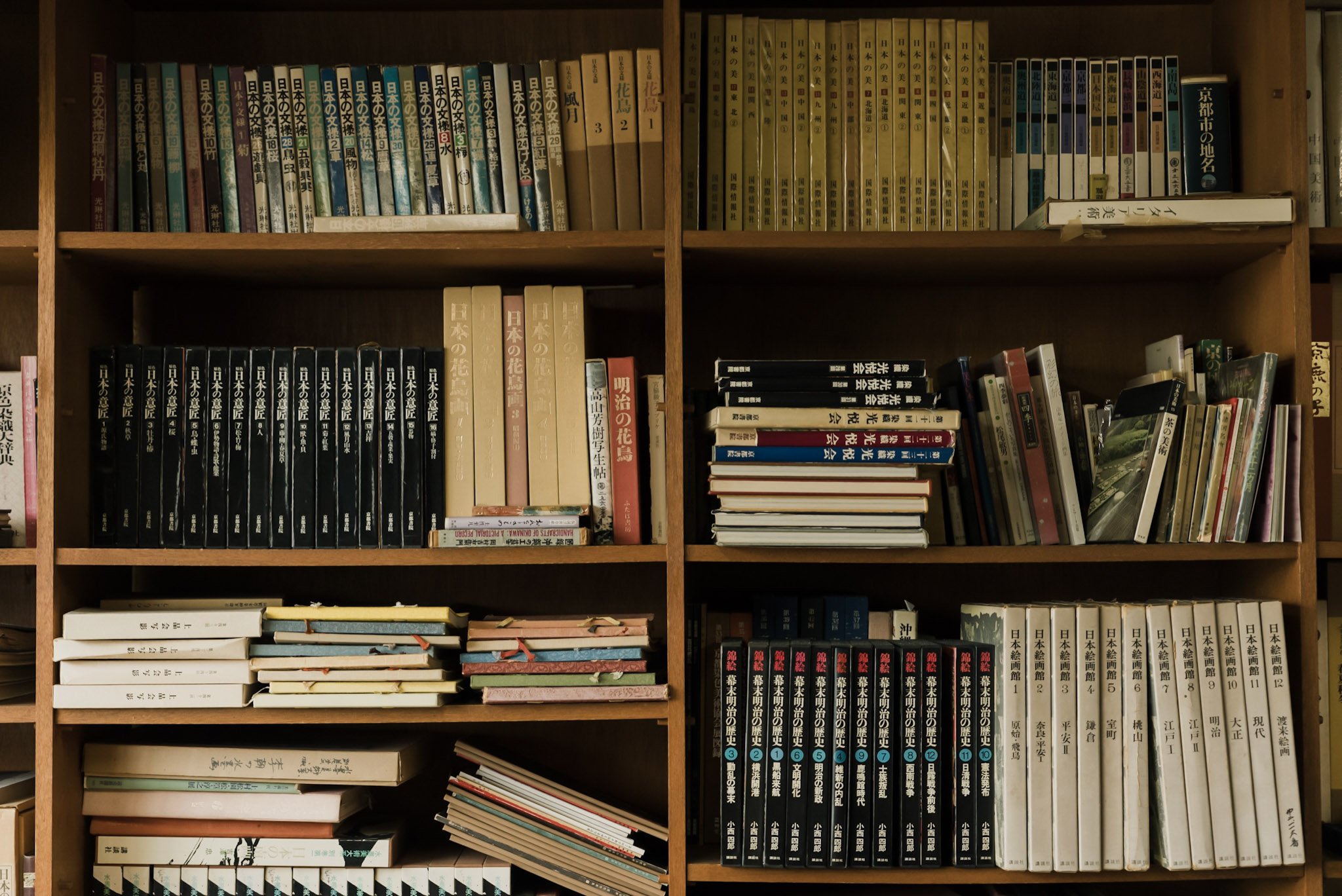
Tsundoku can still operate as a verb in Japan (the act of piling books), but the noun form (the habit of piling books), is the predominant modern usage and it’s the one we have absorbed into English. Japanese words are now so commonplace in native English speech – ramen, sushi, karaoke, samurai, tsunami, and trademarked words like Nintendo and Pokémon – that new terms are regularly added to the Oxford English Dictionary. The 2026 list included senpai (one’s superior or mentor in the workplace), senbei (flavored rice crackers), and yokai (supernatural spirits or ghosts). The inclusion of some outside-the-box zingers like naginata (a polearm with a curved blade) and mottainai (too good to be wasted), means we shouldn’t be surprised if tsundoku joins the list in the years ahead. But as words embark on their lexical journey through the languages of the world they often become more fluid in the process, and as we assimilate tsundoku into our own language, its applications broaden. It can be used to describe the pile itself, or if you’re in a pinch, the person responsible for piling. Some might use it to express their relationship to films or video games or records – the proverbial backlog that weighs on the mind like a soft but persistent migraine – while others will reinterpret it in creative ways to fit their linguistic needs.
English-language speakers also have a habit of taking Japanese terms and repackaging them as art forms. Kakebo is the art of mindful spending and danshari is the art of decluttering. Boketto, I kid you not, has been described as the “art of doing nothing.” Tsundoku falls prey to the same problem – the “art of buying books and never reading them,” according to the BBC. But there’s nothing more creative about book piles than there is about stacks of unwashed dishes in a kitchen sink. Tsundoku piles are not expressions of human emotion or metaphorical commentaries on the state of the world; they aren’t created to incite joy, sadness, concern, or introspection. They simply amass, like puddles in the rainy season, and they feel just about as inevitable.
Finding Joy in the Piles
Of course there is a compulsion of sorts here, too. Anyone who suffers – if that’s even the right word – from tsundoku, knows that the pile is not the end goal. I really do intend, in some part of my brain, to read every word trapped in the stack, but this never precludes me from adding at a quicker rate than I subtract. I know this because I struggle to walk past a bookshop without poking my head in, and once in there, I struggle to leave without making a purchase.
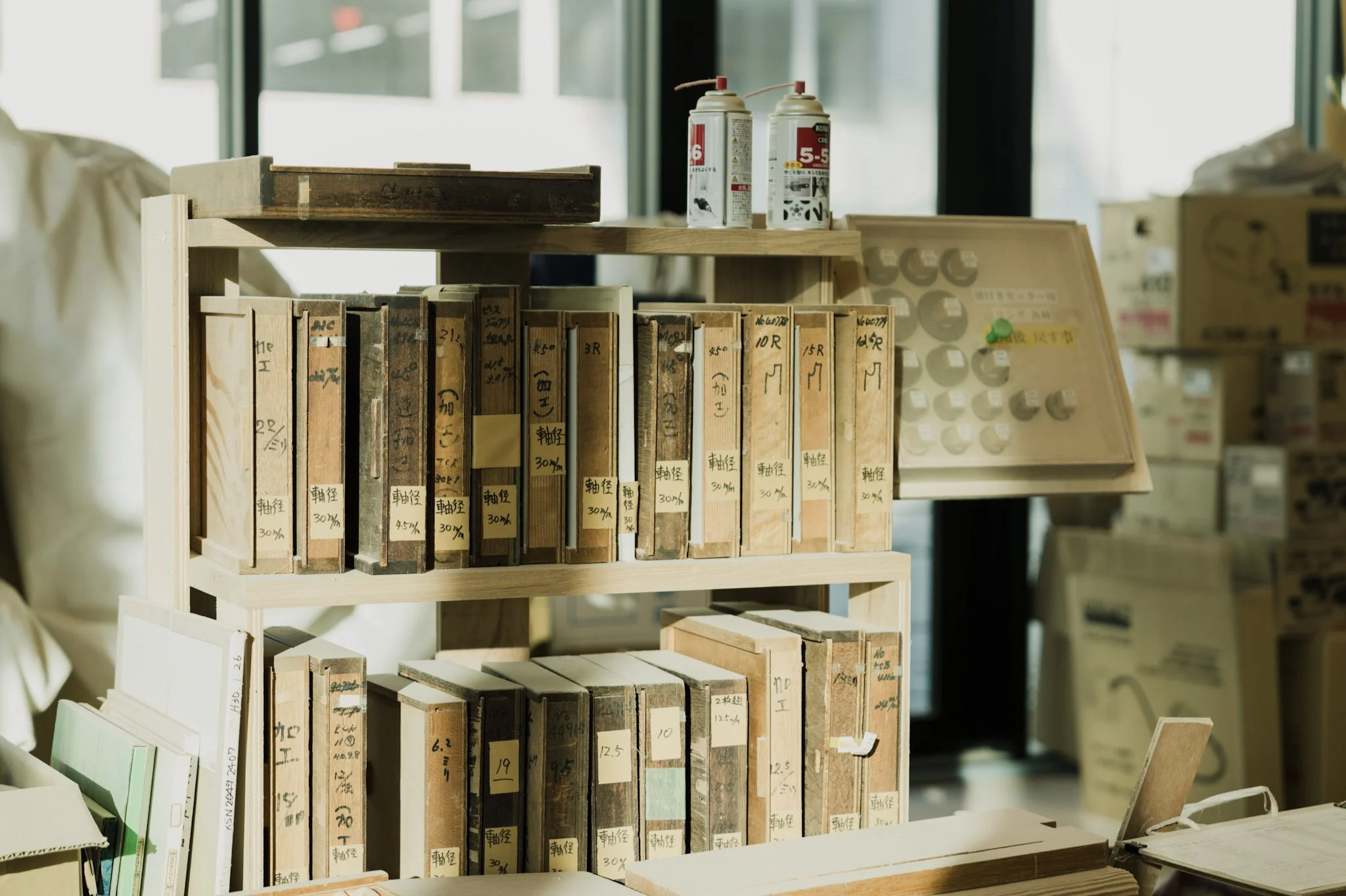
When I first visited secondhand bookshop Infinity Books in Tokyo, sometime in 2020, I fell in love with the place immediately. The handbuilt bookcases, the smell of musty paper, the noodle-thin aisles, the colorful spines leaning slightly to one side, and the little footstools for reaching titles on the highest shelves. It was cozy and familiar, yet instilled awe. There’s nothing quite like it, being in a room drowning in published literature, even if half of it is hackneyed and barely worth the paper it’s printed on. I made a point of returning often, usually to drink beer with the proprietor, Nick, and still when I drop in to see him, often unannounced, I like to leave with a few books – Nick’s recommendations, novels with notes scrawled on the inside leaf, books I feel belong on my shelf despite knowing they’ll soon be consigned to a pile.
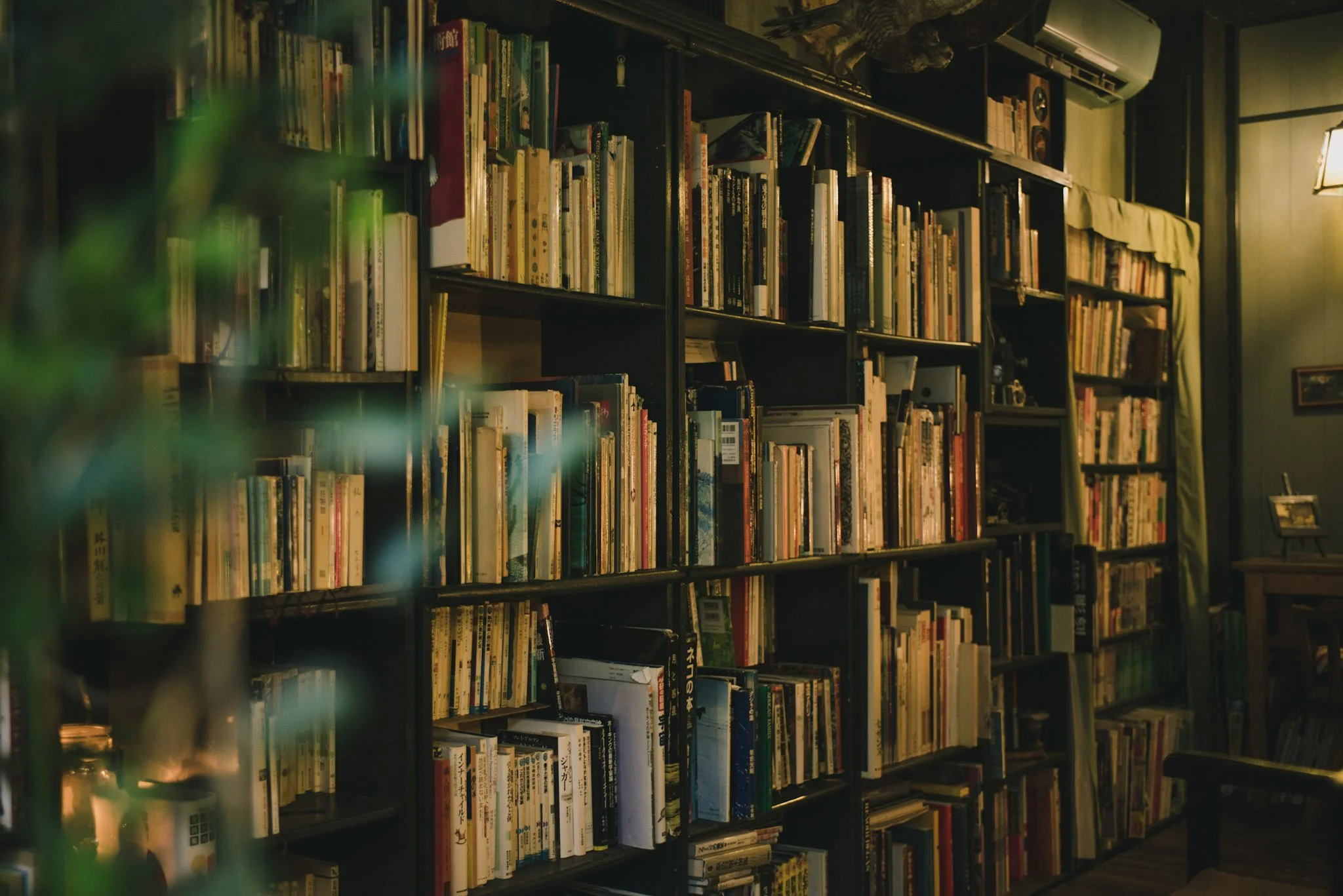
Being in Infinity Books makes it easier to embrace one’s tsundoku habits. After all, what better reminder is there of the futility of trying to read everything? There you are, surrounded by thousands of books, so many of which you’d love to read, so few of which you ever will, and yet, you are utterly content, safe in the knowledge that the books are still there, both in states of disarray and carefully arranged, enveloping you like a protective casing, a comfort blanket for the soul. Never mind that more bags and boxes of used books are donated regularly, as expats relocate from Tokyo and can’t justify the cost of shipping the entire bibliography of Clive Cussler or John Grisham halfway across the world. The storeroom is a mess of towering tsundoku stacks, a living manifestation of the hard truth that the pile is always likely to grow before it shrinks. But shouldn’t we treat that as a blessing, not a curse?
I would add an additional usage for tsundoku, because it’s also a mindset. It’s convincing yourself you’ll read every purchased book but not caring that you never will. It’s looking at the growing pile, at the over-encumbered shelf, at the unfinished novels abandoned at random chapters and finding joy rather than dread. It’s the opposite of gamifying your reading habits by logging every book into an app and keeping track of the number you complete each year. It’s knowing that every piled book tells its own story, besides the one contained within its pages.
About the Author: David is a Northern Irish freelance journalist, writer and author based in the UK and Tokyo. Fusing reporting and social commentary with extensive experience traveling throughout the country, he has published stories on travel, arts and culture, business and current affairs, and sports in Japan. His work has appeared in a range of national and international publications online and in print. He's also the author of two travel books, Intrepid Japan and the most recent edition of Frommer's Japan. You can find links to his work at www.davidmcelhinney.com.

Recommended Reads

Discover Cultural Experiences


Get right next to the action and observe an authentic sumo training session