
Walking Into the Sacred: Japan's Living Tradition of Pilgrimage and Mountain Paths
The idea that the act of walking is itself a form of communion runs like a deep current beneath Japan's long culture of pilgrimage and mountain travel.
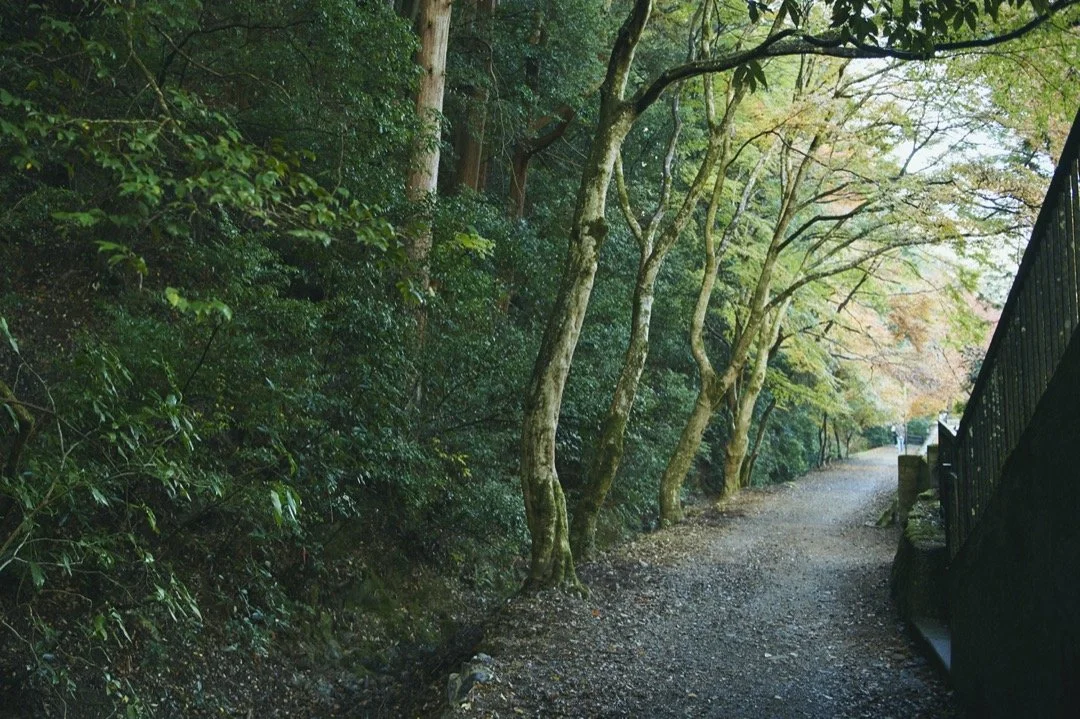
There is a phrase stitched onto the white vests of pilgrims circling the island of Shikoku: dogyo ninin, "two travelers, one road." It refers to Kukai, the 9th-century monk who founded the Shingon school of Buddhism, and who is said to have wandered these same peaks and coastal tracks more than a thousand years ago. According to tradition, he’s never left. Every pilgrim who laces their sandals and steps onto the 1,200-kilometer circuit walks invisibly accompanied, Kukai at their side.
This idea, that the act of walking is itself a form of communion, that the road is not a passage to a sacred place but a sacred place in itself, runs like a deep current beneath Japan's long culture of pilgrimage and mountain travel. It shapes not only the great circuits of Shikoku, Kumano, and Chichibu, but the way Japanese people continue to move through their landscapes today attentively, purposefully, and with a willingness to be changed by the journey.
The Long Way Around Shikoku
The Shikoku pilgrimage, known as the Henro, remains among the most demanding and transformative journeys a person can undertake on foot in the modern world. Its 88 temples are spread across all four of the island's prefectures, each carrying a symbolic weight along the path: awakening, discipline, illumination, and finally nirvana. They are associated with the life of Kukai, who was born on the island in 774, trained in caves overlooking the Pacific, and eventually traveled to Tang China to bring esoteric Buddhism back to Japan. Whether or not a pilgrim believes in this progression, the landscape itself enforces a kind of spiritual logic. The rocky capes of Tosa push walkers into exposure and endurance, the forested interior of Iyo demands patience, the cultivated plains of Sanuki offer, at last, something like ease.
Walking the circuit in its entirety takes between 40 and 60 days, a duration that strips away the pace of ordinary time. Daily rhythm becomes elemental: rise before light, offer sutras at the temple gate, walk until the body asks to stop, sleep in a modest minshuku or temple lodging. Repeat. Within a week, most pilgrims report that their habitual mental noise begins to fade. What replaces it is harder to name. A heightened attention to the physical world, perhaps. The sound of gravel underfoot, the smell of cedar and incense, the particular quality of afternoon light through a mountain pass.
The traditional pilgrim's dress reinforces this altered relationship with the self. The white vest (hakui) and conical rush hat (sugegasa) mark the wearer as existing slightly outside of ordinary society, worthy of the practice of osettai, the gifts of food, tea, or shelter that local residents offer freely to those on the path. An orange pressed into a pilgrim's hands by an elderly woman outside her gate, a cup of green tea left on a temple step–these small acts of generosity carry enormous weight. The recipient of osettai is understood to be receiving on behalf of Kukai himself, and the giver accumulates spiritual merit. The circuit thus creates a kind of moving economy of kindness, the road nourishing those who walk it.
Mountains as Living Presence
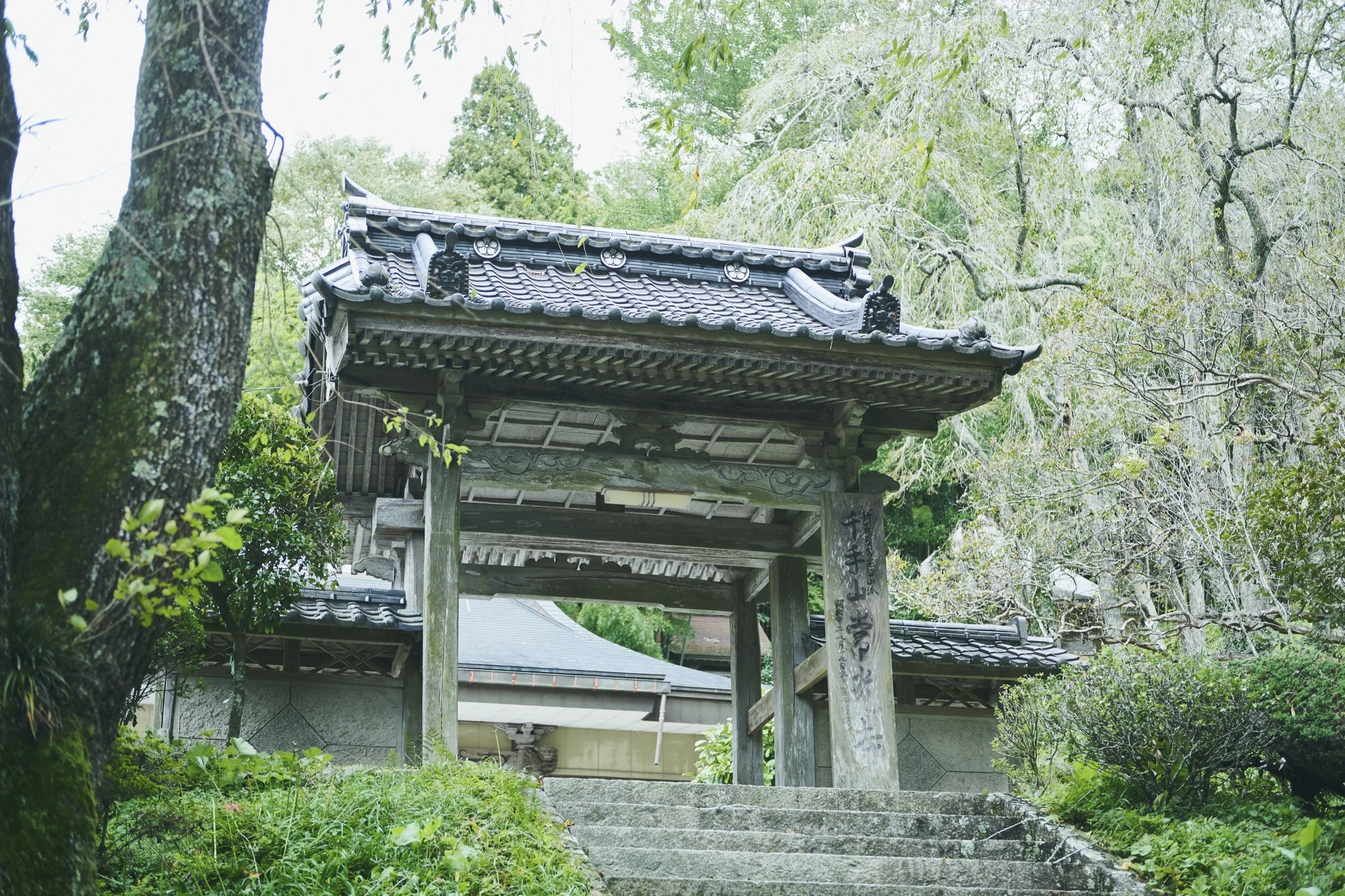
The Shikoku Henro is the most internationally recognized of Japan's pilgrimage routes, but it exists within a much broader tradition of mountain reverence that predates both Buddhism and the written word. Long before Kukai, the peaks of the Japanese archipelago were understood as inhabited presences, home to deities, ancestors, and forces that required approach with humility and ritual.
This animist inheritance merged gradually with Buddhist cosmology and Shinto practice to produce Shugendo–the tradition of mountain asceticism whose practitioners, the yamabushi, subjected themselves to cold-water immersion, fire-walking, and extended periods of meditation in high, remote terrain. Their routes became the bones of what are now Japan's great pilgrimage networks.
The Kumano Kodo, a web of ancient paths threading through the Kii Peninsula's cedar-dark mountains toward the grand shrines of Kumano, is among the most affecting of these landscapes. Walking its steeper sections, such as the moss-covered stone stairs rising through forest so old and dense it seems to generate its own weather, it is possible to understand why this terrain was once read as the borderland between the living and the dead. The cascade at Nachi, 133 meters of falling water, has been venerated as a deity since antiquity.
What makes Japan's pilgrimage landscape distinctive, and what continues to draw walkers from far beyond its shores, is precisely this quality of interpenetration between religion and landscape, structured ritual and intensely personal experience. The Kumano Kodo's 1998 twinning with the Camino de Santiago was less improbable than it first appears: after all, both routes understand that the longest journey is interior, and that the body, worn to a useful simplicity by days of walking, becomes a more honest instrument.
Slowness as Resistance
Japan's relationship with speed is, of course, famously intense. The Shinkansen reduces the distance between Tokyo and Osaka, and a journey that once took two weeks on foot along the ancient Tokaido highway takes two hours and fifteen minutes today. The country built its postwar identity in part around a philosophy of acceleration, with faster production, faster growth, faster communication. In this context, the resurgence of interest in long-distance walking is, for many Japanese, a form of dissent.
The pilgrim routes have been gaining walkers steadily over recent decades, and not only the retired or the devout. Younger people facing the grinding pressures of urban professional life have found in these paths something the workplace cannot offer, the satisfaction of physical effort with visible daily progress, landscapes that slow the mind rather than accelerate it, and encounters with strangers that unfold at a pace allowing for genuine exchange. The philosopher Augustin Berque, who spent decades thinking about the Japanese relationship between self and environment, argued that Japanese culture has long understood the self not as a fixed, interior entity but as something shaped by its surroundings. Walking a pilgrimage route literalizes this: you become, to a degree, what you pass through.
The Chichibu pilgrimage, far less known internationally than Shikoku but beloved by Tokyoites seeking relief without abandoning the city entirely, illustrates this well. Its 34 temples dedicated to Kannon, the bodhisattva of compassion, are tucked into rural valleys northwest of the capital, reachable by train and walkable in three or four days–an atmosphere contemplative, rather than heroic. The temples are small, the mountains moderate, the farmers encountered on the road curious and welcoming. The goshuin, the calligraphed ink stamps collected at each temple, have become objects of genuine devotion for some walkers, and cheerful souvenirs for others.
Reading the Landscape
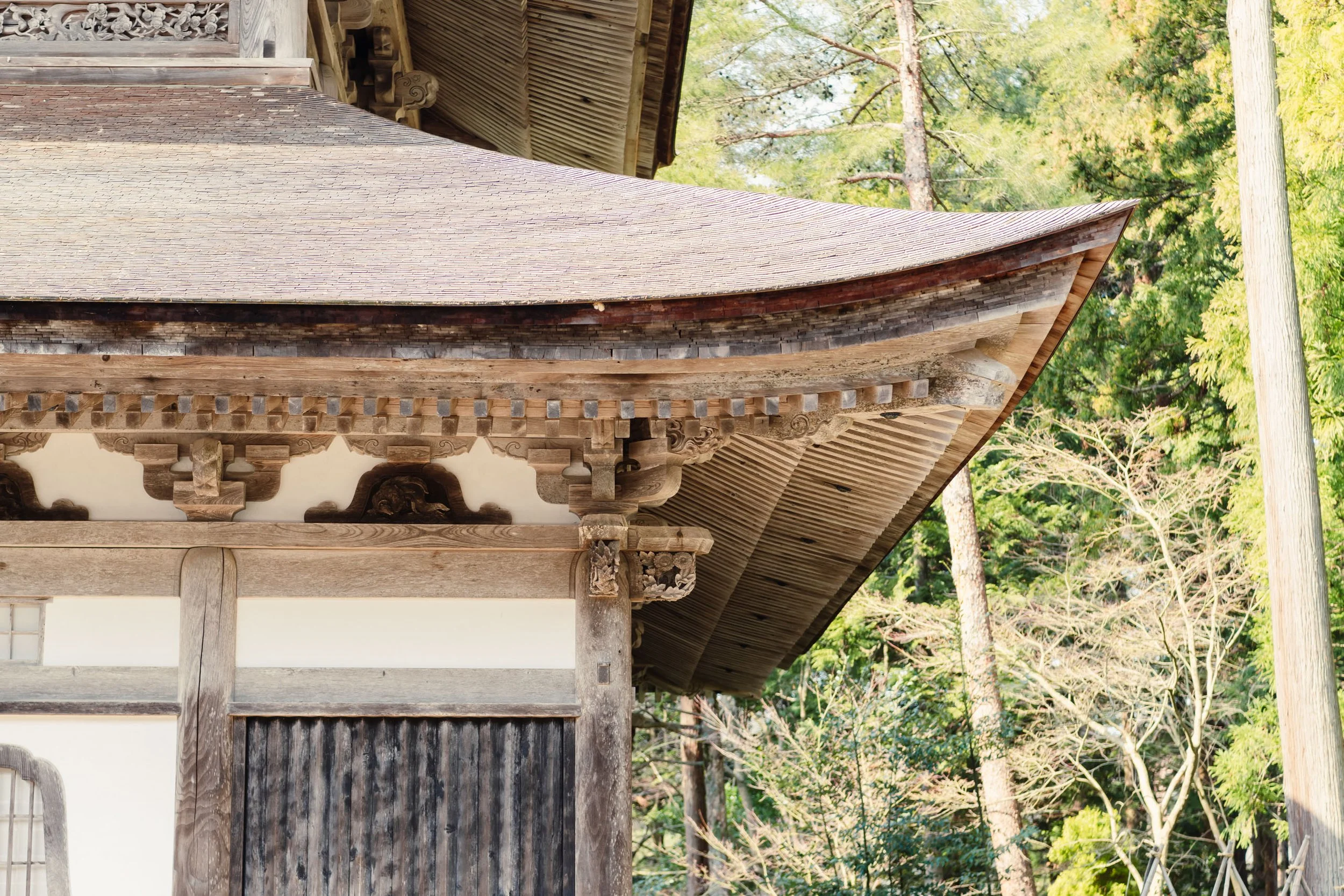
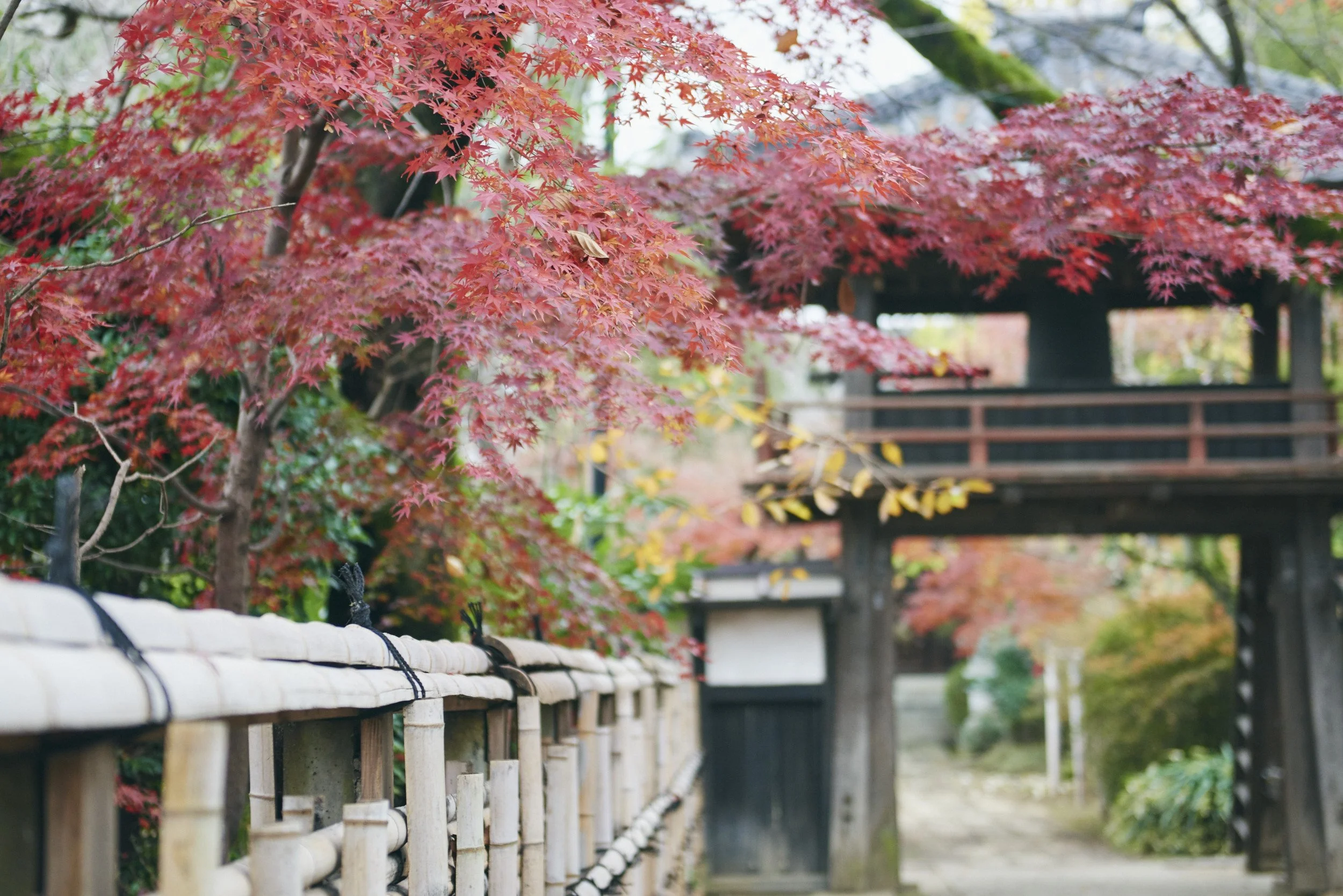
What unites Shikoku's exposed capes, Kumano's cathedral cedars, and Chichibu's quiet valleys is the experience of moving through a landscape slowly enough to read it. Japan's geography rewards this attention. The archipelago's extraordinary ecological diversity, with its volcanic peaks, deciduous temperate forests, subtropical coasts, or alpine meadows, means that the pilgrim or trekker encounters, within the span of a single journey, what might constitute a lifetime of landscape elsewhere. Seasonal change adds another dimension. The same mountain path walked in April under cherry blossom, in August through forest heat, in November through crimson maple light, and in February through snow offers four different experiences of the same ground. The route, as the old Nakasendo travellers understood, is never the same twice.
This attentiveness to seasonal and ecological variation is embedded in Japanese mountain culture in ways that distinguish it from purely athletic trekking traditions. Guides on Japan's more specialized mountain routes often possess knowledge of medicinal plants, local history, the behavior of particular birds, the specific properties of different mountain waters. A guided walk in this tradition is closer to a field education than a fitness excursion. The mountain gives back to those who approach it with preparation and curiosity.
Walking as Knowledge
There is a figure who haunts the margins of Japan's walking culture and who deserves a moment's attention: Ino Tadataka, a retired merchant who, at the age of 55, set out from Edo in 1800 with five assistants and two horses to map the coastline of Hokkaido on foot. He would spend the next seventeen years completing the first accurate cartographic survey of the entire Japanese archipelago, walking roughly 40,000 kilometers (a distance equivalent to the circumference of the Earth) to do so. He died before the maps were published, but their precision continued to astonish navigators well into the twentieth century, when satellite imagery confirmed what one man with a measuring stride and an astronomer's patience had managed to record.
Ino was not a pilgrim in any religious sense. He was driven by something closer to scientific obsession. And yet his story belongs, unmistakably, to the same cultural inheritance. The method was identical, moving through a landscape at the pace the body dictates, paying a quality of attention that faster travel makes impossible, allowing distance to accumulate into knowledge. He calibrated his step to exactly sixty-nine centimeters and counted each one. There is something almost devotional about this. Japan's walking tradition has always understood that the world reveals itself differently to those willing to cross it on foot, in its grain, its resistance, its thousand small particulars.
The Pilgrim's Companion
It is worth returning to dogyo ninin–to the idea that no walker on these routes is truly alone. The companion may be understood as Kukai, or as the centuries of travelers who have worn these stones smooth, or as some aspect of one's own attention that only becomes audible in silence. The function is the same—to make the solitary experience of walking permeable to something larger than oneself.
This is, perhaps, what Japan's pilgrimage culture ultimately offers to those who approach it with openness, a particular quality of companionship. These routes are living systems, absorbing new generations of walkers and returning them, slightly altered, to the world. The road does not promise a sudden arrival into understanding. It promises, more modestly and more durably, that the act of walking toward something difficult, with patience and without shortcuts, is itself a practice worth undertaking. In a world that has engineered away almost every reason to go slowly, that remains a genuinely radical invitation.
About the Author: Sébastien is a writer and videographer living in Tokyo. Born in 1995 under the sun of Marseille in the South of France, he has been living in Japan since 2022. He has written for several international media outlets, mainly about Japan, art, and cinema. In his free time, he enjoys drinking coffee and taking 35mm photos.

Recommended Reads


Discover Cultural Experiences


Get right next to the action and observe an authentic sumo training session