
Meet Ryuta, Bashofu Textile Artisan
“Visitors can see a craft that isn’t easily found elsewhere, touch the raw materials, handle finished fabrics, and even see and touch the plants that the fiber comes from.”
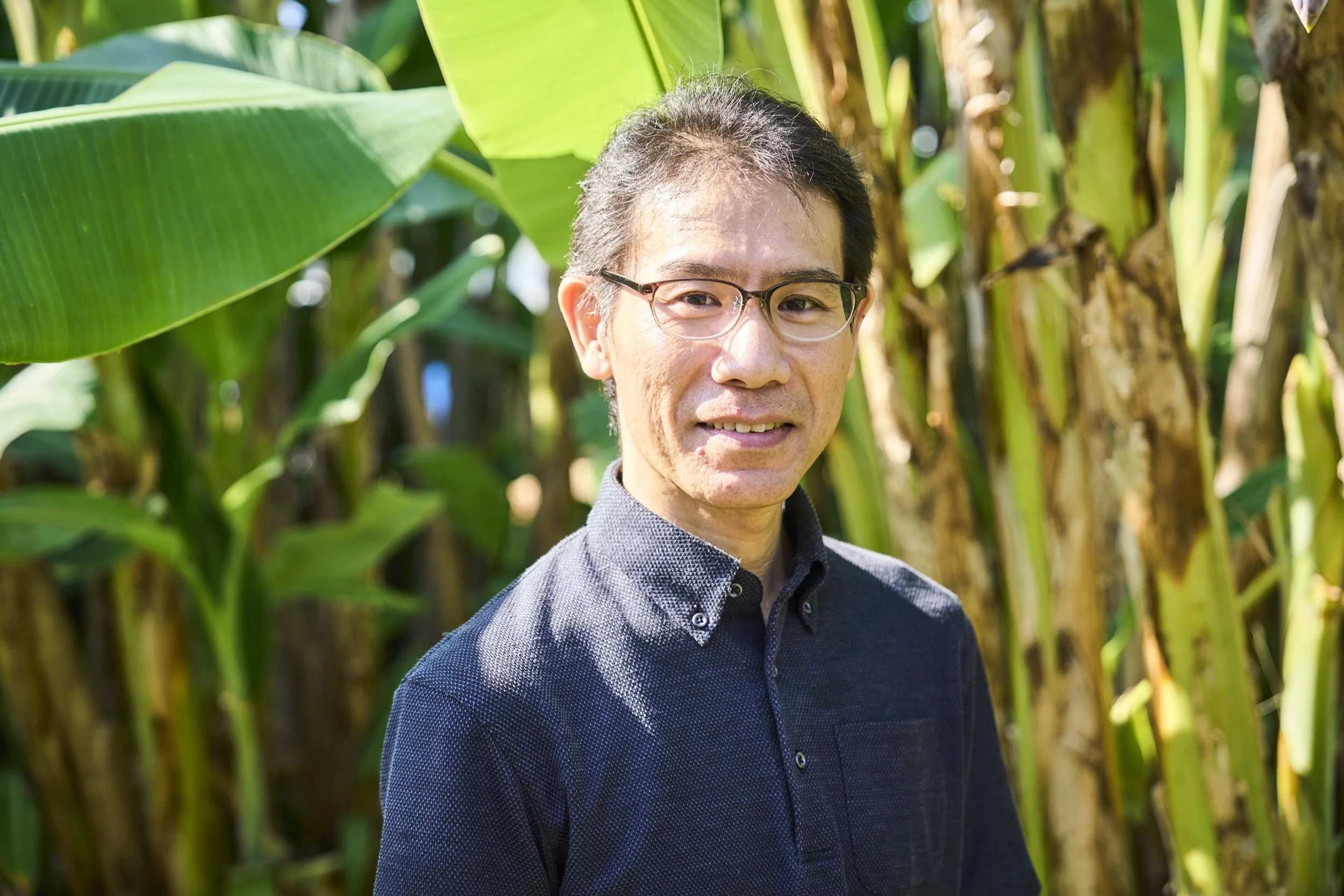
Continuing a forgotten 800-year old Okinawa tradition, Bashofu weaving’s intricate hand-woven textiles preserve history.
Situated just before the entrance to the lush forests of Yanbaru, Ginoza is located on the eastern shore of central Okinawa. And just farther north lies Kijoka, the hometown of bashofu textile weaving.
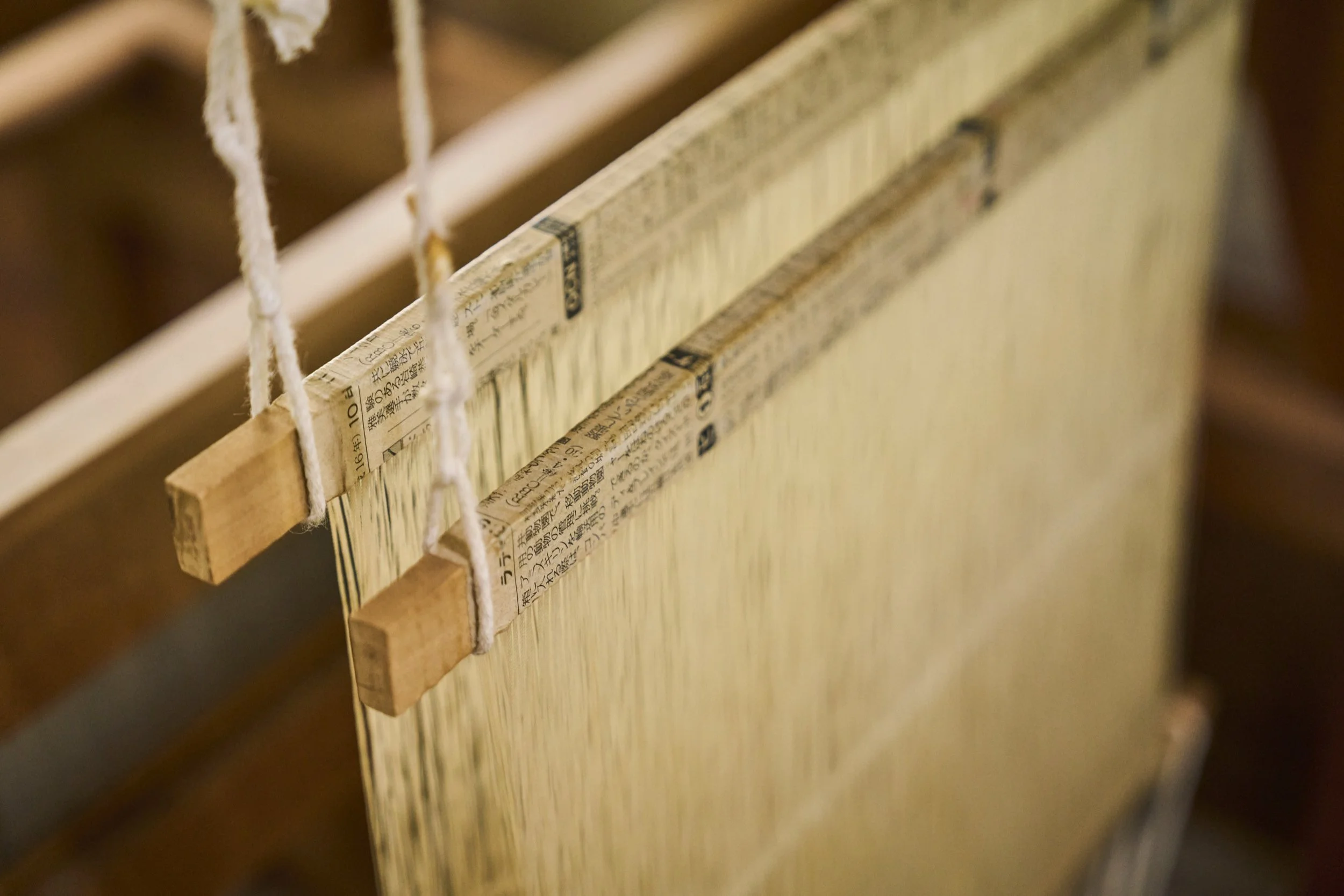
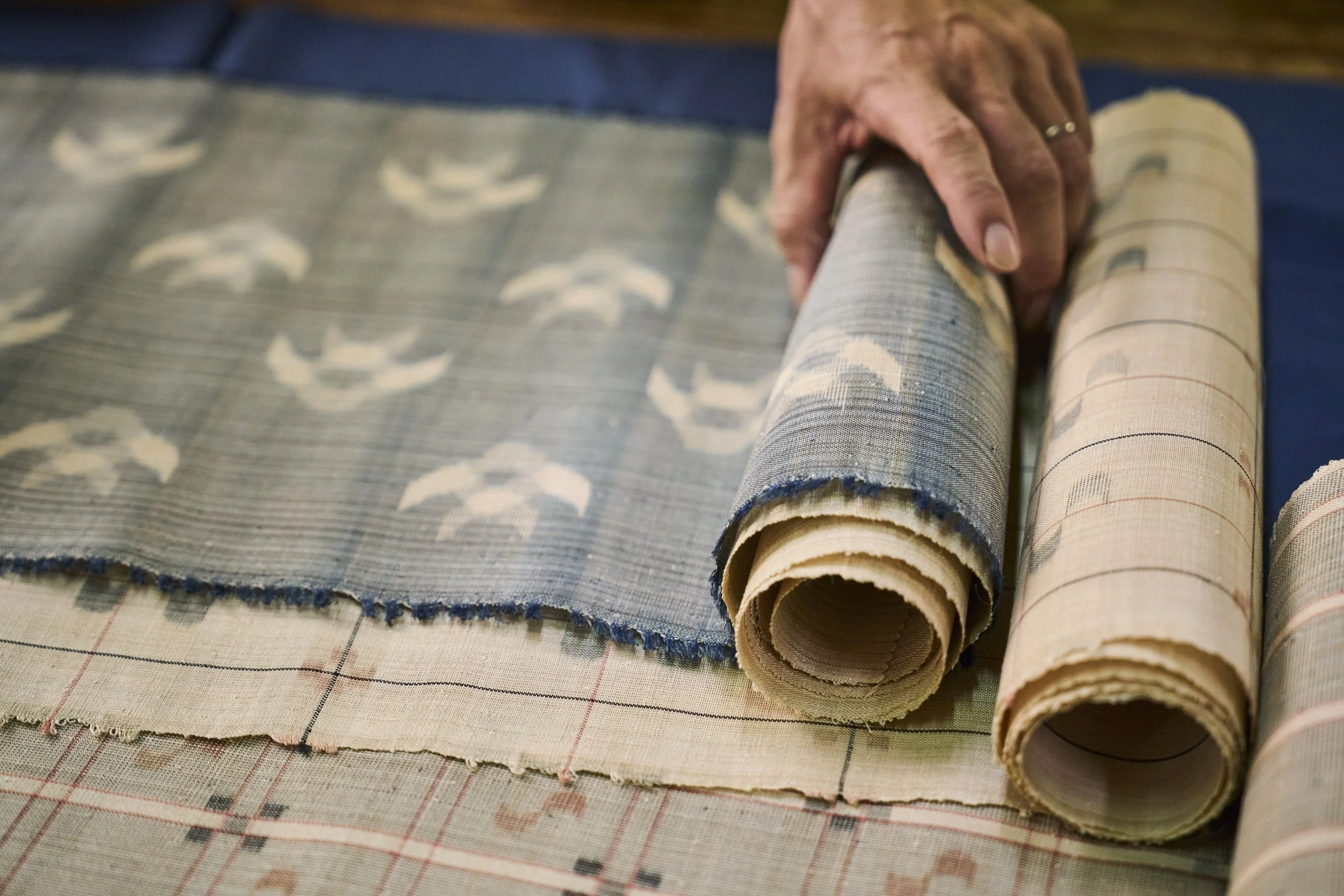
It was here that the late Toshiko Taira painstakingly revived and reestablished the traditional art of bashofu weaving. Said to be the textile that best represents the culture and traditions of Okinawa, the bashofu textile is made from the fibers of the ito-basho plant, closely related to the banana plant, with its entire production process, from harvesting to weaving, all done by hand.
Under the tutelage of the late Toshiko Taira, Ryuta-san learned these traditional and timeworn techniques of producing woven bashofu textile and continues to preserve and carry on this craft from his workshop in Ginoza.
Q: Can you tell us a little bit more about yourself and the studio that you’re operating here?
A: I set up my workshop here after going independent, and it's been about 20 years now. This is Ginoza in Kunigami District, Okinawa Prefecture. It's a little south of Kijoka, where I trained and studied the craft.
In terms of Okinawa Island, this area is considered the gateway to Yanbaru. It's not too far from Naha, and at the same time, it's also convenient for traveling north into Yanbaru, since it's located roughly in between the two.
As for why I'm here, I was fortunate enough to have a connection that gave me the opportunity to establish my workshop in this area. The natural environment has been preserved to a great extent, and I think it's a wonderful place to live and work.
At my workshop, I specialize in bashofu weaving, focusing primarily on obi sashes for kimono.
Q: How did you decide to focus on pursuing this craft? What led you here?
A: Before I became involved with bashofu specifically, I first started studying textiles when I was a university student.
I graduated from the Textile Course in the Crafts Department at Okinawa Prefectural University of Arts. While I was there, I was introduced to bashofu through classes that focused on traditional materials and techniques.
That experience led me to visit the workshop of my mentor, Toshiko Taira, in Kijoka, where I began studying bashofu in earnest. After training in Kijoka for several years, I eventually went independent and established my own workshop.
At university, most of our work focused on weaving with materials like silk and cotton. As part of our studies, we also learned about traditional Okinawan materials. That included the bashofu fiber used for bashofu, as well as ramie, which is used in textiles such as Yaeyama Jofu and Miyako Jofu. As graduation approached, I started thinking about what path I wanted to take. I knew I wanted to continue working in textiles, and I was particularly drawn to materials that weren't used in other weaving regions. Bashofu stood out because it's unique to Okinawa and deeply connected to the island's culture and history.
At the time, I was still a student, so I didn't really understand the situation surrounding the craft. But I learned that there were fewer and fewer successors entering the field. In a way, that made it even more appealing to me. I thought it might be interesting to step into that world and see it from the inside. That's what led me to pursue bashofu.
Q: What message of impression do you want visitors to your workshop to feel, especially those coming from outside of Japan?
A: There are plenty of craft experiences available these days, but many of them are designed so that you can finish in ten or fifteen minutes.
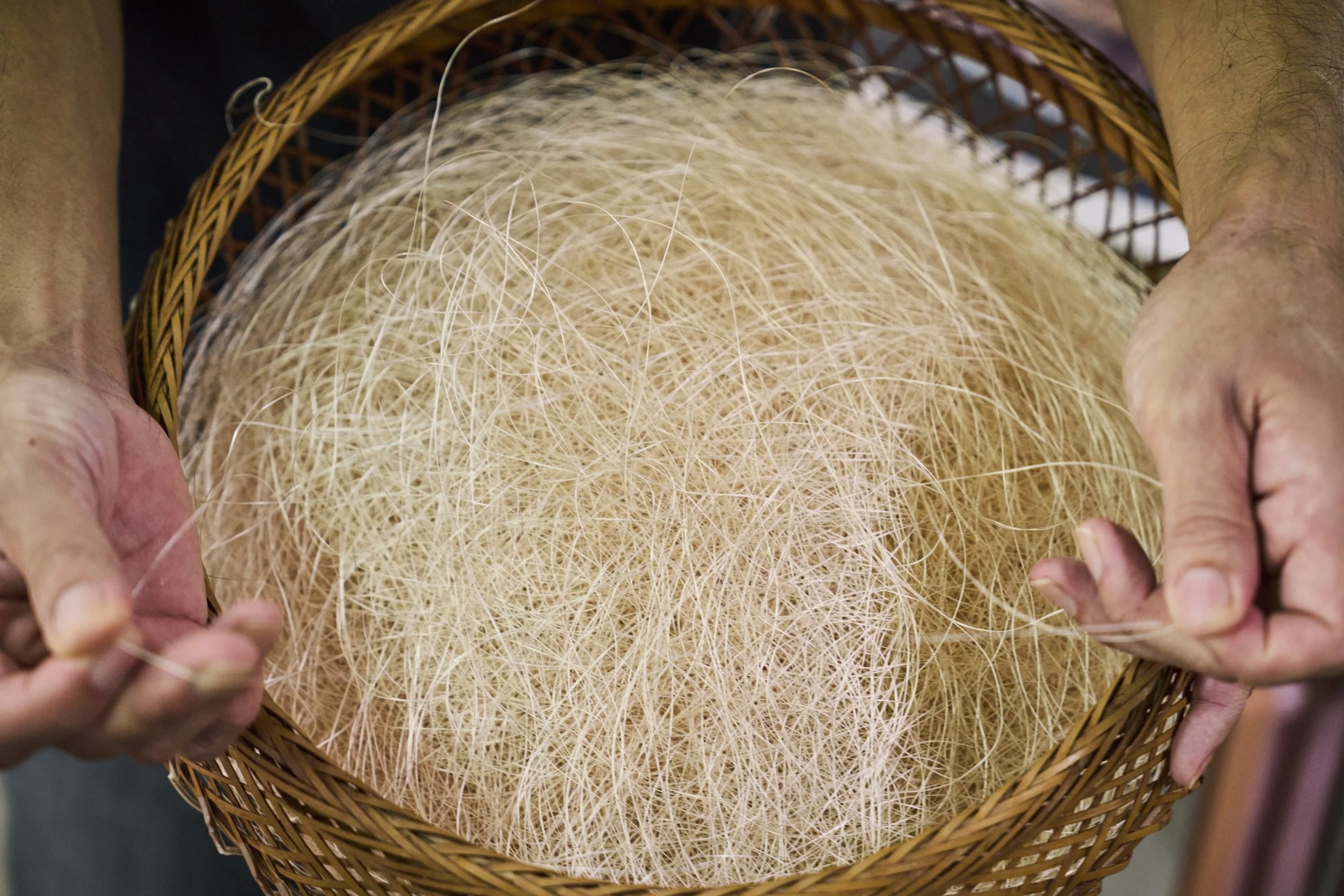
What makes our workshop different is that visitors have the opportunity to experience bashofu in a much deeper way. Visitors can see a craft that isn't easily found elsewhere, touch the raw materials, handle finished fabrics, and even see and touch the plants that the fiber comes from. One thing that really surprises people is the scale of the ito-basho tree. Seeing the actual fiber and understanding where the thread comes from gives them a much stronger appreciation for the material.
As for the thread-making experience itself, the work is very simple and repetitive. It's quiet, steady work that requires patience and concentration. What's interesting is that, as people settle into it, they often become quieter and quieter. Sometimes they'll spend thirty minutes completely absorbed in the task. Afterwards, many tell me it was an incredibly fulfilling experience, or that they felt relaxed and focused in a way they hadn't expected.
I sometimes wonder if it has something in common with meditation or Zen practice. That's just my personal feeling, but there is something about concentrating on a single task that allows people to clear their minds. I hope visitors can enjoy that kind of moment here—a chance, even while traveling, to slow down and focus on themselves in a way that's difficult to find elsewhere.
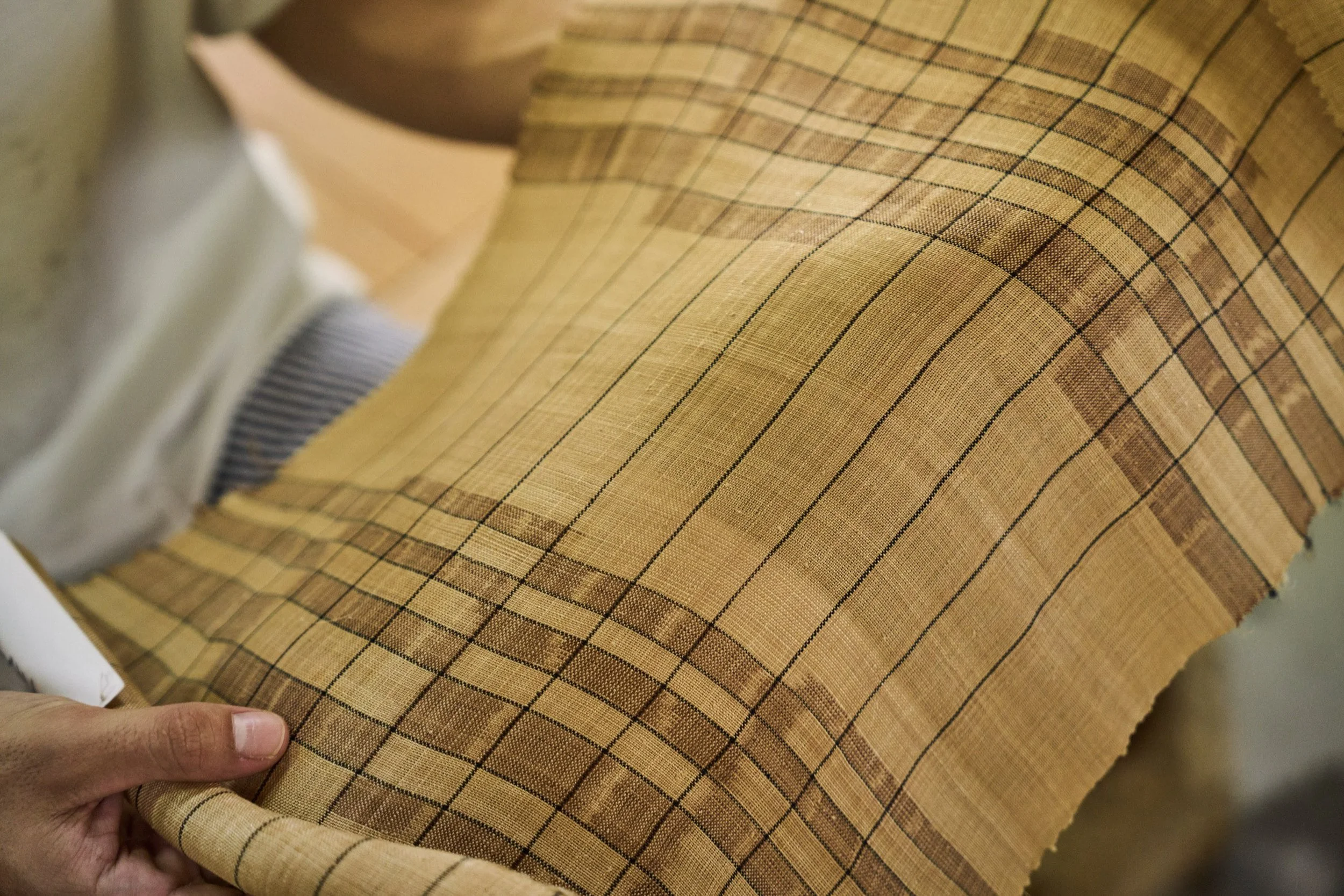
Gather in your fingertips the more than 800 year old Okinawan heritage of bashofu
With a deep passion for the continuation of this 800-year-old tradition, Ryuta-san happily welcomes all guests interested in experiencing bashofu and enjoying the tranquil atmosphere and meticulous weaving.
Step into Ryuta’s bashofu weaving workshop and get a glimpse into the production process of this ancient Okinawan tradition.
Meet More Masters


Discover Cultural Experiences


Get right next to the action and observe an authentic sumo training session