
The Shogun's City: How Old Edo Shaped Modern Tokyo
Despite the neon modernity of modern Tokyo, its roots as an ancient castle town lie preserved in the very structure of the city existing today.
Kenzo Tange is often called the godfather of modern Japanese architecture. The Fuji Television Headquarters, the Yoyogi National Gymnasium, the Sekiguchi Catholic Church, and the Tokyo Metropolitan Buildings all bear his distinct artistic signature, a kind of postwar vision of the future, where materials like concrete and steel were used to craft shapes of organic design. “Everywhere you go in Tokyo,” Tange reckoned, “traditions and preferences of past generations – particularly those of the Edo period – exist side by side with the Japanese preference for the avant garde and whatever is chic.”
I like this quote because it’s perhaps the most original rendering of a common cliche: that Tokyo is a fusion of past and future, a place where old meets new. Although such cliches are weak – are there any cities where the old doesn’t have to contend in some way with the new? – there is a truism in Tange’s original sentiment. Tokyo is obsessed with the new, with the zeal for development, with building bigger and shinier things, even though construction is also a form of destruction. So what, then, are the Edo-period “traditions and preferences” that still exist? Which fossils of the old world have survived?
Strangely, one place where Edo – Tokyo’s name from 1603 to 1868 – still holds the most influence is in the city’s design. Modern Tokyo is a sprawl of gleaming glass skyscrapers and LED screens, a metropolis that invokes a sense of cinema from near-every angle. The blueprint of an old castle town isn’t readily apparent. But zoom out a little; look at Tokyo on a map. The city unfurls from a green oasis enclosed by blue moats, like the nucleus at the heart of a cell in a biology textbook drawing. The citadel-like order of the “central” city soon gives way to a random, winding, and tangled warren that’s likely to confuse the postman, never mind the first-time visitor. This randomness extends to the reclaimed land of Tokyo Bay in the east and the mountains much further to the west. Thoroughfares are broad – often broader than the amount of vehicular traffic would merit – while sidestreets and residential roads are twisting and cozy, full of loops and dead ends, signifying division between the public and the private. This is not a modern development; it’s how old Edo grew, and it’s the pattern new Tokyo decided to follow. It’s not like there haven’t been opportunities for redesign: the Great Kanto Earthquake of 1923 and the firebombing raids of 1945 both flattened huge swathes of the city. Yet Tokyo resisted change.
In his wonderful monograph, Tokyo: A View of the City, Donald Richie noted that the Japanese capital didn’t evolve as the support system of a fortress or an industrial port (though it became both of these in time, too). “Tokyo – like Washington or Beijing – was a city born of decree. ‘Here a city shall be built,’ it was proclaimed, and so it was,” he wrote. Edo was built by fiat, Tokyo grew as though by impulse. And that’s the real paradox of the city. The old meeting the new isn’t Hanazono Shrine rubbing shoulders with Kabukicho or the old pleasure quarters of Asakusa sitting under dystopian Tokyo Skytree. It’s a city that yearns to be of the future, yet has never quite succeeded in escaping its own past.
Edo: A View of the City
Look on my Works, ye Mighty, and despair!"
Nothing beside remains. Round the decay
Of that colossal Wreck, boundless and bare
The lone and level sands stretch far away.
— Ozymandias, Percy Bysshe Shelley
For a man who supposedly eschewed extravagance, it might seem odd that Tokugawa Ieyasu, Japan’s Great Unifier, ordered the construction of a castle that was by any measure extravagant. In fact, by 1605 Edo Castle was the largest in the world, requiring hills to be leveled, fields to be engulfed, and land to be reclaimed from the sea. But the Shogun wasn’t done yet. Within a few more years, the castle had ballooned to 16km in circumference, several times that of the walled city of London. There were 66 gates and 19 towers (one still partially standing), as well as demilune footbridges, carp-filled ponds, landscape gardens, and a residential palace that soared 60 meters above the city.
Tokugawa's era of peace, and the resulting bureaucratic bloat, was to blame for the castle’s unparalleled size. The hulking, multi-layered, densely populated fortification was almost certainly impenetrable, but it was never under the threat of siege. The Shogun and his bafuku government lived there. Daimyo (feudal lords) stayed in the castle for several months a year, then to prove their loyalty, left their families as hostages when returning home. The aristocracy also had retinues, samurai, servants, porters, attendants, and concubines, the last of whom even had their own inner sanctum, the Ooku, or “Great Interior.” In essence, anyone who could be a threat to Edo was already there, while foreign invasion was nigh-on impossible under Tokugawa’s policy of Sakoku, or “Locked Country,” which prevented outsiders from setting foot on Japanese soil.
Edo Castle was an expression of wealth, power, and prestige. From old ukiyo-e prints, we can tell that it was a magnificent site, a physical manifestation of Tokugawa’s rule eternal. But eventually the Shogunate and its castle would meet the same fate as Shelly’s Ozymandias. Fires, natural disasters, modern warfare, and urban planning mean little of the old grandeur remains, only fragments of the colossal wreck. The point being that Edo grew insatiably, ambivalent to the fact that one day it might fall. This foreshadowed the implicit mission statement of Tokyo: to grow, and then keep growing some more.
The castle is known to modern Tokyoites as the Imperial Palace, where one of the original moats surrounds an area of well-kempt if largely uninteresting lawns. At the heart of it all is the palace and its gardens, home of the Emperor, the most hallowed and secure patch of land in Japan. In Edo, this was the city’s central point. But it has conferred a strangeness on modern Tokyo. The essayist and philosopher Roland Barthes believed people have a synesthetic sense of what a city ought to be, with a center to which one is drawn. Tokyo has several districts – Shibuya, Shinjuku, Ginza, Ikebukuro — which feel like city centers, with all the liveliness, development, commerce, freedom, and opportunity implied. Whereas the Imperial Palace is devoid of these hallmarks. “[Tokyo] does possess a center, but this center is empty,” wrote Barthes, in his own Tokyo monograph, Empire of Signs. “The entire city turns around a site both forbidden and indifferent, a residence concealed beneath foliage, protected by moats, inhabited by an emperor who is never seen.”
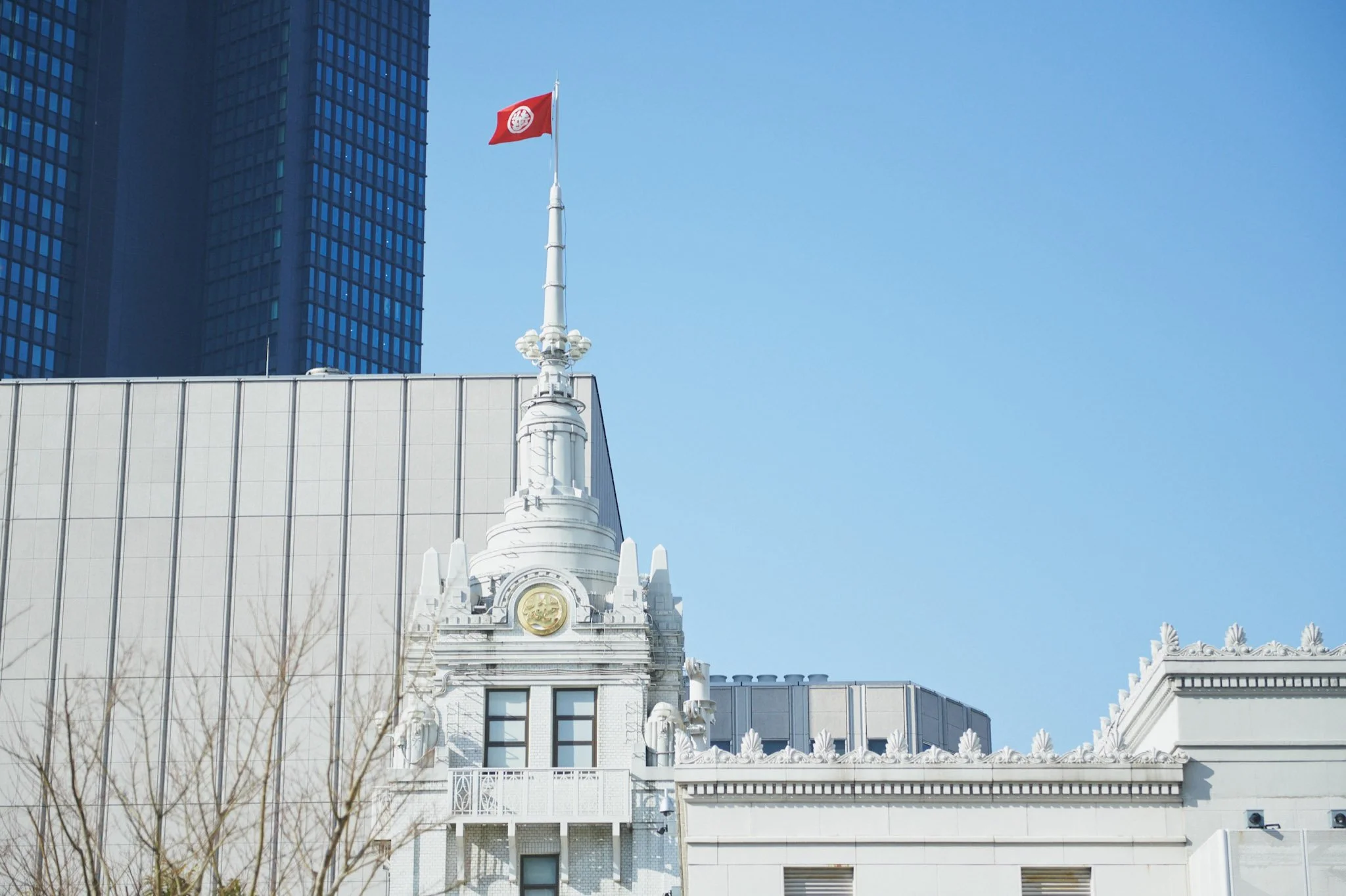
New Look, Same Old Streets
Then as now, all roads led to Edo Castle. Or more specifically, circumnavigated it. As Richie noted, “The roads surrounded the castle core, like the rings of a tree, and one may even now read the history of the place by examining these concentric circles.” As the city grew, so too did the rings, becoming less circular and less concentric as they went. Soon Edo began to acquire the randomness that still turns finding an address in Tokyo into a wild goose chase. Amid all the entropy and growing chaos, the people of the old city had to establish order.
The first semblance of order was a result of shogunal decree. The government granted use of the hilly, more desirable land – known as the Yamanote, the “Hand of the Mountain” – to the daimyo and the samurai. The low-lying delta lands along the Sumida River and Tokyo Bay – called Shitamachi, the “Under Town” – were given to merchants, laborers, and the like. This emphasized the class divisions in Edo society; those with wealth literally looked down upon their inferiors in the swamp. While the divisions are not quite as apparent today, Tokyo’s most glamorous areas – Roppongi, Azabu, Daikanyama, Hiroo, Akasaka, Omotesando-Harajuku – still congregate in the Yamanote and you’ll find repurposed lordly estates here, like the New Otani Hotel or Shinjuku Gyoen National Garden. Shitamachi areas, such as Asakusa, Ryogoku, and Kita Senju, tend to have a more working-class character, the feel of old market towns, though developers are doing their best to eradicate that.
In the Under Town, merchant guilds formed and areas became associated with what was sold there. Today, you might still buy books in Kanda-Jimbocho, fish in Tsukiji, or do your banking in Otemachi. Asakusa remains one of Tokyo’s premier districts for traditional crafts, while other neighborhoods have adjusted their commercial output to fit with the times. Ginza, a former marshland, is now full of Westernized shopping avenues and luxury fashion brands like Gucci, Chanel, Yves Saint Laurent, and Dior, and if you want to buy electronics, you’ll go to Akihabara, Tokyo’s “Electric Town,” where the lower-class samurai once lived.
As the city expanded, both in the Yamanote and Shitamachi, districts became increasingly self-sufficient, with neighborhood associations, markets, theaters, bathhouses, shrines, and noren-gai (main streets with fluttering half-curtains over the doorways) catering to the local populace. What this means is that Tokyo today, much like London or Dublin, is really just a collection of smaller towns and villages, albeit on an immense scale. Tokyo’s districts, now known as ku or “wards,” are the administrative zones of the city and there are 23 in total. If you ask a Tokyoite where they're from, they’ll often say that Shibuya or Chofu or Arakawa is their hometown, rather than simply Tokyo. It’s telling that the Japanese sometimes translate ku to “city.” Within those ku are innumerable microcommunities – what we might call “15-minute towns” – most of which arose not from any concerted planning efforts, but from the random wanderings of people now three centuries dead. As many historians have observed, though, this counterintuitively produces a more economical design than a grid drawn out by the brightest minds in urban planning.
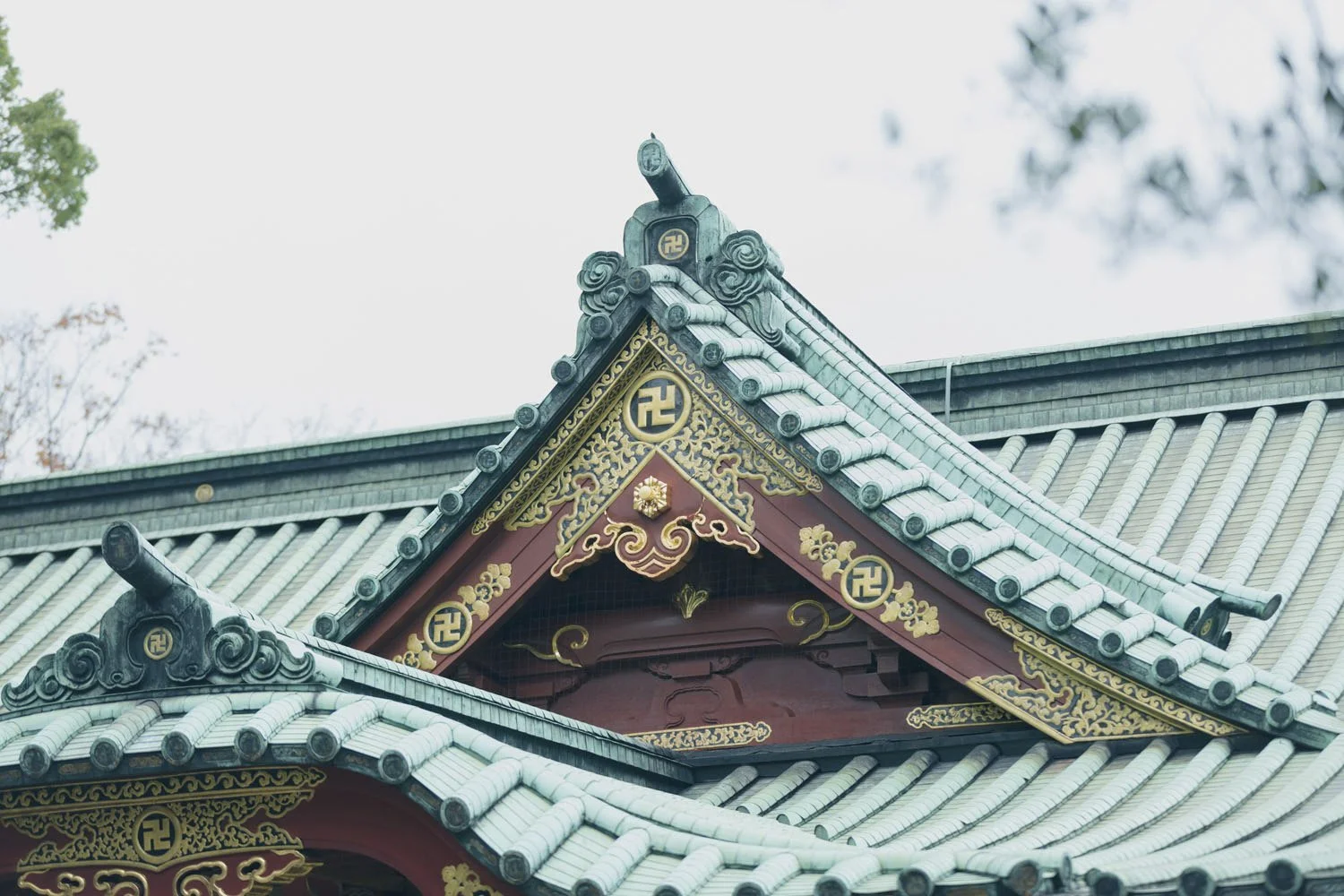
Even if Tokyo has dazzling new skin, the skeleton of Edo remains, some of it poking out from the surface like bits of unearthed bone. There’s the three-tiered Fushimi-Yagura Watchtower, built in 1659 and still standing on the Imperial Palace grounds, and the Tamagawa Aqueduct, which supplied 17th-century Edo with water for fire-fighting, drinking, sanitation, and irrigation, and remains in use today. But Nihonbashi best exemplifies the fate of Edo-period architecture. Literally “Japan Bridge,” it was erected in the early 1600s, across a water channel a little east of Edo Castle, and was so significant that it became the nation’s “point zero” – all distances in Japan were measured from it. The river has since been banked and redirected, the old Edo-period structure was replaced with a stone bridge in 1911, and above that, a ghastly elevated highway now cloaks everything in shadow. Tokyo developers have never cared much for sentiment.
Yet still, we find the “traditions and preferences” of the past world, if only we are primed to look. In the broad thoroughfares that ring the Imperial Palace and in Tokyo’s incomprehensible scale. In the glamor of the Yamanote and in the districts that preserve their mercantile roots. And in the city’s inescapable, intoxicating randomness. Despite all the cliches of Tokyo as a poster child of the future, it’s still the Shogun’s city, perhaps more than we care to know.
About the Author: David is a Northern Irish freelance journalist, writer and author based in the UK and Tokyo. Fusing reporting and social commentary with extensive experience traveling throughout the country, he has published stories on travel, arts and culture, business and current affairs, and sports in Japan. His work has appeared in a range of national and international publications online and in print. He's also the author of two travel books, Intrepid Japan and the most recent edition of Frommer's Japan. You can find links to his work at www.davidmcelhinney.com.

Recommended Reads

Discover Cultural Experiences


Get right next to the action and observe an authentic sumo training session