
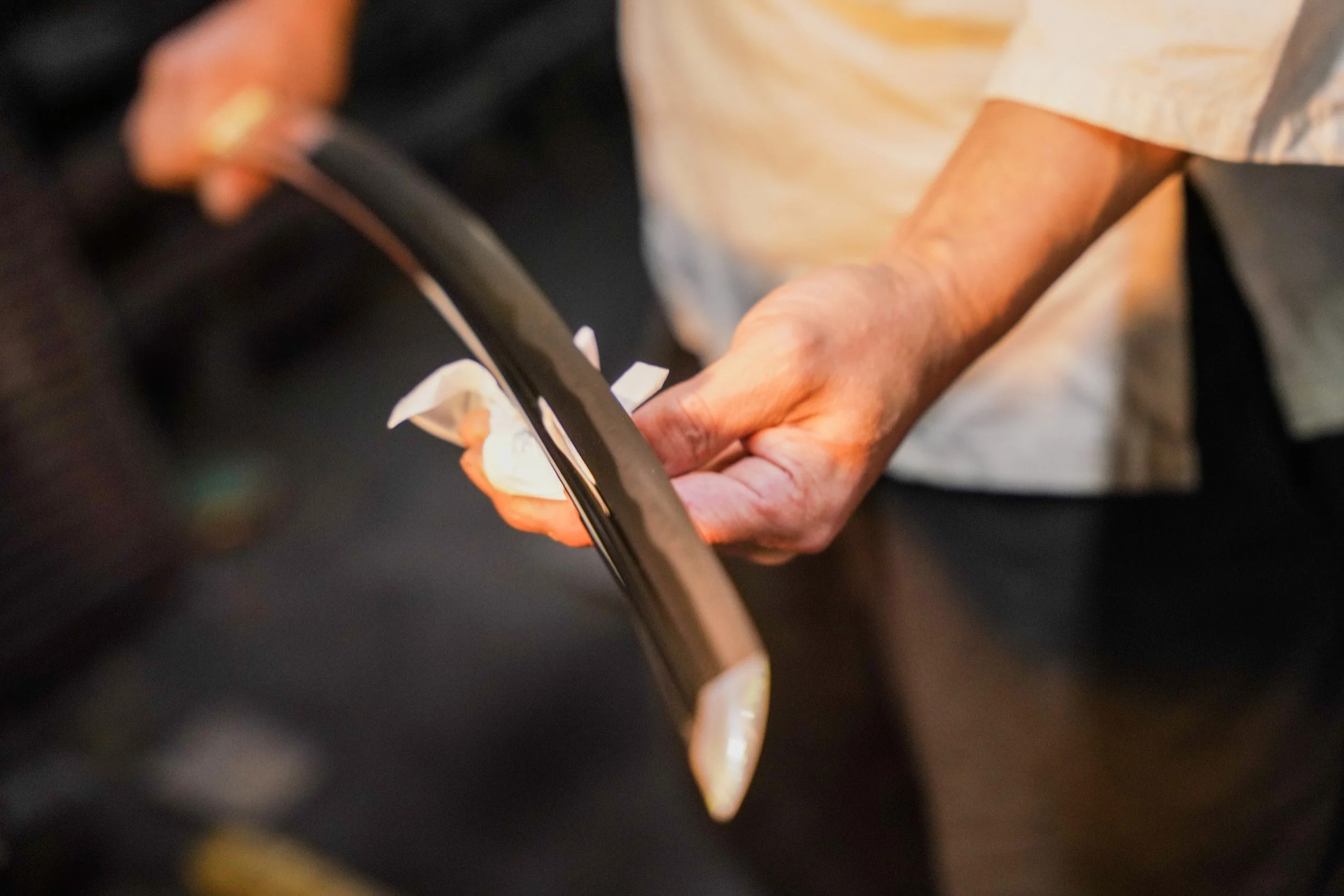
The beauty of the blade
Both weapon and work of art, Japanese katana swords come alive in fire and are forged by master swordsmiths.
An Introduction to Katana Swords
Forged through flame, patience, strength, and skill, the Japanese katana sword is one of the most iconic blades in the world—revered not only for its cutting ability, but for its deep cultural and historical significance. Over centuries, the katana evolved in both form and function, shifting in length, curvature, and battlefield use before settling into the now-iconic curved, single-edged sword synonymous with the samurai and traditional Japanese craftsmanship.
Despite its enduring legacy and extraordinary aesthetic beauty, traditional katana sword making in Japan is in decline. The number of licensed katana swordsmiths has steadily decreased due to historical disruptions, Japan’s aging population, and the immense dedication required to earn national swordsmith certification. Today, only around 150 active katana sword masters remain in Japan, each entrusted with preserving centuries-old forging techniques and cultural heritage.
Visitors who step inside a katana workshop in Japan can witness this rare craft firsthand—where sparks fly, steel is shaped by hand, and living history is forged blade by blade for future generations.
In this Guide:
The history of katana swords
Processes in making a katana sword
Katana sword masterclasses
Further reading on katana swords
Katana FAQ
First recorded in the Nihon Shoki (720 CE), one of Japan’s earliest historical texts, the katana sword has evolved over centuries in response to changes in warfare and craftsmanship. Its design shifted in length and use before settling into the now-iconic curved, single-edged Japanese katana recognized around the world.
By the 15th century, the exceptional quality of Japanese katana swords had earned international recognition, with historical records documenting exports to Korea and China as well as the arrival of Korean swordsmiths in Japan to study traditional forging techniques. These exchanges helped establish Japan’s reputation for elite sword making across East Asia.
Modern perceptions of the katana are most closely tied to the Muromachi and Edo periods, when samurai culture and bushidō flourished. During this era, the katana functioned as both a weapon and a visible marker of status, authority, and identity.
Beyond its physical form, the katana was believed to possess a spiritual essence, imparted during the blade’s hardening process. Samurai were therefore seen not as owners, but as custodians, entrusted with preserving the sword’s soul and history for future generations.
The History of Katana Swords
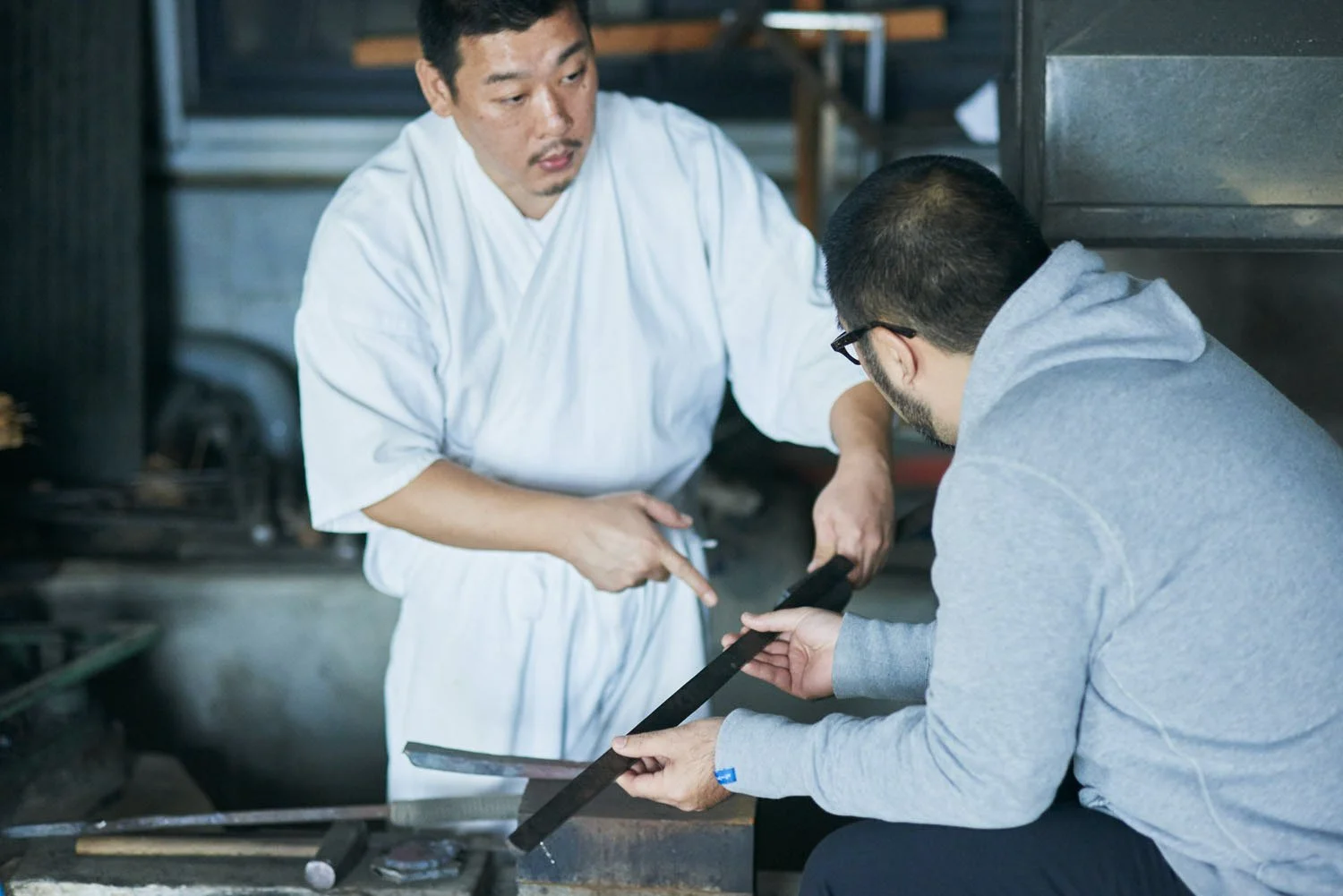
Processes in Making a Katana Sword
Forging
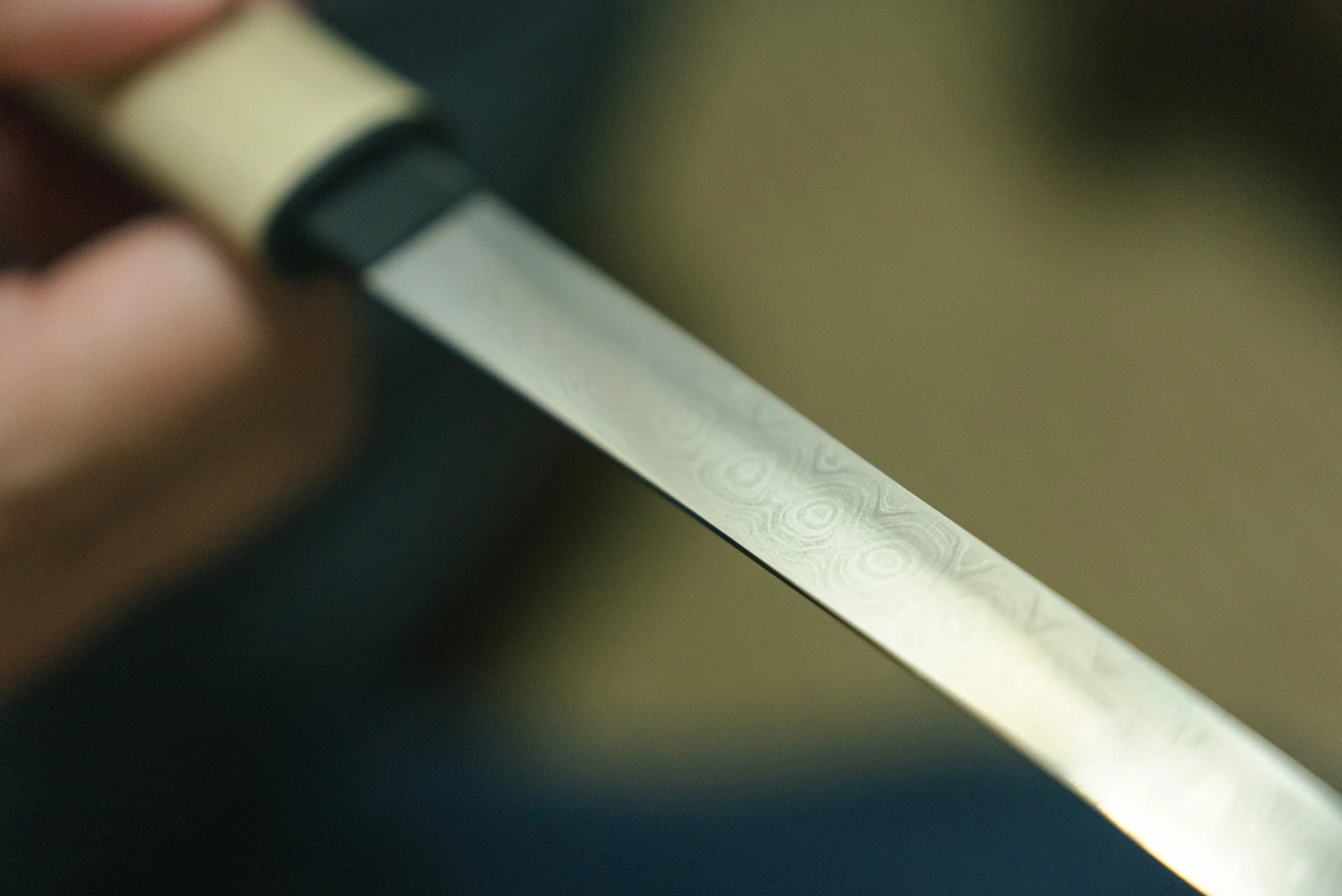
The swordsmith repeatedly heats, folds, and hammers tamahagane steel to remove impurities and evenly distribute carbon. This process strengthens the blade while creating the layered steel structure that contributes to both durability and the katana’s distinctive grain pattern
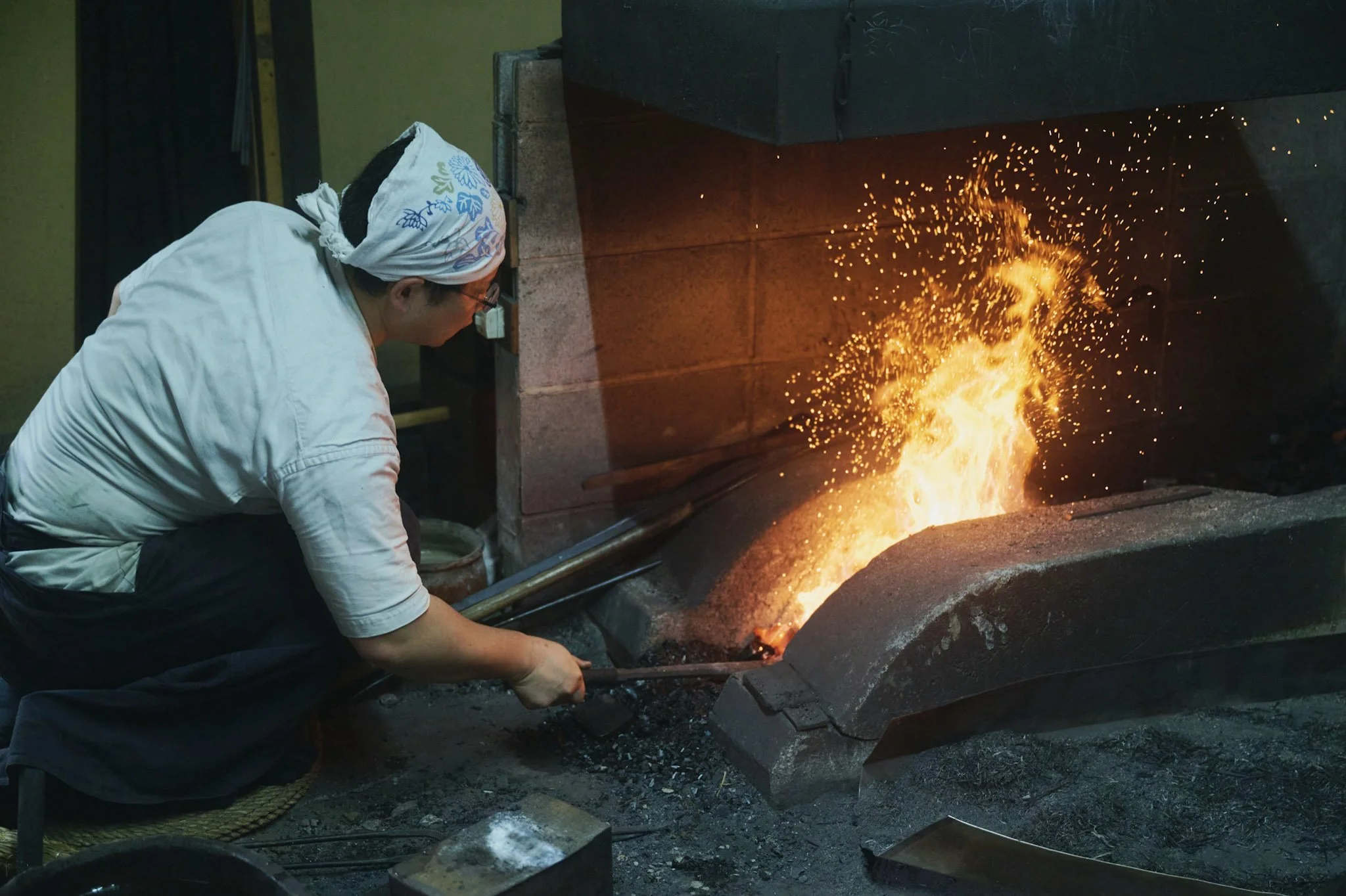
Shaping & Hardening
After the blade is shaped, a clay mixture is applied to control cooling speed during quenching. The blade is then heated and rapidly cooled in water, hardening the edge while leaving the spine more flexible. This critical step creates the katana’s curvature and the visible temper line (hamon), traditionally believed to imbue the blade with spirit.
Polishing & Mounting
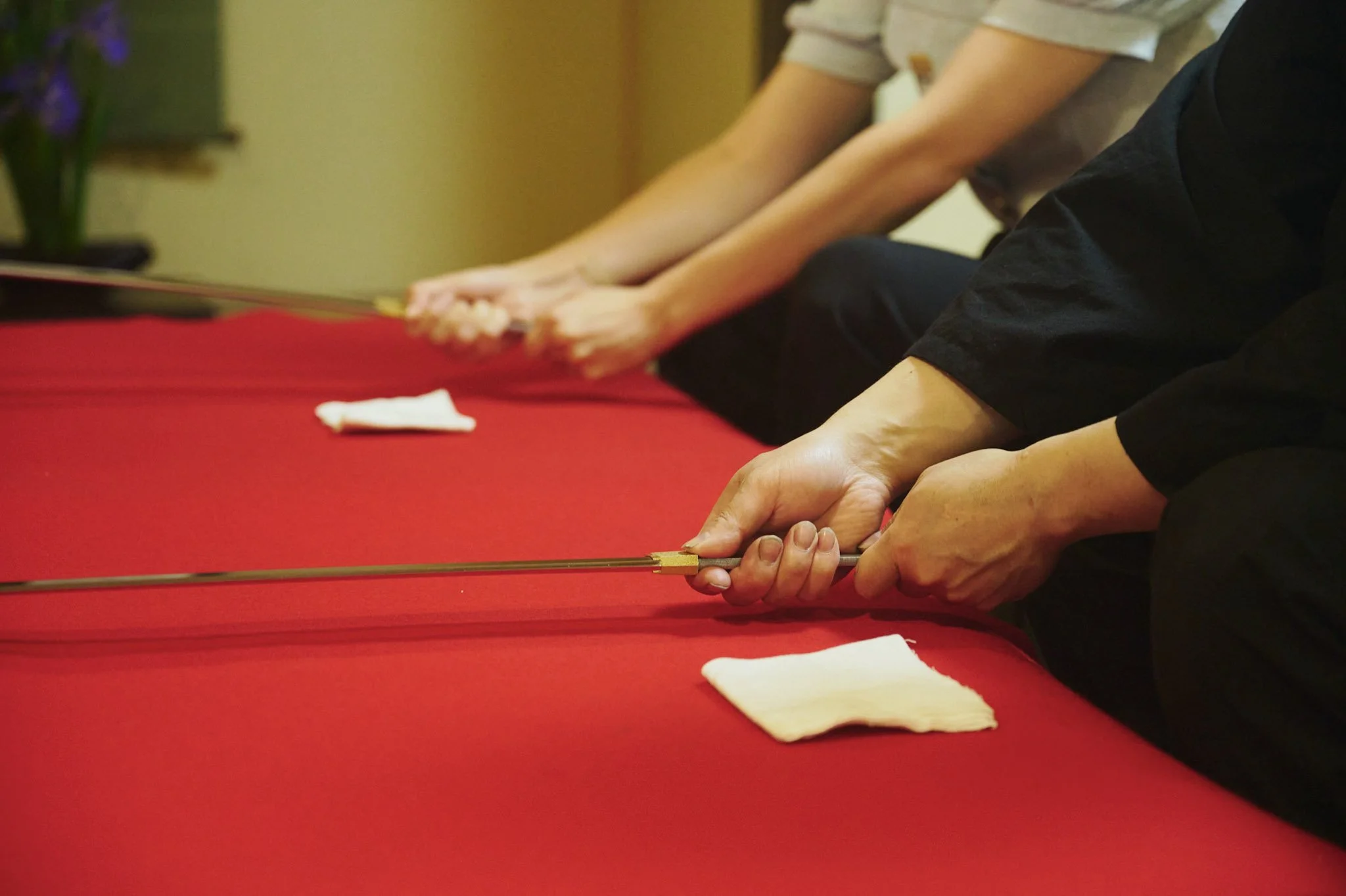
A specialist polisher refines the blade using progressively finer stones to reveal the hamon and steel grain while achieving a razor-sharp edge. The finished blade is then mounted with handcrafted fittings—tsuba, handle, and scabbard—often made by different artisans, completing the sword as both a weapon and a work of art.
Japanese Katana Sword Masterclasses
Enter the world of the katana alongside master swordsmiths, uncover the spirit and discipline behind Japan’s most iconic blade, and enrich your journey with deeply authentic cultural experiences.
Tokyo
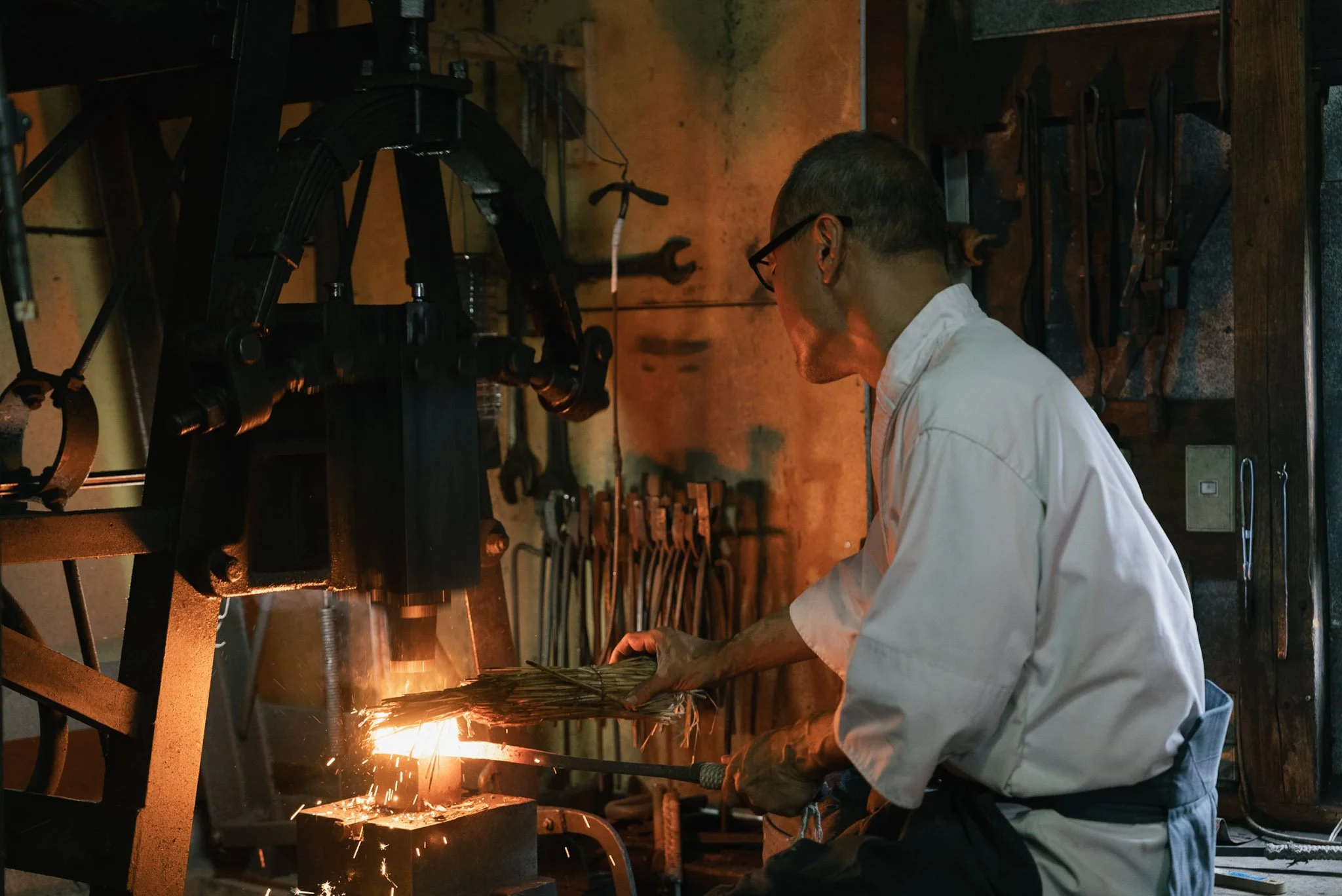
Experience hands-on katana sword rafting with a master swordsmith in Odawara
Kyoto | Kansai
Kyushu
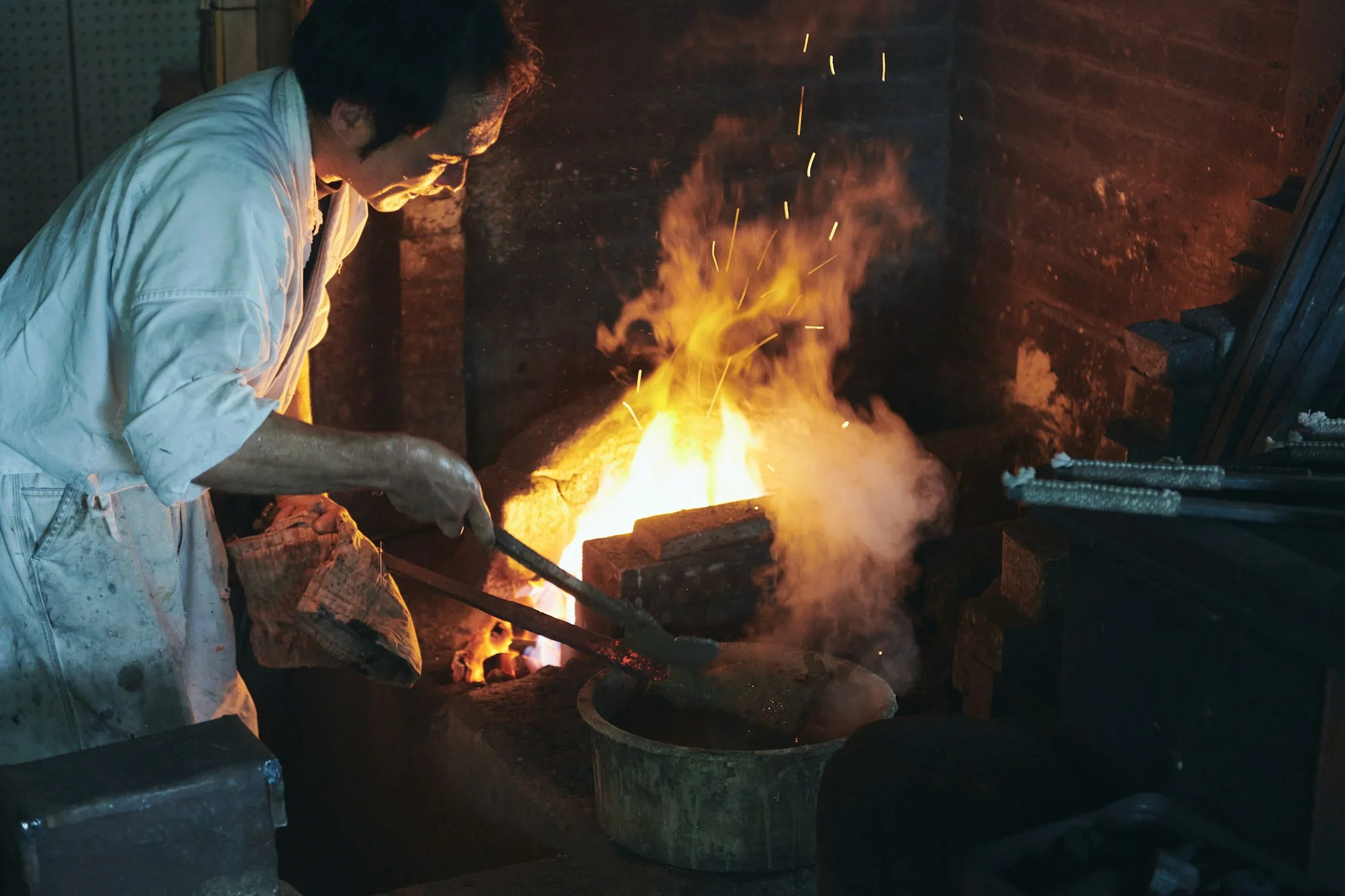
Witness the flames of katana tradition forged by a 5th-generation master swordsmith
Hiroshima

Observe the art and philosophy of katana sword-making with one of Japan's top masters
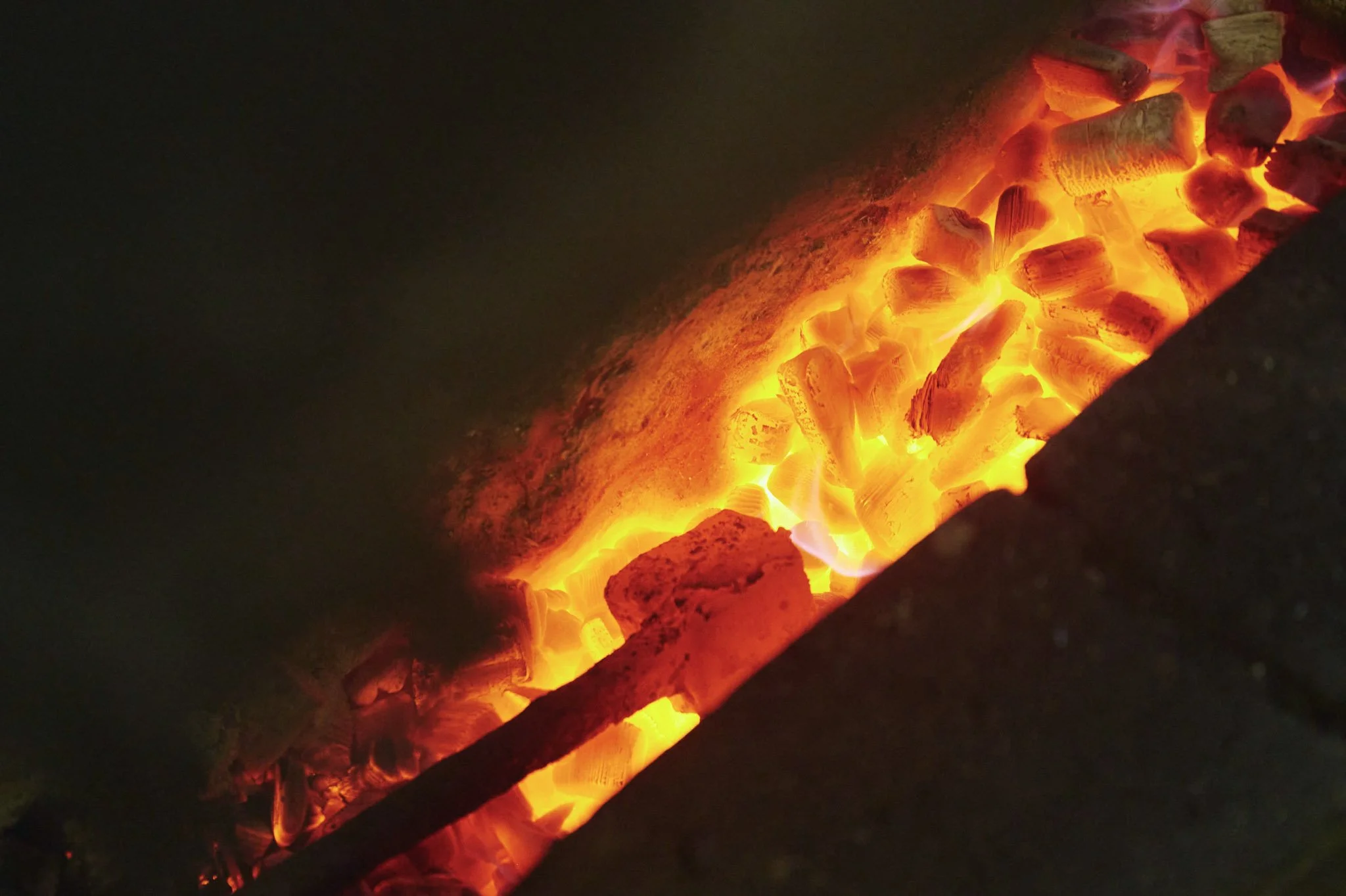
Enjoy a homemade meal, then experience a lesson in the art of crafting katana
Kanazawa

Witness the art of an authentic Japanese swordsmith at a katana forge in Kanazawa
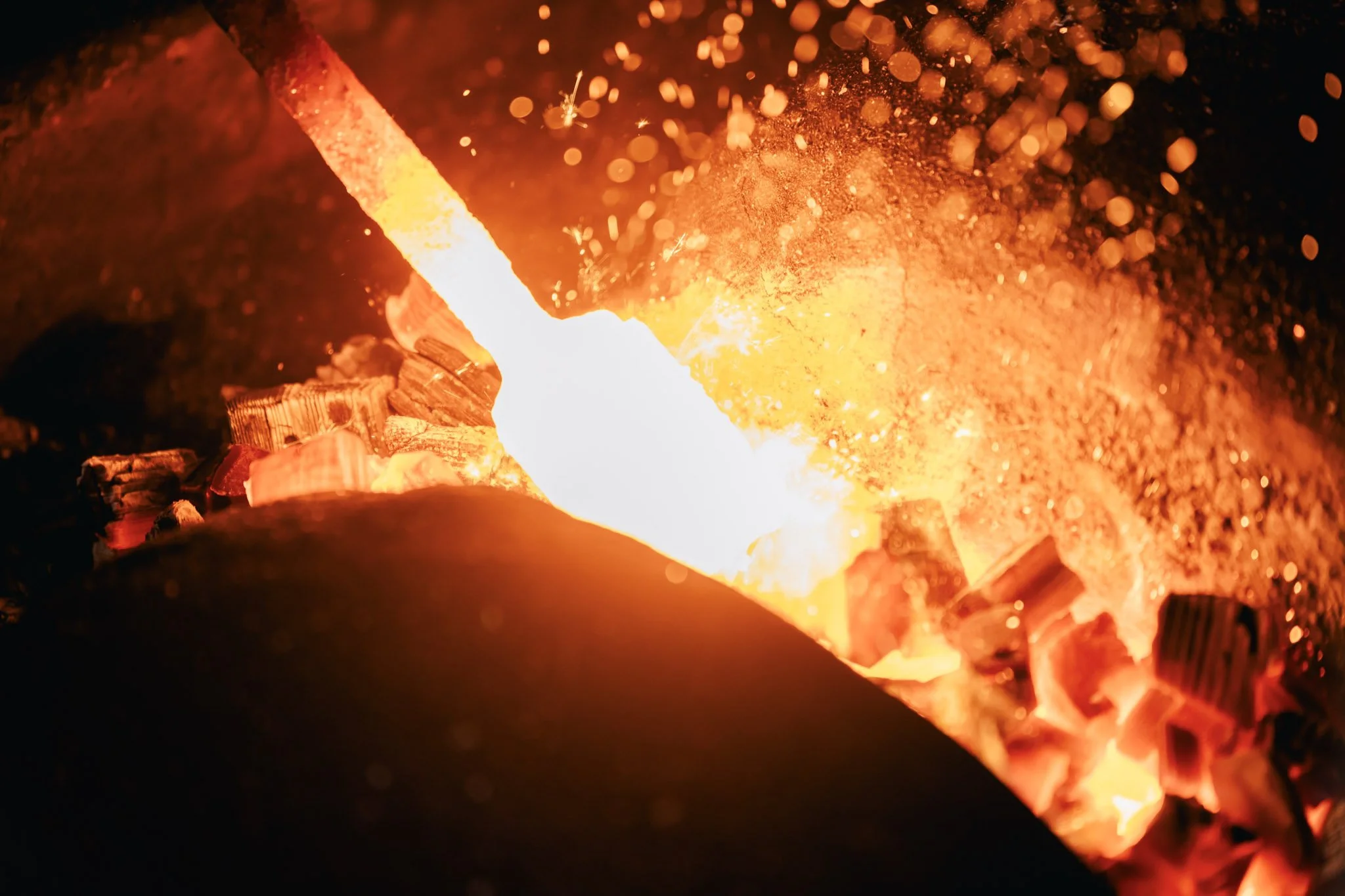
Witness how katana blades are forged from steel and fire by a master swordsmith
Tohoku
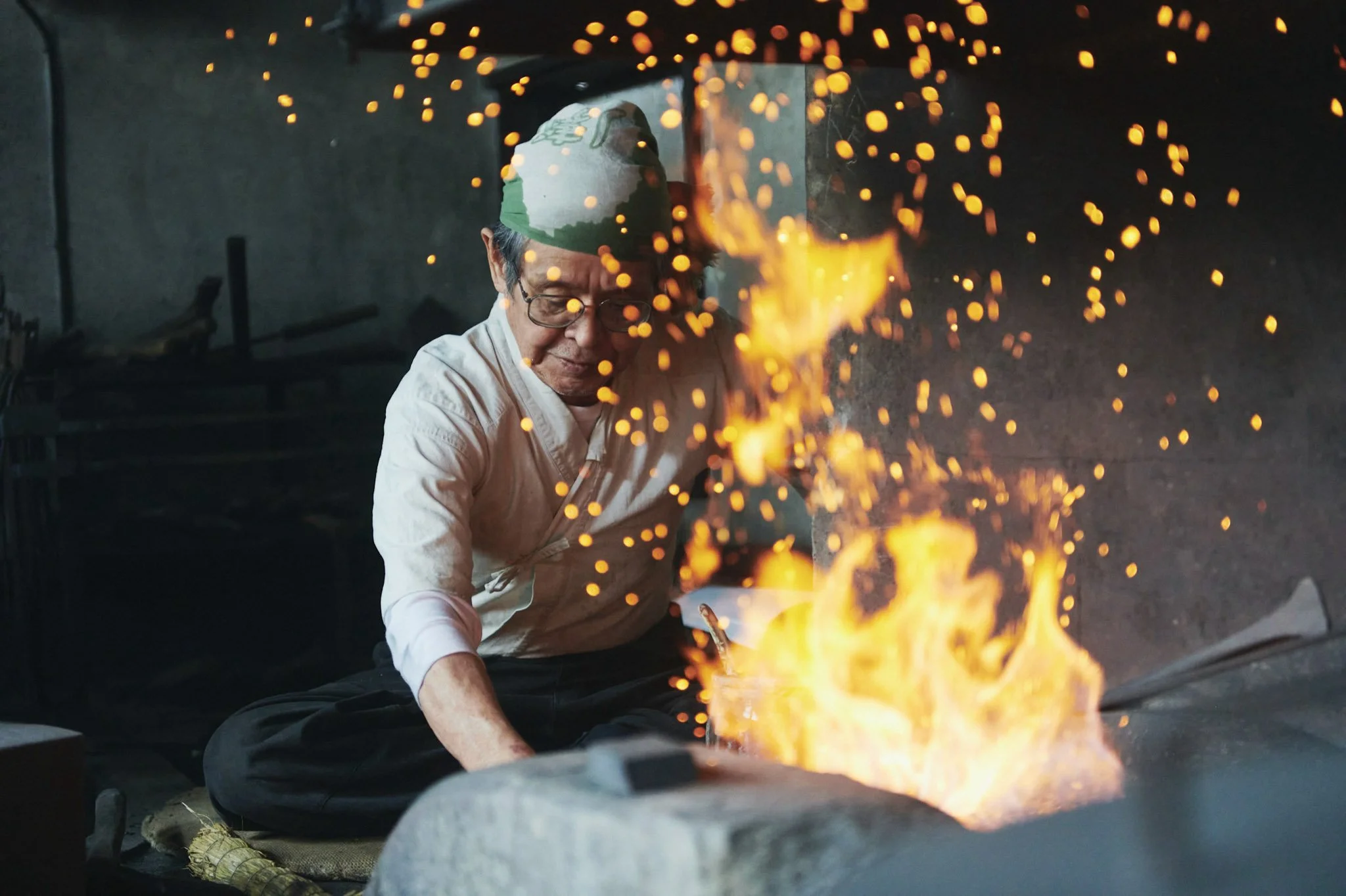
Meet a master katana craftsman at his sword forge located near an iconic battlefield

Learn sword-making with Fusahiro, one of Japan's last remaining katana makers
Dive deeper into Japanese katana
An Interview with Fusahiro, Katana Master
Hear the story of how this swordsmith started his journey of becoming a samurai blade craftsman.
The Armor of Samurai
The iconic armor of samurai: crafted as much for intimidation as for protection, these masterpieces of design and engineering reflect the warrior's status, identity, and the artistry of their era.
Meet the Katana Artisans
Meet some of Japan’s greatest katana swordsmiths, actively keeping this craft alive.
Japanese katana sword FAQ
-
A katana is a single-edged, curved Japanese sword traditionally used by the samurai class from the late medieval period onward. Compared to earlier swords like the chokuto or longer battlefield blades such as the tachi, the katana is optimized for quick drawing and precise cutting. Its distinctive curvature, layered steel construction, and visible temper line (hamon) are hallmarks of traditional craftsmanship.
-
Katana are still made in Japan today, though in very limited numbers. Contemporary swordsmiths must be licensed by the Japanese government and are restricted in how many blades they may produce each year. These modern katana are forged using centuries-old techniques and are considered works of art rather than weapons.
-
Forging a katana typically takes several months, from smelting the steel to final polishing and mounting. The full process involves multiple specialists—including polishers, scabbard makers, and metal fittings artisans—each contributing their expertise. High-level swords may take a year or more to complete.
-
In Japanese tradition, swords are believed to house spiritual essence and are closely linked to Shinto belief.
For the samurai, the sword was not merely a weapon but a moral symbol—often described as the “soul of the samurai”—embodying discipline, honor, and responsibility.
-
Some katana swordsmith workshops accept visitors by appointment, often through curated travel experiences. Availability is limited, as many smiths work in private studios and prioritize their craft.
Guided visits may include demonstrations, explanations of the forging process, and insight into the tools and rituals involved. Advance planning and respectful conduct are essential.

Get right next to the action and observe an authentic sumo training session